
Reviewed by Dr. Amir Issa, MD, DABVLM, RPhS · CURA Vein Doctors · October 2026
Most advice on preventing varicose veins promises something the research doesn’t support: that the right habits will keep them from forming. They won’t, not entirely. The strongest risk factors, age and family history, can’t be changed. What you can influence is how much strain your veins carry, how your legs feel, and when it’s time to get them checked.
The figures below come from the Edinburgh Vein Study, a population study of 1,566 adults aged 18 to 64, along with the 2023 US vascular society guidelines, a German clinical guideline, and Cochrane reviews. Every source is listed at the end.
Can Varicose Veins Be Prevented?
Not entirely. Age and family history are two of the strongest risk factors, and neither can be changed. Staying active, keeping a healthy weight, and breaking up long stretches of standing or sitting take pressure off your veins, but none is proven to stop varicose veins from forming. See a specialist when symptoms or skin changes appear.
What Does the Research Say About Who Gets Varicose Veins?
25.7%
of adults aged 55 to 64 developed new varicose veins over 13 years in the Edinburgh Vein Study, compared with 9.8% of those aged 18 to 34.
1.75×
higher odds of developing varicose veins for people with a family history of venous disease, in the same study.
57.8%
of people who already had varicose saphenous veins or chronic venous incompetence showed progression over about 13 years, roughly 4.3% a year.
Age and family history do most of the work, and neither is negotiable. In the same research group’s lifestyle analysis, no consistent link appeared between most lifestyle habits and varicose veins. Body weight was the notable exception: higher BMI was associated with more varicose veins in women, and with a higher risk of chronic venous insufficiency in the follow-up study. These are observational findings. They show association, not proof that any habit prevents or causes the condition.
| Risk Factor | Can You Change It? | What the Research Shows |
|---|---|---|
| Age | No | New varicose veins over 13 years rose from 9.8% (ages 18 to 34) to 25.7% (ages 55 to 64) |
| Family history | No | Odds of varicose veins were 1.75 times higher with a family history of venous disease |
| Height | No | Taller adults had higher odds of varicose veins in both sexes in the Edinburgh data |
| Sex | No | The Edinburgh study found similar incidence in men and women, while other studies report higher rates in women, so the evidence is mixed |
| Pregnancy and hormones | Partly | Named as a contributing factor in the German S2k guideline |
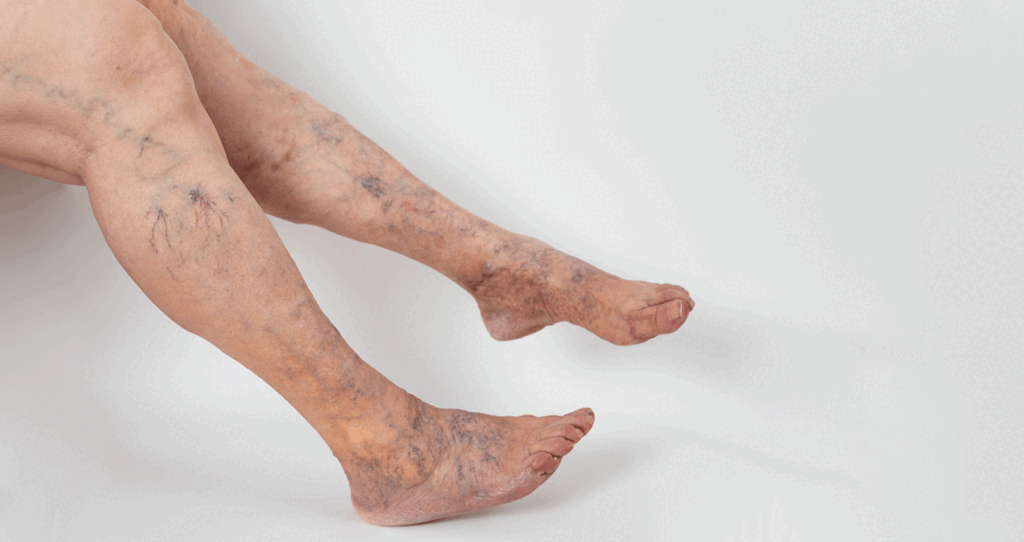
| Long periods of standing or sitting | Often | Listed as a contributing factor in the S2k guideline, though population data show no consistent lifestyle link |
| Body weight | Yes | Higher BMI was linked to more varicose veins in women and to a higher risk of chronic venous insufficiency |
Do Exercise and Compression Stockings Prevent Varicose Veins?
Not in any proven way. Compression stockings have some trial support for easing symptoms, but the 2023 US vascular guidelines report no evidence that they slow progression or recurrence. Evidence for them as a primary treatment was rated insufficient. Exercise and weight control are reasonable for comfort and circulation, not guaranteed prevention.
| Step | What the Research Shows | Verdict |
|---|---|---|
| Compression stockings | A randomized trial of class I stockings in uncomplicated varicose veins found symptom scores about 28% lower. The 2023 guidelines, however, found no evidence that compression slows progression | Symptom relief, mixed evidence |
| Healthy weight | Higher BMI was associated with more varicose veins in women and with a higher risk of chronic venous insufficiency, based on observational data | Observational support |
| Walking and leg elevation | Standard conservative advice to support the calf muscle pump and reduce pressure on impaired valves. We found no trial showing either prevents varicose veins | Advised for symptoms, unproven for prevention |
| Breaking up long periods of standing or sitting | Listed as a contributing factor (orthostatic stress) in the S2k guideline, but the Edinburgh data show no consistent lifestyle link | Plausible, mixed data |
| Treating painless varicose veins early | The 2023 guidelines state that prophylactic intervention in people without symptoms does not prevent progression of venous disease | Not supported as prevention |
That doesn’t make the habits pointless. They’re worth doing for how your legs feel, and there are practical routines for minimizing varicose veins before they get worse as well as everyday prevention strategies for work and travel. What the evidence doesn’t support is treating any of them, or early treatment of painless veins, as a guarantee against progression.
What Are the Two Main Causes of Varicose Veins?
Two linked failures drive varicose veins: vein valves that stop closing, letting blood flow backward, and a weakened vein wall that stretches under pressure. Inherited weakness and sustained pressure inside the veins make both more likely. Researchers still debate which comes first.
Valve failure. Healthy leg veins contain one-way valves. When they fail, blood falls backward, called reflux, and pools, which raises pressure inside the vein. More than 80% of varicose veins trace back to reflux in the great saphenous vein, the long vein running along the inner leg.
Vein wall weakness. Tissue studies of varicose veins show abnormalities in the cells and structural proteins of the wall. One leading theory holds that the wall dilates first, which pulls the valve leaflets apart. Other evidence shows valves can fail on their own. Either way, sustained pressure inside the vein, called venous hypertension, drives the damage forward.
At What Age Do Varicose Veins Start?
Varicose veins can start in childhood or early adulthood, but they become far more common with age. In the Edinburgh Vein Study, 11.5% of adults 18 to 24 had varicose veins of any severity, rising to 55.7% by ages 55 to 64. One review puts the average age of first symptoms around 31 in women and 37 in men.
If you’re in your 20s with visible varicose veins and a parent who has them, that isn’t unusual. Varicose veins that cause symptoms are worth an evaluation at any age.
Are Vitamins Good for Varicose Veins?
Not on their own. There is no trial evidence that vitamins C, K, or E prevent or treat varicose veins. The supplements with randomized-trial support are plant-based, horse chestnut seed extract and purified flavonoids, and they ease symptoms like pain and swelling rather than preventing varicose veins or closing them.
| Supplement | What the Evidence Shows | Limits |
|---|---|---|
| Horse chestnut seed extract (standardized to escin) | A Cochrane review of 17 randomized trials found less leg pain, swelling, and itching over 2 to 16 weeks in chronic venous insufficiency. In two trials it performed similarly to compression stockings for leg pain | Short-term data. Studied in people who already had venous disease, not as prevention. Every trial used a standardized extract |
| Purified flavonoids (MPFF, diosmin) | A recent review of venoactive compounds rated micronized purified flavonoid fraction among the best-supported options for pain, heaviness, and swelling | Relieves symptoms, does not prevent varicose veins. Formulations differ in how well they work |
| Ruscus extract with hesperidin methyl chalcone and vitamin C | The same review placed this combination among the highest-quality evidence | A combination product, so vitamin C is not acting alone |
| Vitamins C, K, and E on their own | No trial evidence for varicose veins. Trials of these vitamins have focused on heart and eye outcomes | Worth correcting a true deficiency, but extra doses are not a proven prevention strategy |
Supplements can interact with medicines, including blood thinners such as warfarin, so check with your doctor or pharmacist before starting one. Vitamin C is needed to make collagen, and severe deficiency weakens blood vessels, which is why a real deficiency is worth fixing, and why vitamin C and K levels are worth checking when veins pop or bruise easily.
What Should You Not Do If You Have Varicose Veins?
Most of these are about safety rather than prevention. A red, hard vein can be a clot, and a knocked or scratched varicose vein can burst and bleed heavily.
| Avoid | Why It Matters | Do Instead |
|---|---|---|
| Staying in one position for hours | An idle calf muscle pump lets blood pool in the legs | Break it up regularly with ankle pumps or a short walk |
| Ignoring a red, hard, or tender vein | It can signal superficial thrombophlebitis, a clot in a surface vein | See a doctor promptly, and go to the emergency room for severe pain or breathlessness |
| Rubbing or massaging a painful, warm, or hard area | Pressure over a possible clot isn’t advised until one has been ruled out | Have it examined first |
| Scratching or knocking prominent veins | Skin over a varicose vein can be thin, and a rupture can bleed heavily | Moisturize itchy skin and protect the area |
| Wearing compression you weren’t fitted for | Too tight can restrict circulation, especially with peripheral artery disease, and too loose does nothing | Get measured first, then match length and pressure to your symptoms |
| Relying on supplements or camouflage instead of an evaluation | Neither shows whether a valve is failing | Get a duplex ultrasound if you have symptoms |
When Should You See a Doctor of Veins About Varicose Veins?
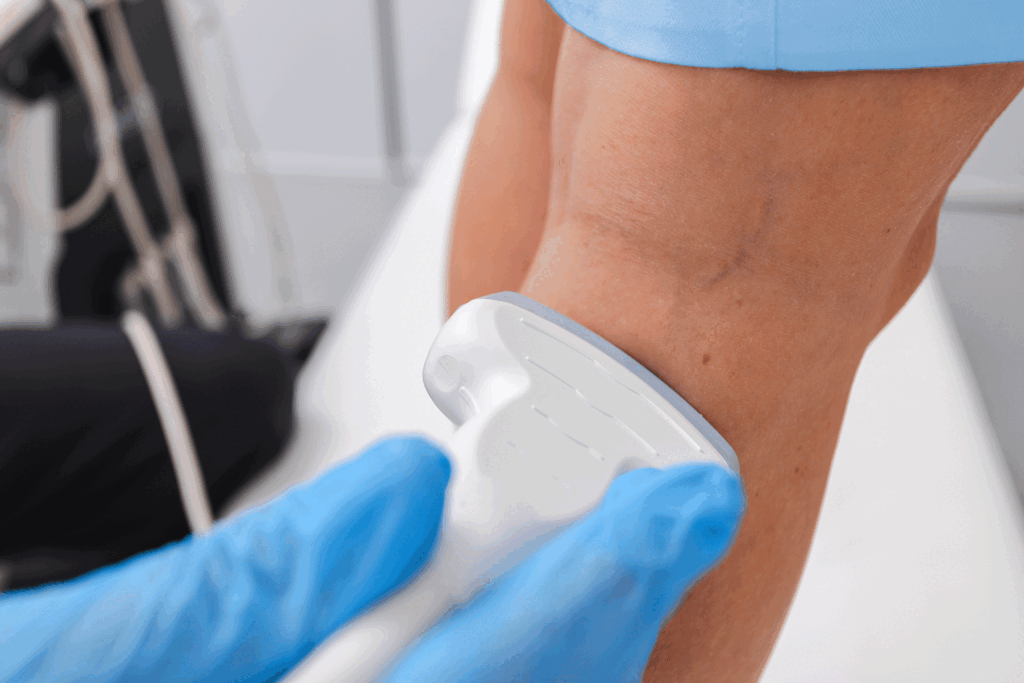
See a doctor of veins if varicose veins ache, swell, itch, or change the color of your skin near the ankle, or if a vein turns red, hard, or tender. A duplex ultrasound shows which valves are failing, so treatment, if needed, targets the real source instead of the visible vein.
Frequently Asked Questions
How can I prevent varicose veins naturally?
You can’t fully prevent them, but you can take strain off your veins. Staying active, keeping a healthy weight, and breaking up long periods of sitting or standing are the usual advice. They’re reasonable for comfort, but none is proven to stop varicose veins from forming.
What are the two main causes of varicose veins?
Failed vein valves that let blood flow backward, and a weakened vein wall that stretches under pressure. Inherited weakness and sustained pressure raise the odds of both, and researchers still debate which comes first.
At what age do varicose veins start?
They can start in childhood or early adulthood, but they become far more common with age. In the Edinburgh Vein Study, 11.5% of adults aged 18 to 24 had varicose veins of any severity, versus 55.7% of those aged 55 to 64. One review puts average first symptoms around age 31 in women and 37 in men.
What should you not do if you have varicose veins?
Don’t stay in one position for hours, ignore a red, hard, or tender vein, or massage a painful, warm area before a clot is ruled out. Don’t rely on supplements or makeup instead of an evaluation, and don’t wear compression you weren’t fitted for.
Schedule an evaluation with CURA Vein Doctors at +1 973-363-2029, or send a message through the contact page, to find out what’s driving yours.
References
- Incidence of Chronic Venous Disease in the Edinburgh Vein Study. Journal of Vascular Surgery: Venous and Lymphatic Disorders. pubmed.ncbi.nlm.nih.gov/26993896
- Lifestyle Factors and the Risk of Varicose Veins: Edinburgh Vein Study. Journal of Clinical Epidemiology, 2003;56(2):171-9. pubmed.ncbi.nlm.nih.gov/12654412
- The 2023 Society for Vascular Surgery, American Venous Forum, and American Vein and Lymphatic Society Clinical Practice Guidelines for the Management of Varicose Veins of the Lower Extremities, Part II. Journal of Vascular Surgery: Venous and Lymphatic Disorders. jvsvenous.org/article/S2213-333X(23)00322-0
- Efficacy of Medical Compression Stockings Class I on the Reduction of Symptoms in Patients with Uncomplicated Varicose Veins: Results of a Randomized, Controlled, Clinical Trial. Vasa. econtent.hogrefe.com/doi/10.1024/0301-1526/a001163
- S2k Guidelines: Diagnosis and Treatment of Varicose Veins. National Library of Medicine. ncbi.nlm.nih.gov/pmc/articles/PMC9358954
- A Review of Familial, Genetic, and Congenital Aspects of Primary Varicose Vein Disease. Circulation: Cardiovascular Genetics. ahajournals.org/doi/10.1161/CIRCGENETICS.112.963439
- Pathogenesis of Varicose Veins. European Journal of Vascular and Endovascular Surgery. ejves.com/article/S1078-5884(02)91843-5
- Pathophysiology and Principles of Management of Varicose Veins. Mechanisms of Vascular Disease, NCBI Bookshelf. ncbi.nlm.nih.gov/books/NBK534256
- Varicose Veins and Venous Insufficiency: Etiology and Pathophysiology. Medscape. emedicine.medscape.com/article/1085412-overview
- Pittler MH, Ernst E. Horse Chestnut Seed Extract for Chronic Venous Insufficiency. Cochrane Database of Systematic Reviews, 2012. pubmed.ncbi.nlm.nih.gov/23152216
- The Role of Venoactive Compounds in the Treatment of Chronic Venous Disease. Journal of Vascular Surgery: Venous and Lymphatic Disorders. sciencedirect.com/science/article/pii/S2213333X25000939
- Thrombophlebitis: Symptoms and Causes. Mayo Clinic. mayoclinic.org/diseases-conditions/thrombophlebitis