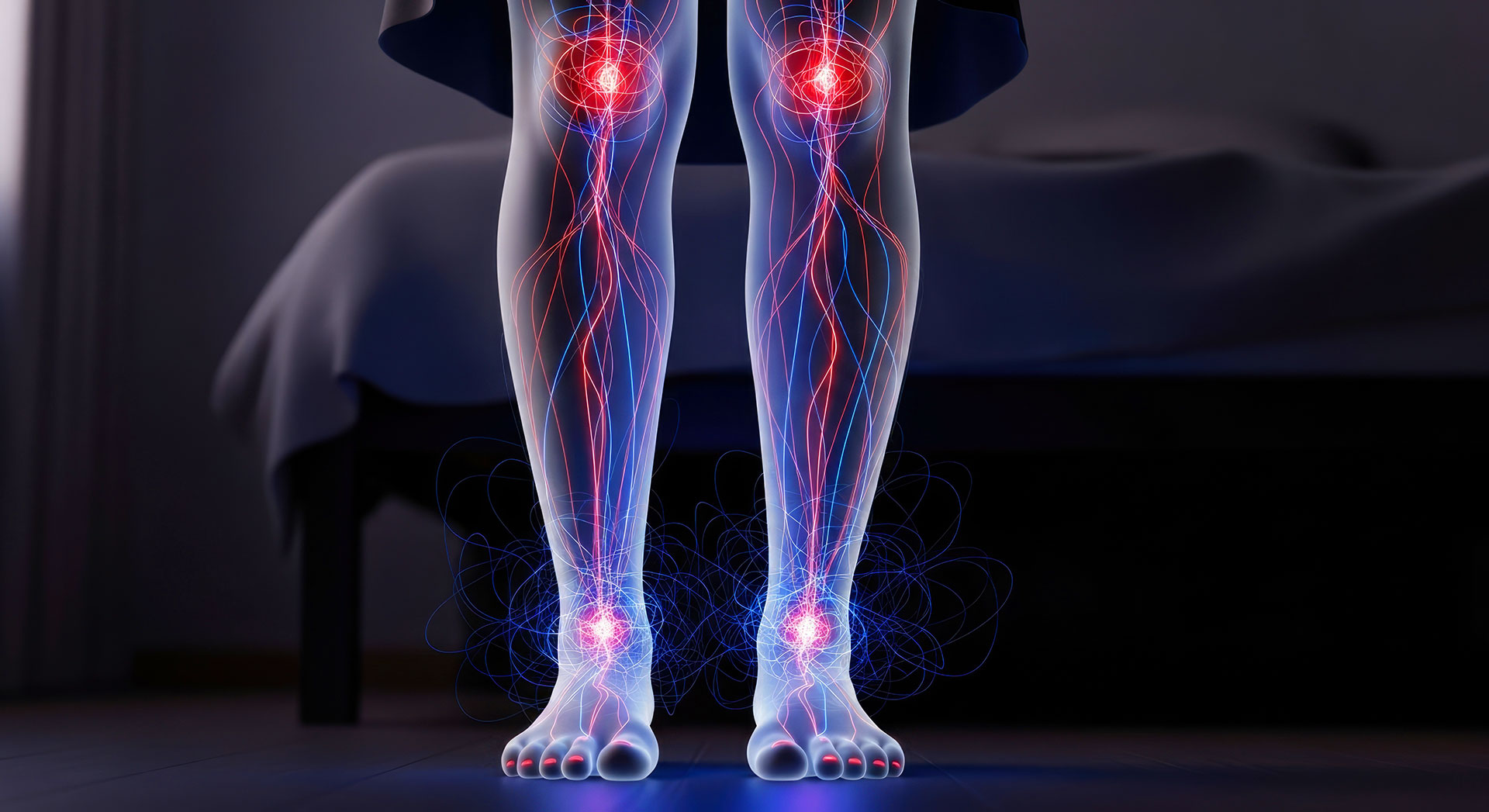
Restless Legs Syndrome (RLS)
Restless Legs Syndrome (RLS) is a condition that causes uncomfortable sensations in the legs and a strong urge to move them, especially while resting or trying to sleep. Many people describe the feeling as aching, tingling, crawling, or throbbing that improves temporarily with movement. While RLS can occur on its own, it may also be associated with chronic venous insufficiency, poor circulation, iron deficiency, or other underlying medical conditions. Identifying the cause is essential to choosing the most effective treatment and improving sleep quality.
Diagnosing Restless Legs Syndrome
Diagnosing Restless Legs Syndrome begins with a thorough evaluation of your symptoms and medical history. Your vein specialist or healthcare provider may recommend the following:
- Complete Medical History: Review of your overall health, medications, family history, and any chronic conditions.
- Blood Tests: To check iron levels and rule out conditions such as kidney disease or nutritional deficiencies.
- Sleep Study: Used when sleep disorders or periodic limb movements are suspected.
- Neurological Examination: To evaluate nerve function and rule out peripheral neuropathy or other neurological conditions.
If your symptoms are related to poor circulation or venous insufficiency, a Duplex ultrasound may also be recommended to evaluate blood flow and determine whether vein disease is contributing to your restless legs.
Causes and Triggers of Restless Leg
Several factors can contribute to Restless Legs Syndrome or make symptoms worse. Common causes and triggers include:
- Low iron levels or iron deficiency
- Pregnancy, particularly during the third trimester
- Certain medications, including some cold and allergy medicines
- Chronic venous insufficiency and poor circulation
- Periodic limb movement disorder
- Sleep disorders such as sleep apnea
- Neurological disorders affecting the nervous system
- Spinal cord disorders
- Family history or genetic factors
- Sleep deprivation and poor sleep habits
Because RLS may have multiple underlying causes, a comprehensive evaluation is important to identify the most appropriate treatment.
Treatment and Management Strategies
Treatment depends on the underlying cause and severity of your symptoms. If iron deficiency is identified, iron supplements may be recommended. Your healthcare provider may also adjust medications that could be triggering symptoms or prescribe medications that help regulate dopamine activity for more severe cases.
If chronic venous insufficiency is contributing to your restless legs, treating the underlying vein disease with minimally invasive procedures may significantly improve symptoms. Healthy sleep habits, regular exercise, hydration, and avoiding caffeine or other known triggers can also help manage RLS. Treatment costs vary depending on the recommended evaluation, testing, and individualized treatment plan.
Seeking Relief and Improving Sleep Quality
Improving sleep quality is an important part of managing Restless Legs Syndrome. Keeping a sleep diary can help identify patterns and triggers, while avoiding activities or substances that worsen symptoms may reduce nighttime discomfort.
Your healthcare provider may recommend additional diagnostic tools, including sleep studies, neurological examinations, or vein evaluations when poor circulation is suspected. At CURA Vein Doctors, we evaluate whether venous insufficiency is contributing to restless legs and develop personalized treatment plans designed to improve circulation, relieve symptoms, and support better long-term sleep and recovery.
Conclusion
Although Restless Legs Syndrome can significantly affect sleep and quality of life, effective treatment is available once the underlying cause is identified. Whether symptoms are related to iron deficiency, neurological conditions, or chronic venous insufficiency, early evaluation can lead to lasting relief. At CURA Vein Doctors, our experienced specialists provide comprehensive vein evaluations and personalized treatment plans to help patients reduce symptoms, improve circulation, and enjoy better sleep and overall well-being.