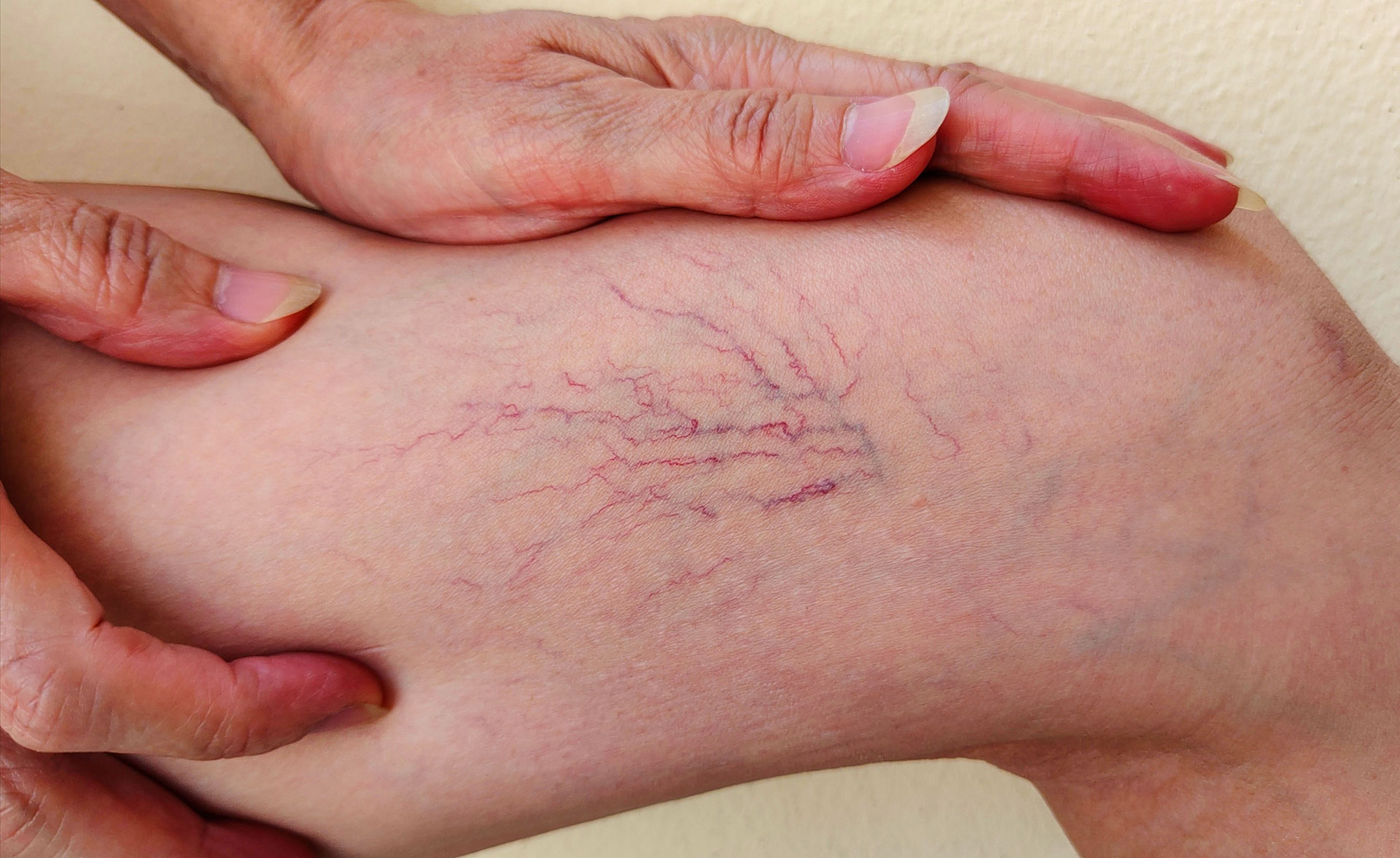
What Sets Spider Veins Apart?
Spider veins are small, damaged blood vessels that appear close to the skin’s surface. Smaller than varicose veins, they commonly develop on the legs and face and often appear as thin red, blue, or purple lines resembling spider webs or tree branches. While they are usually considered a cosmetic concern, spider veins may also indicate underlying venous insufficiency in some patients. A vein specialist can determine whether treatment is recommended based on your symptoms and overall vein health.
Twisted Veins and Spider Veins
Twisted veins, commonly called spider veins, are tiny blood vessels located just beneath the skin. They often form due to weakened vein walls or increased pressure within the veins, causing them to become more visible over time.
Although spider veins are generally painless, some individuals may experience mild aching, burning, or leg fatigue, especially after prolonged standing or sitting. Genetics, hormonal changes, pregnancy, aging, obesity, and occupations requiring long periods of standing can all contribute to their development. Early evaluation at CURA Vein Doctors can help identify any underlying vein disease and determine the most appropriate treatment.
Symptoms of Spider Veins
The most common symptom of spider veins is the appearance of small red, blue, or purple blood vessels on the skin. While many people have no physical symptoms, others may experience aching, heaviness, burning, itching, or mild swelling in the affected area, particularly after standing for long periods.
Seeking early treatment can help prevent spider veins from worsening and identify any underlying circulation problems before they progress.
Treatment Options
Lifestyle Changes
Simple lifestyle changes can help reduce the risk of developing new spider veins and prevent existing ones from worsening. These include:
- Maintaining a healthy weight
- Exercising regularly
- Avoiding prolonged sitting or standing
- Elevating your legs when possible
- Wearing compression stockings if recommended by your vein specialist
Laser Therapy and Intense Pulsed Light (IPL)
Laser therapy and Intense Pulsed Light (IPL) are non-invasive treatments that target small spider veins near the skin’s surface. The focused light energy causes the affected veins to gradually fade while preserving the surrounding healthy tissue. These treatments are most effective for small superficial veins and selected facial spider veins.
Sclerotherapy
Sclerotherapy is considered the gold standard treatment for spider veins. During the procedure, a specialized sclerosant solution is injected directly into the affected vein, causing it to collapse and gradually be absorbed by the body. Blood is naturally redirected through healthier veins, improving both circulation and the appearance of the treated area.
The procedure is performed in the office, requires little to no downtime, and is highly effective for treating spider veins. Depending on the number of veins treated, multiple sessions may be recommended to achieve optimal results. Treatment costs vary based on the extent of the veins being treated and your personalized treatment plan. Wearing compression stockings after treatment helps improve healing and enhances the effectiveness of the procedure.
Conclusion
Understanding spider veins begins with recognizing their causes, symptoms, and available treatment options. While lifestyle changes may help slow their progression, minimally invasive treatments such as sclerotherapy and laser therapy provide effective, long-lasting results for many patients. At CURA Vein Doctors, our experienced vein specialists provide personalized evaluations to determine the most appropriate treatment, helping patients improve both the appearance of their legs and their overall vein health.