
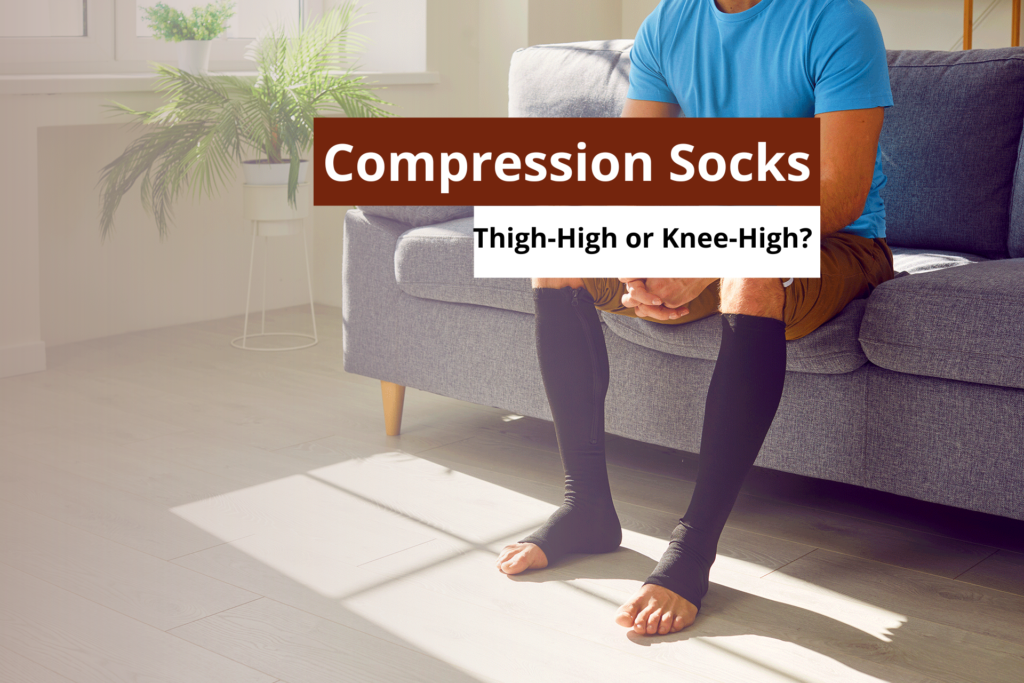
Reviewed by Dr. Amir Issa, MD, DABVLM, RPhS · CURA Vein Doctors · September 2026
Standing in the compression sock aisle, or scrolling through one online, it’s easy to freeze up. Knee-high or thigh-high? What pressure level? Does any of this actually matter, or is it all marketing? Some of it matters quite a bit.
What Do Compression Socks Actually Do?
Compression socks apply graduated pressure, tightest at the ankle and gradually looser going up the leg, which supports the calf muscle pump that pushes blood back toward the heart. This reduces swelling by moving fluid out of the soft tissue, eases the leg heaviness that comes with a long day on your feet, calms the aching leg pain that often follows, and lowers the risk of a blood clot forming during long periods of inactivity, like a flight. None of this repairs a damaged vein valve, it manages the downstream effects.
Thigh-High vs Knee-High Compression Socks: Which Should You Wear?
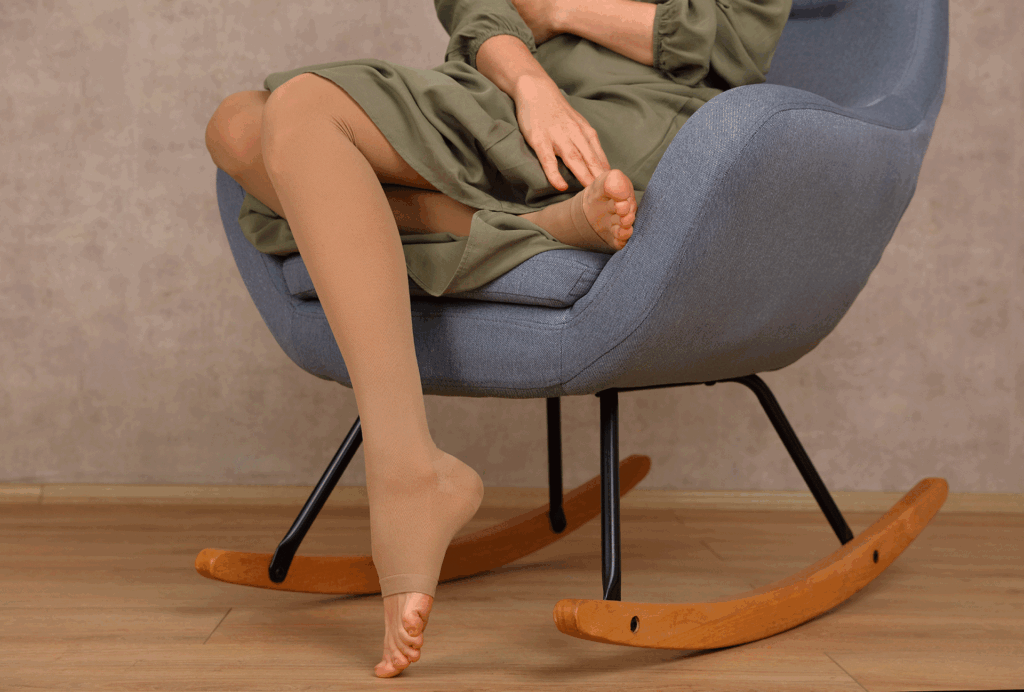
Knee-high compression socks work well for symptoms centered on the ankle and calf, while thigh-high socks are needed when the underlying vein problem, called reflux, extends above the knee. Length isn’t about strength, both come in the same pressure ranges, it’s about covering the area where your veins actually need support.
Thigh-High vs Knee-High: Quick Comparison
| Feature | Knee-High | Thigh-High |
|---|---|---|
| Coverage | Below the knee | Full thigh |
| Best for | Ankle or calf swelling, early venous insufficiency, travel | Reflux at or above the knee, post-procedure, severe CVI |
| Ease of use | Easier to put on, better daily compliance | Harder to apply, can roll down |
| Comfort for daily wear | Generally more comfortable | Can cause irritation, often needs donning aids |
| Typically recommended for | Mild to moderate symptoms | Moderate to severe symptoms, specific reflux location |
Is It Okay to Wear Thigh-High Compression Stockings?
Yes, for most people, with one important caveat: proper fit and pressure level matter more than length. Thigh-highs are safe and often medically necessary for reflux above the knee, but a poor fit or excessive pressure can restrict circulation, especially in people with peripheral artery disease. Getting properly measured, rather than guessing based on shoe or dress size, is what makes them safe.
Do Thigh-High Compression Socks Exist?
Yes, thigh-high compression stockings are a standard, widely available option, sold in the same pressure ranges as knee-highs. They’re just as legitimate a product as the knee-high version, though worn less often simply because they’re less convenient for everyday use.
Which Is Better, 15/20 mmHg or 20/30 mmHg Compression Socks?
| Pressure Level | Best For | Prescription Needed? |
|---|---|---|
| 8 to 15 mmHg | Mild tired legs, general prevention | No |
| 15 to 20 mmHg | Travel, pregnancy, mild swelling, early venous insufficiency | No |
| 20 to 30 mmHg | Moderate to severe varicose veins, post-sclerotherapy, noticeable swelling | Often recommended, sometimes required |
| 30 to 40 mmHg | Severe chronic venous insufficiency, lymphedema, significant ulcers | Yes, medical supervision required |
Neither is universally better, the right choice depends on symptom severity. 15 to 20 mmHg suits mild, early symptoms and everyday prevention. 20 to 30 mmHg is the step up for confirmed venous insufficiency or after a vein procedure. Going stronger than you need doesn’t add benefit and can feel unnecessarily restrictive, going weaker than you need won’t control symptoms.
What Stores Sell Thigh-High Compression Socks?
Milder compression, 8 to 15 or 15 to 20 mmHg, is widely available at pharmacies, medical supply stores, and major retailers both online and in person. Higher medical-grade compression, 20 to 30 mmHg and above, is typically sold through specialty brands, available through medical supply stores or directly through a vein clinic, where you can also get properly measured and fitted.
Can Compression Socks Prevent Vein Disease?
Not entirely, and this is a common misconception worth clearing up. Compression socks do reduce the risk of a clot forming during long flights or periods of inactivity. What they don’t do is stop chronic venous insufficiency from developing in the first place. They’re a tool for managing symptoms and lowering short-term risk, not a substitute for treating the underlying vein disease if you already have it.

What If You Can’t Tolerate Compression Socks?
Rolling, irritation, and the sheer effort of putting them on are the most common reasons people give up on compression, especially thigh-highs. A few tools make this easier before you write off compression entirely.
| Tool or Change | What It Helps With |
|---|---|
| Silk or slippery donning sleeves | Makes sliding the stocking on far easier, especially thigh-highs |
| Rubber donning gloves or a donning frame | Provides grip and leverage for people with limited hand strength |
| Silicone grip bands or body adhesive | Keeps thigh-highs from rolling down through the day |
| Lifestyle changes (activity, less salt, elevation) | Eases symptoms on days compression isn’t realistic |
When Should You See a Doctor of Veins About Compression Socks?
See a doctor of veins before starting higher-pressure compression, 20 to 30 mmHg or above, or if you’re not sure whether your symptoms need knee-high or thigh-high coverage. A vein specialist can pinpoint exactly where your reflux is located with a duplex ultrasound, so you’re not guessing at length or pressure on your own.
Frequently Asked Questions
Is it okay to wear thigh-high compression stockings?
Yes, as long as they’re properly fitted. A poor fit or excessive pressure is the actual risk, not the length itself.
Do thigh-high compression socks exist?
Yes, they’re a standard product sold in the same pressure ranges as knee-high socks, just less commonly worn day to day.
What stores sell thigh-high compression socks?
Pharmacies and major retailers carry milder options. Medical-grade compression is typically sold through specialty brands or fitted directly at a vein clinic.
Which is better, 15/20 mmHg or 20/30 mmHg compression socks?
Neither is universally better. 15/20 mmHg suits mild symptoms and prevention, while 20/30 mmHg fits moderate to severe venous insufficiency.
Guessing at pressure level and length is exactly what a duplex ultrasound eliminates. Call CURA Vein Doctors at +1 973-363-2029 or use the contact page to get properly evaluated and fitted.
References
- Duplex Ultrasound. MedlinePlus, National Library of Medicine. medlineplus.gov/ency/article/003433.htm
- Efficacy of Medical Compression Stockings Class I on the Reduction of Symptoms in Patients with Uncomplicated Varicose Veins. Vasa: European Journal of Vascular Medicine. econtent.hogrefe.com/doi/10.1024/0301-1526/a001163