
Published by CURA Vein Doctors · Updated September 2026 · Sourced from peer-reviewed vascular medicine research
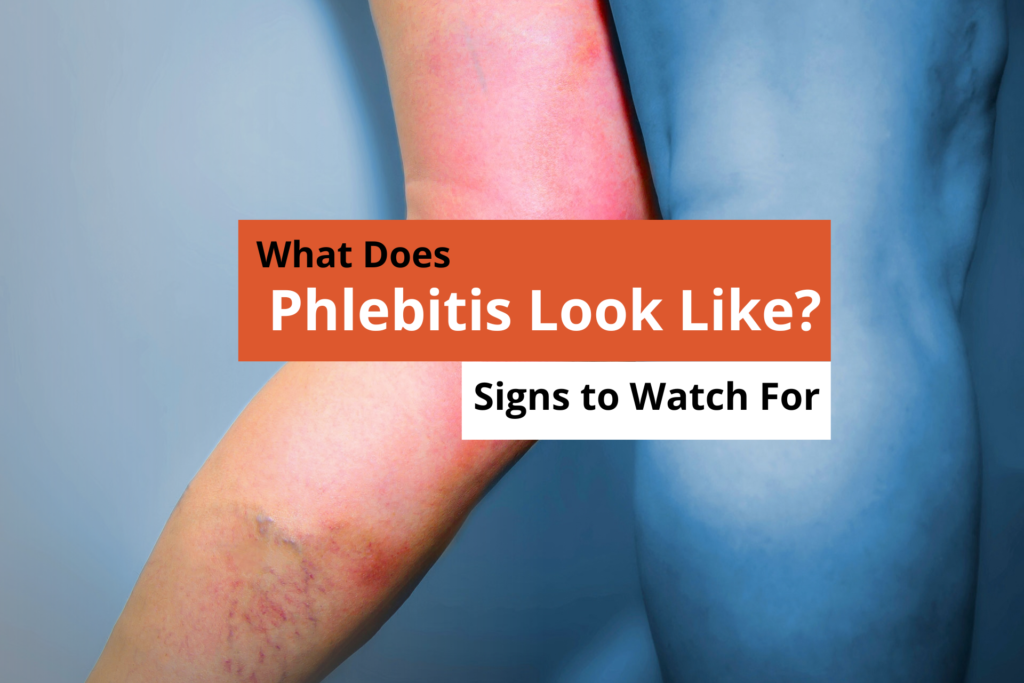
A red streak that wasn’t there yesterday. A vein that suddenly feels like a tight cord under your skin. Phlebitis has a distinct look and feel once you know what you’re seeing, and it’s often mistaken for something else entirely.
What Does Phlebitis Look Like?
What it looks like
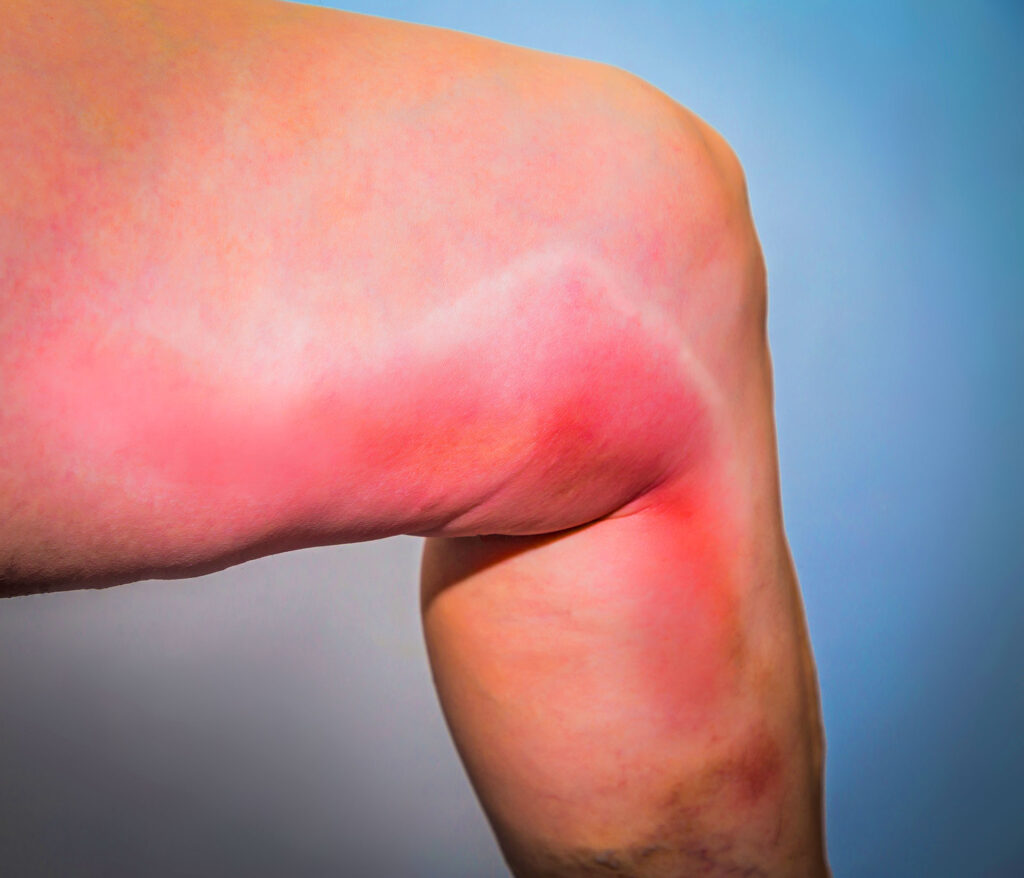
Phlebitis typically looks like a red or reddish-purple streak or patch following the path of a vein, often slightly raised and warm to the touch. The area may look swollen, and pressing on it usually reveals a firm, rope-like cord underneath the skin rather than the soft give of a normal bruise.
What Are the Warning Signs of Phlebitis?
- Redness or discoloration tracing the line of a vein
- Warmth over the affected area
- A firm, cord-like feeling when you press along the vein
- Tenderness or aching, worse with pressure
- Mild swelling localized to the vein itself, not the whole limb
What Can Be Mistaken for Phlebitis?
| Condition | How It Differs From Phlebitis |
|---|---|
| Cellulitis (skin infection) | Spreads more broadly, often with fever, less confined to a vein’s path |
| Simple bruise | Softer, no cord-like firmness, fades through color stages |
| Muscle strain | Pain with movement, no redness or warmth over a vein line |
| Allergic reaction or insect bite | Itchy, more diffuse, doesn’t follow a vein’s path |
| DVT (deep vein clot) | Affects the whole limb with deep swelling, not a surface streak |
How Do You Know If Phlebitis Is Getting Worse?
| Stage | What You’ll Notice |
|---|---|
| Improving | Redness fading, less tender, cord softening |
| Stable or mild | Symptoms unchanged for a few days, manageable discomfort |
| Worsening | Redness spreading beyond the original area, increasing pain, fever developing |
| Needs urgent care | Swelling of the entire limb, red streaking spreading rapidly, high fever |
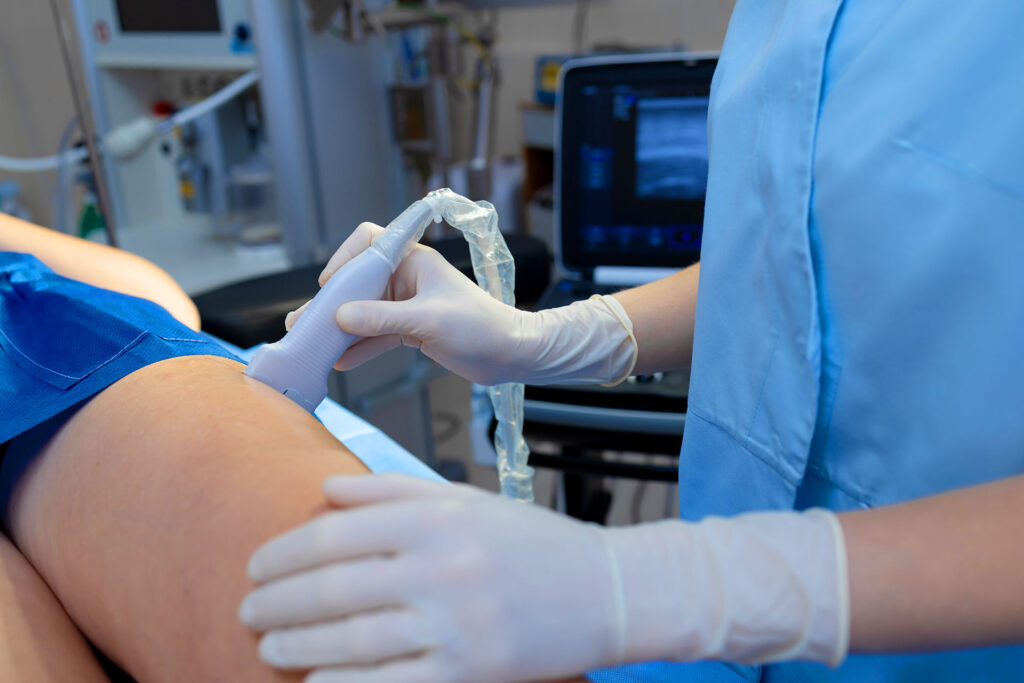
Research on superficial vein thrombosis found that nearly a quarter of patients had a concurrent deep vein clot at the time of diagnosis, which is why worsening or spreading symptoms are evaluated with ultrasound rather than assumed to be a simple skin-level problem.
What Is the Fastest Way to Get Rid of Phlebitis?
Fastest relief
For mild superficial phlebitis, warm compresses, over-the-counter anti-inflammatory medication, compression, and staying active speed relief fastest; most people notice improvement within a few days. There’s no true instant fix, but starting these steps right away, rather than waiting it out, shortens how long symptoms stick around.
When Should You See a Doctor of Veins About Phlebitis Symptoms?
See a doctor of veins if the redness spreads beyond the original area, the pain intensifies instead of easing, or you develop a fever. A vein specialist can confirm it’s phlebitis and not something else with a quick exam. For a full breakdown of phlebitis causes and treatment options, see our guide on phlebitis and what it means for your vein health.
Easing Phlebitis Symptoms at Home
At-home care
Warm compresses several times a day help ease pain and speed healing. Keep the leg elevated when resting, wear compression stockings if your doctor recommends them, and stay gently active rather than staying still. Avoid tight clothing over the area, and don’t massage or press hard on the inflamed vein.
Frequently Asked Questions
What are the warning signs of phlebitis?
Redness along a vein, warmth, tenderness, and a firm, cord-like feeling when you press on the area are the main warning signs.
How do you know if phlebitis is getting worse?
Spreading redness, increasing pain, and fever all signal it’s worsening. Swelling of the entire limb needs urgent evaluation rather than home care.
What can be mistaken for phlebitis?
Cellulitis, a simple bruise, muscle strain, and allergic reactions can all look similar. A vein specialist can tell them apart with a quick exam.
What is the fastest way to get rid of phlebitis?
Warm compresses, anti-inflammatory medication, compression, and staying active bring the fastest relief for mild cases, usually within a few days.
A red streak along a vein is worth a real look, not a guess based on a photo search. Call CURA Vein Doctors at +1 973-363-2029 or use the contact page to get it checked.
References
- Superficial Vein Thrombosis. StatPearls, National Library of Medicine. ncbi.nlm.nih.gov/books/NBK556017
- Migratory Thrombophlebitis. StatPearls, National Library of Medicine. ncbi.nlm.nih.gov/books/NBK547702