
Reviewed by Dr. Amir Issa, MD, DABVLM, RPhS · CURA Vein Doctors · October 2026
You work out to feel better. So why are the veins on your legs looking more prominent after leg day? The connection between exercise and varicose veins is misunderstood on most health websites, and bad advice is everywhere. Veins that swell visibly during a hard workout and varicose veins that develop over years of valve failure are two entirely different conditions. Understanding the difference determines what you can safely train, what needs adjustment, and what requires a vein specialist. Is the gym making your veins worse, or could skipping it be the bigger mistake?
Can You Get Varicose Veins From Working Out?
Short Answer
Exercise does not cause varicose veins. Varicose veins form when vein valves fail, driven by genetics, age, pregnancy, and prolonged standing, not physical activity. Low-impact exercise reduces venous pressure and helps slow symptom progression. The veins that appear during a hard workout are a normal, temporary vascular response, not varicose disease.
During intense exercise, superficial veins dilate to help dissipate heat and deliver more oxygen to working muscles. This is exercise-induced vasodilation, a normal physiological response that resolves within minutes of rest. Varicose veins result from a different mechanism entirely: when the one-way valves inside a vein stop closing properly, blood pools in the vessel and the wall stretches permanently over months and years. No amount of weightlifting creates that kind of structural failure.
What exercise can influence is how quickly symptoms worsen if valves are already compromised. The type, intensity, and technique of your training all play a role, and each one is worth understanding.
Myths and Facts About Exercise and Varicose Veins
Much of the confusion comes from conflating normal vascular physiology with chronic venous disease. These three myths are the most clinically consequential.
Exercises That Help Varicose Veins
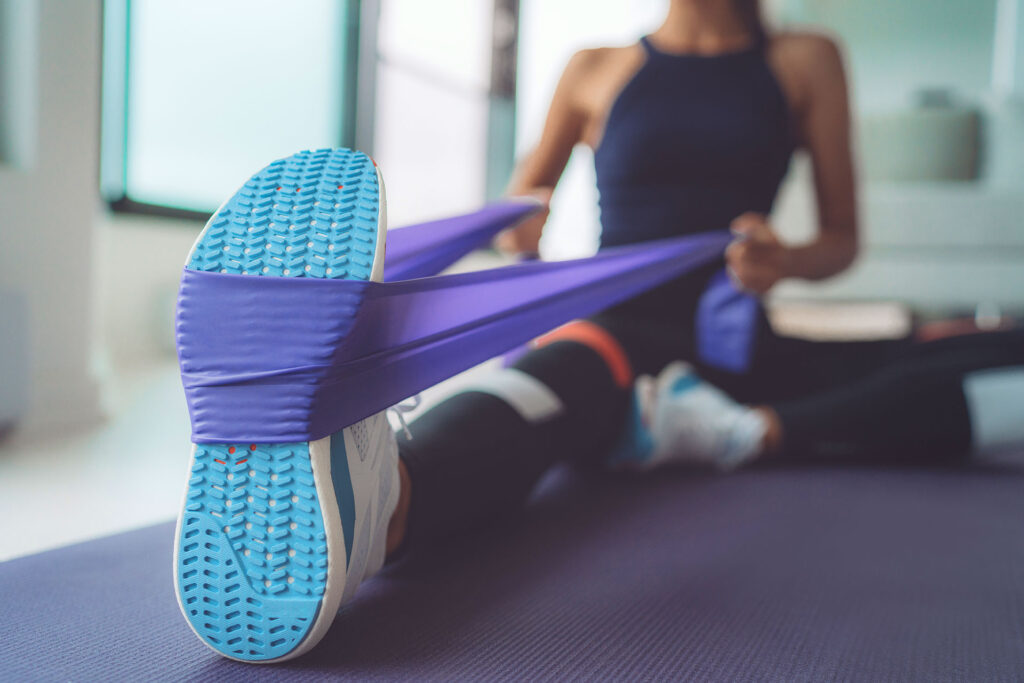
The calf muscles act as a secondary pump for venous blood, squeezing blood upward against gravity with each contraction. Exercises that activate this pump consistently are the most effective for managing varicose vein symptoms. A randomized controlled trial found that structured exercise training significantly improved calf muscle pump function in patients with chronic venous insufficiency, reducing ambulatory venous pressure and increasing ejection fraction.1 Kan and Delis confirmed these hemodynamic benefits extend to patients with active venous ulceration, the most advanced form of the disease.2
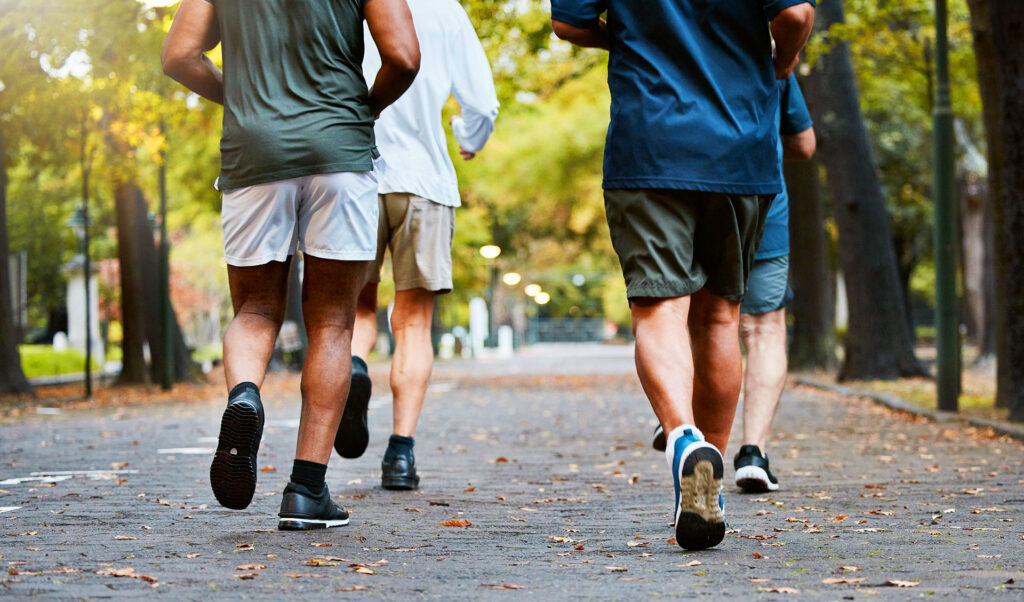
- Walking: The gold standard for venous health. Each step activates the gastrocnemius and soleus muscles, driving blood toward the heart. Even 30 minutes of brisk walking daily produces measurable reductions in ambulatory venous pressure.
- Swimming and aquatic exercise: Hydrostatic pressure from the water column assists venous return from the legs, reducing the load on already-stressed vessel walls. Particularly beneficial for patients with significant daily swelling.
- Cycling: Delivers calf pump activation without joint impact. Both outdoor cycling and stationary bikes are appropriate at any symptom severity level.
- Yoga and Pilates: Inversions and leg-elevation poses actively drain blood from the lower limbs. Avoid extended static standing poses without movement breaks.
- Calf raises: Direct, targeted calf pump activation. Easily performed at a desk or kitchen counter, making them a practical option during long periods of sedentary work.
Exercises to Modify, Not Avoid
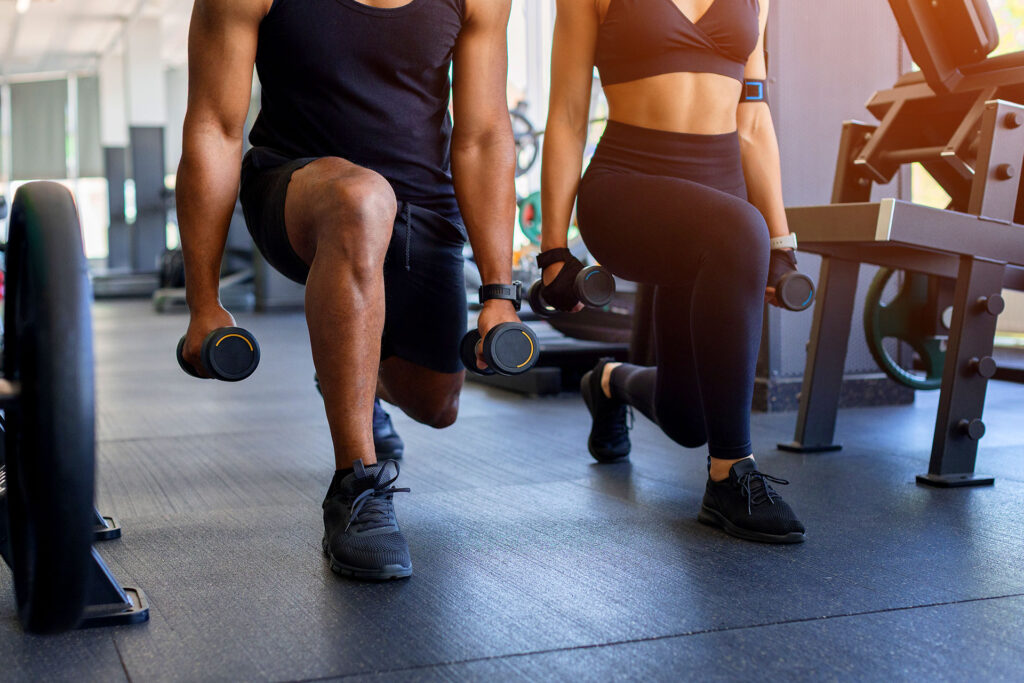
Heavy resistance training raises intra-abdominal pressure when performed with the Valsalva maneuver: forceful breath-holding against a closed glottis. This pressure transmits through the inferior vena cava to the iliofemoral veins, temporarily impeding venous return from the legs. In patients with already-compromised valves, this repeated pressure spike may accelerate symptom progression over time.
The answer is not to quit the weight room. It is technique. Exhaling through the exertion phase instead of holding your breath eliminates the Valsalva response and substantially reduces the venous pressure spike. Using moderate loads with higher repetitions, wearing graduated compression stockings during training, and keeping rest periods short enough to maintain calf pump activity all reduce the risk. Squats and deadlifts with proper breathing are not inherently off-limits. Long-distance running is safe with compression stockings. High-intensity interval training is appropriate for most patients with mild to moderate varicose veins.
Exercise Reference Guide for Varicose Veins
| Exercise | Impact Level | Effect on Venous Return | Guidance |
|---|---|---|---|
| Walking | Low | Significantly improves calf pump | Excellent, daily |
| Swimming | Low | Hydrostatic pressure assists return | Excellent |
| Cycling | Low | Good calf pump, no joint impact | Recommended |
| Yoga / Pilates | Low | Inversions actively drain leg veins | Recommended |
| Jogging / Running | Moderate | Activates calf pump; some impact | OK with compression stockings |
| HIIT / Group Aerobics | Moderate to High | Variable by exercise selection | OK with compression; limit floor work |
| Heavy Weightlifting | High | Valsalva raises venous pressure | Modify breathing + wear compression |
How to Exercise Safely With Varicose Veins
Wear compression stockings. Class 1 (15-20 mmHg) for low-impact activity; Class 2 (20-30 mmHg) for running, gym sessions, or any day with prolonged standing.3 Put them on before getting out of bed, while legs are least swollen. To reduce your risk of varicose veins progressing, pairing daily exercise with consistent compression is the strongest non-surgical approach available.
Modify breathing, not training. Exhale through the exertion phase of every lift. This eliminates the Valsalva response that spikes venous pressure in the legs. Moderate loads with controlled breathing are clinically preferable to maximal breath-hold sets.
Cool down deliberately. Elevate your legs 10-15 minutes after training. Skip hot showers and saunas immediately post-workout since heat worsens vein pooling. One massage caution: if one leg is swollen, warm, or red, do not massage it. Those are DVT warning signs, and massage over a clot can cause pulmonary embolism. Chronic stress also raises venous pressure, so recovery quality matters too.
Exercise After Varicose Vein Treatment
Return-to-exercise timelines vary by procedure. Most CURA patients undergoing endovenous ablation are encouraged to walk within 24 hours of treatment to promote inflammation-driven vein closure and reduce DVT risk. High-impact and high-resistance training requires a longer recovery window. The table below reflects general clinical guidance; your vein specialist will adjust based on vein diameter, symptom severity, and individual healing response.
| Activity | After Sclerotherapy | After EVLA / Thermal Ablation | After Phlebectomy |
|---|---|---|---|
| Walking | Immediately encouraged | Immediately encouraged | Within 24-48 hours |
| Low-impact exercise | 3-5 days | 3-5 days | 1-2 weeks |
| Swimming | 2 weeks | 2 weeks | 4 weeks |
| Jogging / gym cardio | 2-4 weeks | 2-4 weeks | 4-6 weeks |
| Heavy resistance training | 4-6 weeks | 4-6 weeks | 6-8 weeks |
Stop Exercising and Seek Care If You Notice These Signs
Most exercise with varicose veins is safe. Certain symptoms during or after a workout indicate a vascular emergency that requires same-day evaluation, not watchful waiting.
Warning Signs That Need Immediate Attention
Sudden sharp pain along a visible vein during or after exercise
One leg becomes noticeably more swollen, warm, or red than the other (possible deep vein thrombosis)
A varicose vein ruptures or bleeds through the skin, even if the bleeding seems minor
Chest pain or unexplained shortness of breath during or after a workout (possible pulmonary embolism)
Frequently Asked Questions
Do and don’ts in varicose veins?
Do: walk daily, wear graduated compression stockings during prolonged standing, elevate your legs when resting, and maintain a healthy weight. Avoid: standing or sitting in one position for more than 30 minutes without movement, crossing your legs for extended periods, and wearing tight waistbands or restrictive clothing that compresses the groin or abdomen.
What exercises should you avoid with varicose veins?
No exercise needs to be permanently avoided. Heavy lifting performed with breath-holding (the Valsalva maneuver) raises intra-abdominal pressure and temporarily impedes venous return from the legs. Modify technique rather than quit: use lighter loads, keep breathing controlled and continuous through the lift, and wear compression stockings. All low-impact exercise is actively recommended.
Can I go to the gym if I have varicose veins?
Yes. The gym is safe and beneficial for most people with varicose veins. Wear graduated compression stockings (20-30 mmHg), focus on low- to moderate-impact activities, and modify heavy lifts by maintaining steady breathing throughout the movement. Walking between sets and elevating your legs for 10 minutes after training also helps venous return. Keep in mind that a general ache after a workout isn’t always vein-related, and diffuse pain can have other causes worth looking into.
Do varicose veins ever go back to normal?
No. Once a vein valve fails and the vessel wall stretches, it does not self-repair. Symptoms can improve substantially with exercise, compression, and lifestyle changes, but the structural damage is permanent. Treatments including sclerotherapy, endovenous laser ablation, or ambulatory phlebectomy permanently remove the diseased vein.
Ready to Train Without the Worry?
A CURA specialist can assess your veins, confirm your training plan is safe, and discuss treatment options if exercise alone is not enough.
Schedule a ConsultationReferences
- Padberg FT Jr, Johnston MV, Sisto SA. Structured exercise improves calf muscle pump function in chronic venous insufficiency: a randomized trial. J Vasc Surg. 2004;39(1):79-87.
- Kan YM, Delis KT. Hemodynamic effects of supervised calf muscle exercise in patients with venous leg ulceration: a prospective controlled study. Arch Surg. 2001;136(12):1364-1369.
- Gloviczki P, et al. The care of patients with varicose veins and associated chronic venous diseases: Clinical practice guidelines of the Society for Vascular Surgery and the American Venous Forum. J Vasc Surg. 2011;53(5 Suppl):2S-48S.