

Reviewed by Dr. Amir Issa, MD, DABVLM, RPhS · CURA Vein Doctors · October 2026
Most leg swelling is not dangerous. Gravity, long flights, a salty meal, heat, or hours on your feet are common triggers that clear overnight. But the same symptom can be the first sign of a blood clot, a failing heart, or a kidney that has stopped filtering protein. Knowing which pattern you are dealing with is not a medical exercise. It is a survival skill.
Can Edema in Legs Kill You?
Edema itself does not kill. The underlying causes can. A deep vein thrombosis (DVT) can break off and travel to the lungs as a pulmonary embolism. Heart failure produces edema as a downstream sign of a pump that is failing. Kidney failure, liver failure, and severe infection each cause leg swelling as a late marker of systemic breakdown. The edema is the signal; the cause is the threat.
What Causes Pitting Edema in Legs?
Pitting edema forms when fluid accumulates in the interstitial tissue faster than the lymphatic system can drain it. Press a finger against the swollen area for five seconds, then release. A pit that remains is pitting edema. Skin that springs back immediately is non-pitting. The distinction drives the diagnostic workup because the two types have entirely different causes.
Pitting edema reflects a fluid pressure shift: high venous pressure forcing plasma into tissue (venous insufficiency, heart failure), or low plasma protein allowing fluid to escape freely (kidney failure, liver failure). Non-pitting edema reflects structural infiltration: lymphatic obstruction, thyroid disease, or lipedema, where protein-rich fluid or fat accumulates rather than free fluid. Elevation resolves the first type. It does nothing for the second.
Pitting edema is graded 1 through 4 based on the depth of the pit and how long it takes to rebound. The grade affects clinical urgency.
Pitting Edema Severity Scale
Monitor
Evaluate
24–48 hrs
Same day
| Grade | Pit depth and rebound time | What it suggests | Next step |
|---|---|---|---|
| Grade 1 | 2 mm; rebounds immediately | Mild; often positional or dietary | Monitor; elevate; reduce sodium intake |
| Grade 2 | 3–4 mm; rebounds within 15 seconds | Moderate; may be medication-related or early venous insufficiency | Primary care evaluation if persistent or new |
| Grade 3 | 5–6 mm; rebounds in up to 1 minute | Significant; systemic cause likely | Medical evaluation within 24–48 hours |
| Grade 4 | 8 mm or deeper; takes 2–5 minutes to rebound | Severe; associated with organ failure or acute venous obstruction | Same-day evaluation |
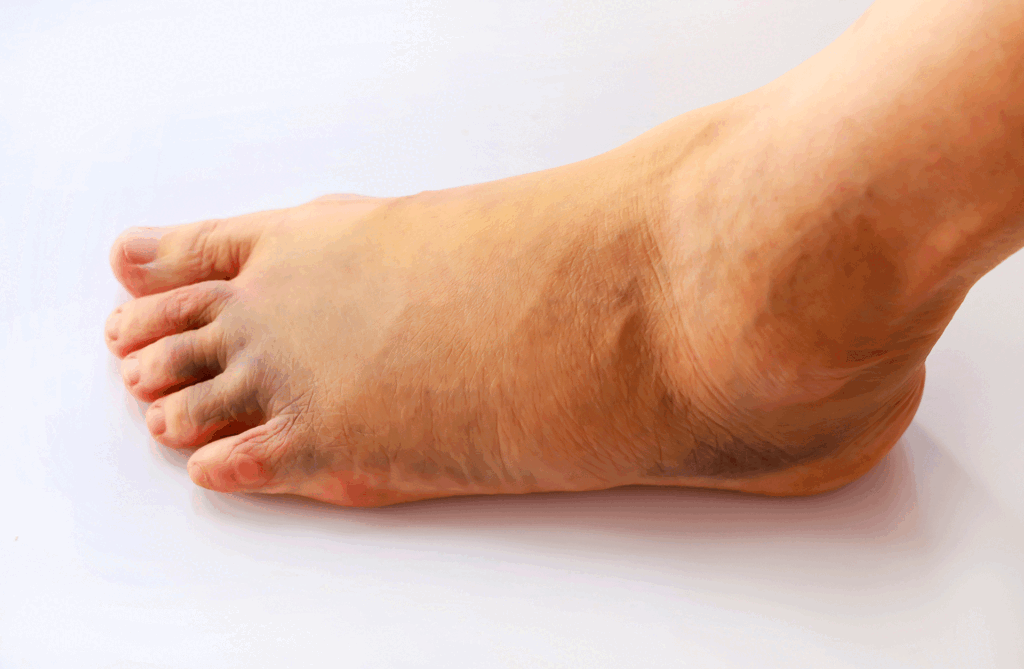
Is Pitting Edema Dangerous? Reading the Pattern
Bilateral pitting edema that builds through the day and clears overnight is most often benign: venous insufficiency, prolonged standing, heat edema, or a medication side effect. It is manageable. What changes the picture is the context around it. Both legs swelling rapidly over days, swelling in only one leg, or swelling combined with systemic symptoms each points to a different and potentially fatal mechanism.
| Swelling pattern | Most likely driver | Urgency |
|---|---|---|
| Both legs; builds through the day; clears overnight with elevation | Venous reflux or prolonged gravity-dependent positioning | Routine vascular evaluation; duplex ultrasound if persistent |
| Both legs; rapid onset over days; short of breath lying flat | Acute heart failure; fluid backing up from reduced pump output | Same-day evaluation; possible emergency room |
| Both legs; swollen face in the morning; foamy urine | Kidney failure with protein loss; low albumin allows free fluid escape | Same-day evaluation |
| Both legs with abdominal distension and yellowing of skin or eyes | Liver failure; low albumin production and elevated portal pressure | Same-day evaluation |
| One leg only; calf tender, warm, or visibly larger than the other | Deep vein thrombosis; venous outflow obstruction | Emergency evaluation; same day |
| One leg only; no pain; enlarged surface veins present for years | Chronic venous reflux with progressive valve failure | Vascular evaluation; not emergency but needs imaging |
Organ failure and leg swelling: the three patterns
Heart failure: bilateral leg edema + shortness of breath lying flat (orthopnea) + neck vein distension. Worsens with activity. Kidney failure: bilateral leg edema + facial swelling in the morning + foamy urine from protein loss. Liver failure: bilateral leg edema + abdominal fluid (ascites) + jaundice. Any of these combinations warrants same-day evaluation, not dietary adjustment or compression alone.
DVT and the Path to Pulmonary Embolism
Unilateral leg swelling is a venous emergency until proven otherwise. A deep vein thrombosis blocks outflow from the affected limb, producing swelling, warmth, leg pain, and sometimes surface vein distension. Up to 30% of proximal DVTs (above the knee) will shed a thrombus fragment that travels to the pulmonary circulation. Pulmonary embolism causes approximately 100,000 deaths annually in the United States, making DVT one of the highest-stakes diagnoses in outpatient medicine.
The Wells clinical prediction score assigns pre-test probability to suspected DVT based on active cancer, recent immobilization, localized tenderness, and asymmetric swelling. A patient with one swollen leg and any of those risk factors has a high pre-test probability. Wells and colleagues validated this framework across thousands of patients in a landmark 2003 New England Journal of Medicine study. The practical message: do not wait for symptoms to escalate. A unilateral swollen leg needs same-day vascular imaging.
Conditions that produce progressive leg swelling beyond acute DVT include chronic venous insufficiency and post-thrombotic syndrome. Understanding the types of venous disease that cause leg swelling clarifies which presentations require structural treatment and which respond to compression alone.

Is Subcutaneous Edema Dangerous?
Subcutaneous edema refers to fluid in the tissue layer beneath the skin. When it pits, the cause is pressure-driven. When it does not pit, the tissue contains protein-rich fluid, fat, or structural infiltration that does not shift with gravity or elevation. Non-pitting leg edema is most commonly lymphedema, lipedema, or myxedema from untreated hypothyroidism. Compression therapy is approached differently for each, and diuretics make lymphedema worse.
Non-pitting edema is not acutely fatal, but it is not harmless. Lymphedema progresses to skin fibrosis and chronic wound risk without treatment. Myxedema signals untreated thyroid disease with cardiac consequences. The absence of pitting does not mean the cause can be ignored. It means a different workup is needed.
Call 911 or go to the ER if you notice any of these:
- Sudden swelling in one leg with calf pain, warmth, or redness (possible DVT)
- Leg swelling with chest pain, sudden shortness of breath, or rapid heartbeat (possible pulmonary embolism)
- Rapidly worsening bilateral leg swelling with inability to lie flat without breathlessness (acute heart failure)
- Leg swelling appearing after surgery, hospitalization, a long-haul flight, or prolonged bed rest
- Swelling with fever, red streaking along the skin, or skin that is hot to touch (infection or cellulitis)
Do not wait for these to worsen. Each represents a potentially fatal mechanism in motion.

Frequently Asked Questions
How to tell if leg swelling is serious?
One swollen leg, swelling that does not clear overnight with elevation, or swelling paired with shortness of breath or calf warmth are all serious. Any of those warrants same-day evaluation.
What organ failure causes leg swelling?
Heart failure, kidney failure, and liver failure all cause bilateral pitting leg edema. Each has a tell: orthopnea for the heart, foamy urine for the kidneys, jaundice and abdominal swelling for the liver.
How do you know if leg swelling is heart related?
Cardiac edema is bilateral and worsens with activity rather than gravity alone. The tell is orthopnea, needing two or more pillows to breathe at night, combined with rapid unexplained weight gain over days.
What is the best treatment for swollen legs?
It depends on the cause. Venous insufficiency responds to compression and ablation. Cardiac edema needs diuretics. Lymphedema needs manual drainage, not diuretics. Diagnosis first, treatment second.
Not sure what is causing your leg swelling?
A duplex ultrasound takes 30 minutes and gives a definitive answer on venous reflux, DVT risk, and blood flow patterns in both legs. CURA Vein Doctors offers vein assessments covered by most major insurance when venous symptoms are affecting daily function.
References
- Ely JW, Osheroff JA, Chambliss ML, Ebell MH. Approach to leg edema of unclear etiology. J Am Board Fam Med. 2006;19(2):148–160.
- Wells PS, Anderson DR, Rodger M, et al. Evaluation of D-dimer in the diagnosis of suspected deep-vein thrombosis. N Engl J Med. 2003;349(13):1227–1235.
- Gheorghiade M, Zannad F, Sopko G, et al. Acute heart failure syndromes: current state and framework for future research. Circulation. 2005;112(25):3958–3968.