
Reviewed by Dr. Amir Issa, MD, DABVLM, RPhS · CURA Vein Doctors · October 2026
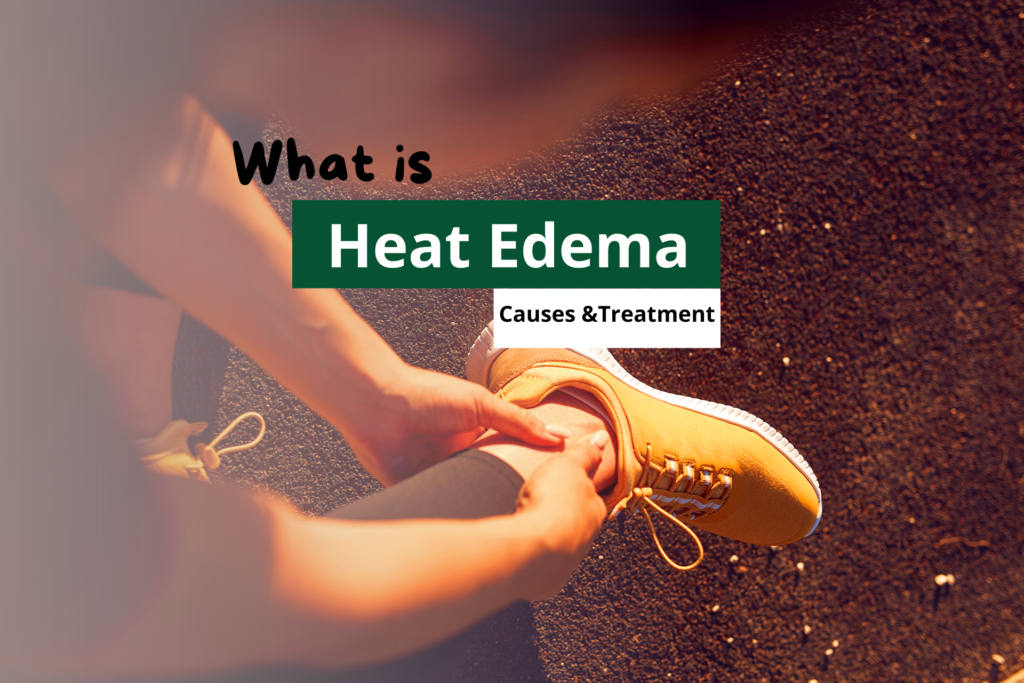
You spent a few hours outside. The heat index was high. By the time you got home and pulled off your shoes, your ankles had puffed up as you’d been on a twelve-hour flight. You don’t remember twisting anything. The swelling showed up on both feet at once. It is a little uncomfortable but not painful.
That is heat edema: a predictable physiological response to high temperatures. The body dilates blood vessels near the skin to shed heat, hydrostatic pressure builds in the small leg capillaries, and fluid leaks into the surrounding tissue. Gravity does the rest.
The question that actually matters is not whether it is heat edema. It is whether heat edema is all it is. For many people, it is. For others, summer is simply when a vein problem that has been building quietly becomes impossible to ignore.
What Is Heat Edema?
Heat edema is a mild, temporary swelling of the feet, ankles, and lower legs that occurs during exposure to hot weather or high temperatures. It is caused by heat-induced vasodilation, which shifts fluid from the capillaries into surrounding tissue. Both legs are usually affected equally and swelling typically resolves within days with elevation and cooling.
Why Does Heat Make Your Legs Swell?
The mechanism is simple but not often explained. When your body gets hot, it needs to move heat out through the skin. To do that, it opens up peripheral blood vessels, routing more blood toward the surface of the arms and legs. More blood in smaller vessels means higher pressure inside those vessels. That pressure pushes fluid through the capillary walls and into the soft tissue around them.
Gravity then does what gravity always does. The fluid settles in the lowest points: the feet, ankles, and sometimes the calves. It pools faster if you are standing or sitting still, because the calf muscle pump that normally pushes blood back up toward the heart is not firing.
This response is described in emergency medicine as a normal physiological response to thermal stress, not a disease. The standard clinical reference, Tintinalli’s Emergency Medicine, classifies it as self-limited, managed with elevation and support hose, and specifically notes that diuretics are not appropriate because they risk making dehydration worse without addressing the underlying fluid shift.
Who Is More Likely to Get It?
The body needs several days to acclimatize. Sweat volume increases, plasma volume adjusts, and fluid shifts become more controlled. First exposure is the worst.
Vascular tone decreases with age, leaving less resistance to the vasodilatory effect of heat. Summer ankle swelling in this group is common and often dismissed as expected. It deserves a vein check.
Pregnancy raises venous pressure in the pelvis, restricting return flow from the legs before heat is even a factor. Add vasodilation and the swelling can be significant, though usually still benign.
The calf muscle pump pushes venous blood back up toward the heart. When it is not firing, pressure in the leg veins rises even without heat. Heat compounds what is already elevated.
This group is different. Vein valves are already failing and blood is already pooling. Heat does not cause the problem; it reveals it. Swelling tends to be heavier, may be asymmetric, and does not fully clear overnight. For this group, summer is a diagnostic opportunity, not a seasonal inconvenience.
Heat Edema vs. Chronic Venous Insufficiency: One Table That Separates Them
The surface picture can look identical. Both cause swollen ankles in summer. The difference is in the history, the pattern, and what happens outside of hot weather. A duplex ultrasound resolves any ambiguity, but these features usually point clearly before you get to imaging.
| Feature | Heat edema | Chronic venous insufficiency |
|---|---|---|
| When swelling appears | During or after heat exposure | Year-round; noticeably worse in summer |
| Both legs affected equally | Yes, typically | Not always; often worse in one leg |
| Skin changes near the ankle | None | Discoloration, dryness, or thickened skin |
| Heaviness or aching outside of summer | Rare | Common, especially by end of day |
| Resolves overnight with feet up | Yes, usually fully | Partially; recurs the next day |
| Visible varicose or spider veins | Not required | Often present, but not always |
| Key diagnostic test | Clinical assessment | Duplex ultrasound of the leg veins |
The most telling question is the last one before summer: were your legs heavy or achy after a long day of standing, even in mild weather? If yes, the heat is not the cause. It is a trigger revealing something already there.
How Long Will Heat Edema Last?
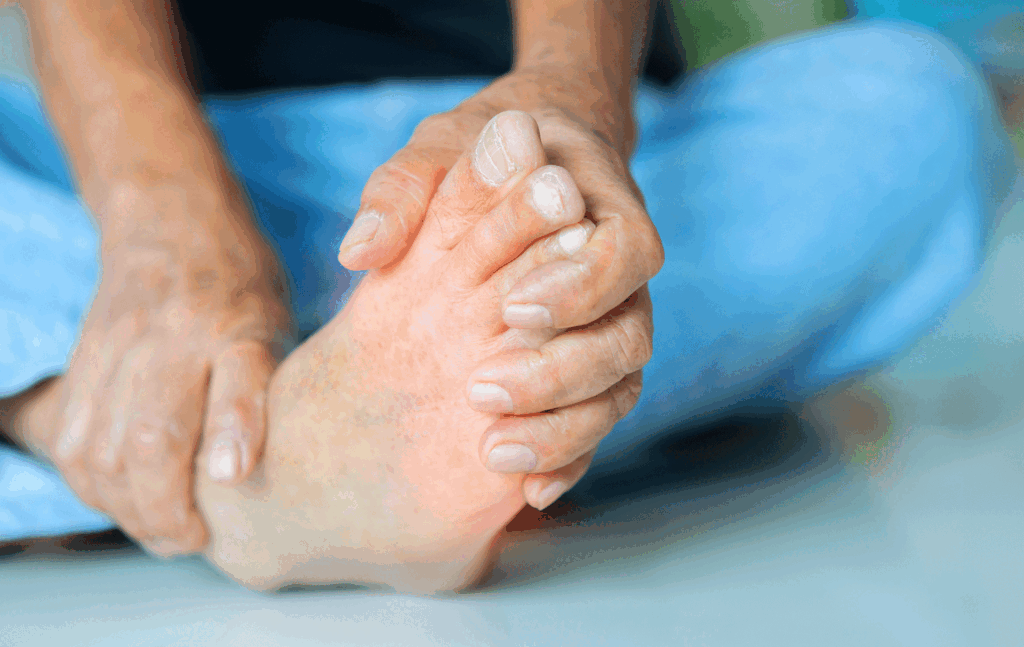
In an otherwise healthy person, heat edema resolves within a few days of returning to a cooler environment and using basic measures: elevation, compression, movement, adequate water. Most people notice improvement overnight. Full resolution usually follows within two to five days.
It does not get progressively worse over days. If leg swelling keeps building rather than easing, something else is driving it.
Seven to ten days without meaningful improvement is the threshold for getting a proper evaluation. Swelling that is asymmetric from the start, that is tender rather than just uncomfortable, or that comes with skin redness or warmth in one leg should prompt an earlier visit, as those features can indicate a deep vein clot rather than a heat response.
Heat Edema Treatment: What Actually Works
The treatment for pure heat edema is not complicated. The goal is to reverse what created the fluid shift: get the legs elevated, get the calf pump moving, and reduce the hydrostatic pressure that is keeping fluid in the tissue.
| Approach | What to do | Why it works |
|---|---|---|
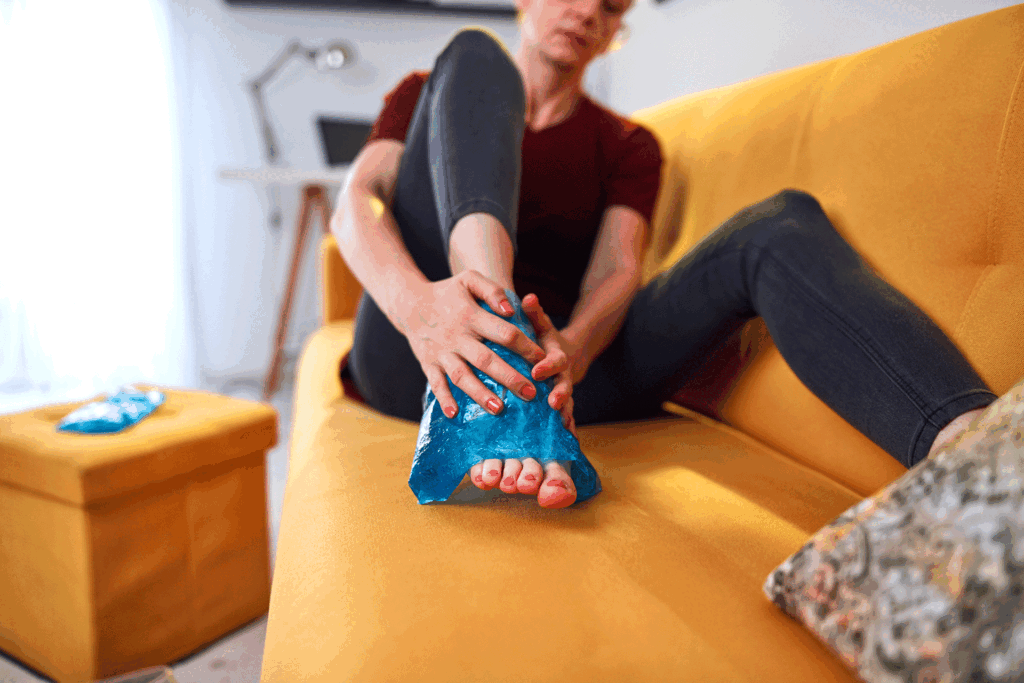
| Elevation | Raise feet above heart level (propped on pillows, not just a footstool) for 20 to 30 minutes at a time | Reverses the hydrostatic gradient; fluid drains back into the circulation |
| Compression stockings | 15 to 20 mmHg for heat edema alone; 20 to 30 mmHg if vein disease is suspected; wear during the day, not at night | Externally counters the raised capillary pressure; reduces fluid leakage throughout the day |
| Hydration | Drink consistently through the day rather than in large amounts at once; reduce added salt | Dehydration raises aldosterone, which causes the kidneys to retain sodium and water, worsening swelling rather than improving it |
| Movement breaks | Short walk or 20 calf raises every 45 to 60 minutes when sitting or standing | Activates the calf muscle pump, reducing venous pressure peaks in the lower leg |
| Avoid diuretics | Unless prescribed for another condition, avoid water pills | Tintinalli’s Emergency Medicine specifically states diuretics are not beneficial for heat edema and risk compounding dehydration |
| Medical review | If swelling is asymmetric, painful legs, or does not improve within 7 to 10 days | Rules out DVT, CVI, cardiac, renal, or lymphatic causes |
The compression evidence is robust. A 2021 Cochrane systematic review of 12 trials (2,918 participants) found that post-flight leg oedema scores averaged 2 to 3 out of 10 in compression wearers versus 6 to 9 in controls.
Five Signs Your Swelling Is More Than Just Heat
- Swelling is significantly worse in one leg than the other
- The swollen leg is tender, warm, or red in a specific area
- Skin near your inner ankle looks brownish, leathery, or itchy, even outside of summer
- Your legs feel heavy or achy on cool evenings, not only in the heat
- The swelling has not meaningfully improved after several days of elevation and compression
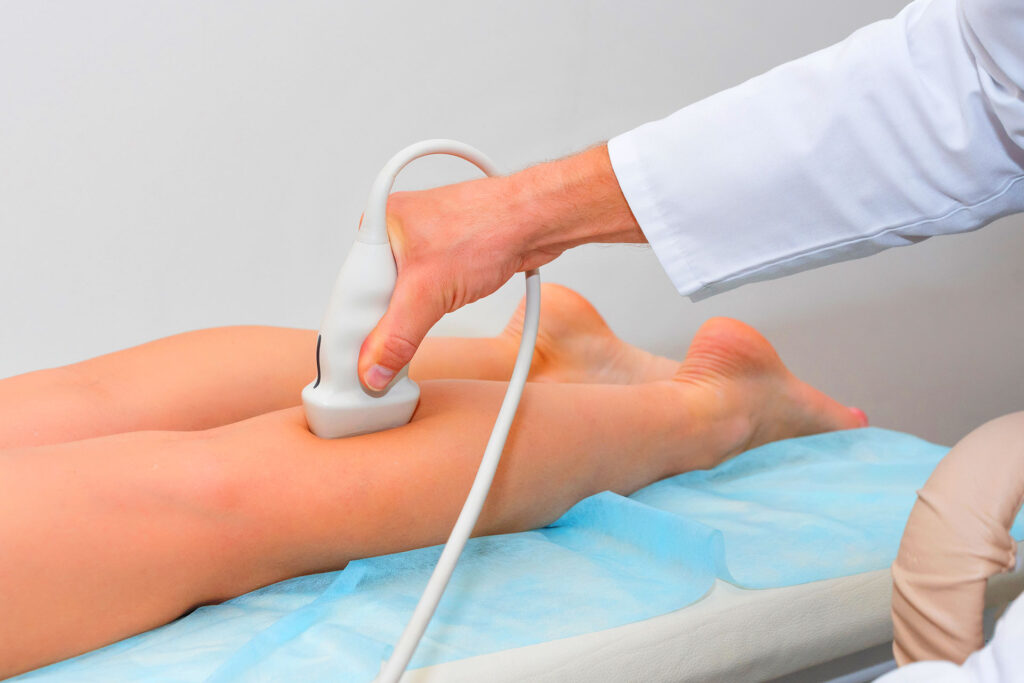
Any of these should prompt a vein evaluation rather than watchful waiting. A duplex ultrasound takes 30 minutes and answers the question definitively.
Is Heat Edema Dangerous?
On its own, no. Heat edema in an otherwise healthy person is not a sign of organ disease, does not cause lasting damage to the veins, and resolves without medical intervention in most cases. It is the same category of heat illness as heat cramps or mild heat exhaustion: uncomfortable, self-correcting, and managed without hospitalization.
The danger is in misclassifying something as heat edema when it is not. A first presentation of chronic venous insufficiency in summer gets dismissed as seasonal swelling for years. Meanwhile the venous pressure is silently damaging the skin above the ankle, setting up for discoloration, dermatitis, or eventually an ulcer that takes months to heal.
Seek Same-Day Evaluation For:
- Sudden swelling, warmth, or redness in one leg with tenderness along the calf (possible DVT)
- Swelling with shortness of breath, chest discomfort, or a racing heartbeat (possible cardiac cause)
- Swelling with decreased urination, puffiness around the eyes, or frothy urine (possible kidney or liver involvement)
- A leg that turns cold, pale, or mottled (possible arterial problem)
- Any new, significant swelling in a person with a known history of heart failure, liver disease, or kidney disease
Compression Socks for Heat Edema: How to Choose
Not all compression is the same. The pressure is measured in millimeters of mercury (mmHg), and it is graduated, meaning tightest at the ankle and loosening toward the knee. That gradient is what does the work: it pushes fluid upward rather than just squeezing it flat.
For pure heat edema in someone without diagnosed vein disease, 15 to 20 mmHg is enough. It reduces daily fluid buildup without requiring a prescription or custom fitting. For anyone with confirmed venous insufficiency, or with persistent or recurring swelling, 20 to 30 mmHg is the standard clinical range. Anything above 30 mmHg should be fitted under medical supervision.
Knee-high compression works for most heat edema situations. Thigh-high is appropriate when swelling extends above the knee or when vein disease in the thigh is confirmed. The most common mistake is wearing them to bed: they counter upright, gravity-driven pressure and are not needed when you are lying down.
Put them on before getting out of bed, while fluid has not yet had time to pool. Pulling them on after two hours of standing does less.
Frequently Asked Questions
How do I get rid of heat edema?
Elevate your legs above heart level, wear graduated compression stockings during the day, take movement breaks every 45 to 60 minutes, and stay well hydrated. Avoid diuretics unless a doctor prescribes them for another condition; they can worsen dehydration without addressing the fluid shift that heat edema creates. Most cases clear within two to five days.
Is heat edema serious?
Heat edema on its own is not dangerous and resolves without medical treatment in most people. The more important question is whether heat edema is masking an underlying vein condition. Swelling that is asymmetric, persistent beyond a week, or accompanied by skin changes near the ankle warrants a vein evaluation.
Does drinking more water prevent heat edema?
Yes, adequate hydration helps. When the body is dehydrated, it releases hormones that cause sodium and fluid retention, which worsens swelling. Consistent water intake throughout the day, combined with reduced salt intake, prevents the secondary fluid retention that compounds heat edema.
How long will heat edema last?
Most heat edema improves noticeably overnight with elevation and clears fully within two to five days with consistent management. If swelling is not meaningfully improving after seven to ten days, or if it is worsening rather than stabilizing, a medical evaluation is appropriate to rule out chronic venous insufficiency or other causes.
Next Step
If your summer swelling is following the pattern of CVI rather than simple heat edema, a duplex ultrasound is the only test that confirms or rules out reflux in the leg veins. CURA Vein Doctors offers vein assessments covered by most major insurance when venous symptoms are affecting daily function. Book a vein assessment online or call +1 973-363-2029.
References
- Waters T. Heat Emergencies. In: Tintinalli JE, Stapczynski JS, Ma OJ, et al., eds. Tintinalli’s Emergency Medicine: A Comprehensive Study Guide, 7th ed. New York: McGraw-Hill Medical; 2011:1339–1344.
- Clarke MJ, Broderick C, Hopewell S, Juszczak E, Eisinga A. Compression stockings for preventing deep vein thrombosis in airline passengers. Cochrane Database of Systematic Reviews. 2021;4(4):CD004002.
- Eberhardt RT, Raffetto JD. Chronic venous insufficiency. Circulation. 2014;130(4):333–346.