
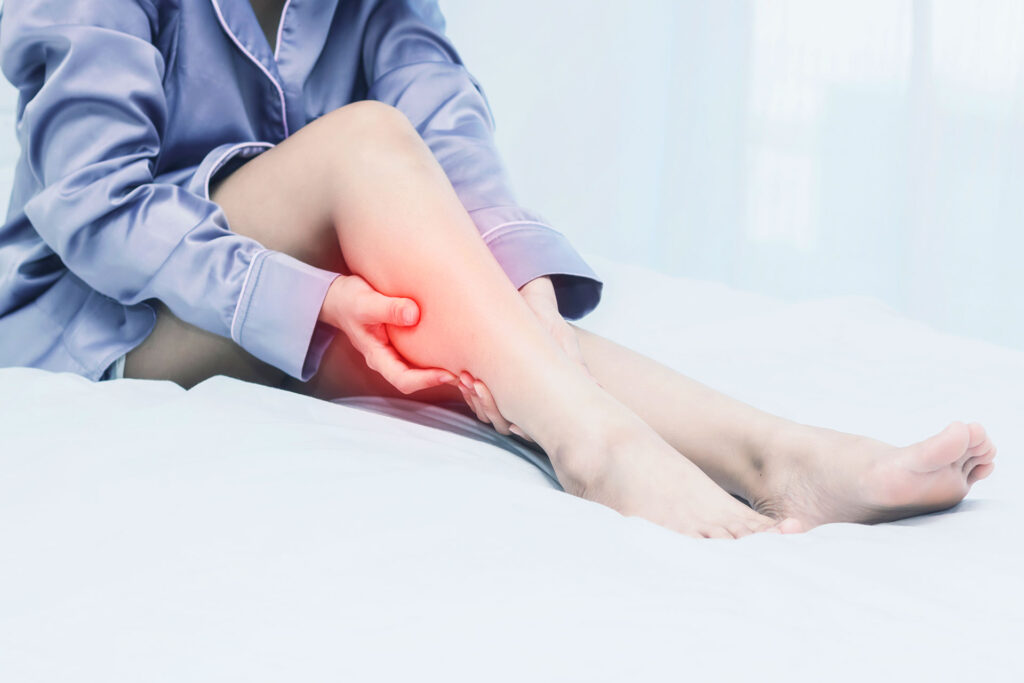
Leg pain at night is one of those symptoms that gets dismissed for too long. People write it off as tiredness, a hard day, or getting older. Then it keeps happening. Same time every night. Same location. Same dull ache that does not fully go away.
Night is when your vascular system stops having gravity on its side. Arterial flow slows. Venous return loses the mechanical help it gets from walking and muscle contraction. Problems that stay quiet during the day surface clearly in the dark. That is why the timing of leg pain matters as much as the pain itself.
What Causes Aches and Pains in Legs at Night?
Aches and pains in legs at night are most commonly caused by chronic venous insufficiency, where failing vein valves allow blood to pool in the lower leg after a full day of activity. Other causes include peripheral arterial disease, restless leg syndrome, nerve compression, and electrolyte deficiencies. The pattern, timing, and location of the pain are the key signals that point to the cause.
Why Night Makes It Worse
During the day, walking and standing keep the calf muscle pump active. Every step you take squeezes blood upward through the deep veins toward the heart. The moment you lie down and stop moving, that pump stops. Blood that was being pushed upward during the day now sits in the lower leg without the mechanical assistance it relied on.
For people with healthy veins and arteries, this shift causes no symptoms. For people with venous insufficiency, arterial disease, or nerve compression, lying still removes the one thing compensating for the underlying problem. The ache builds. Sleep becomes fragmented. The same cycle restarts the following night.

The 7 Most Common Causes of Nighttime Leg Aches
| Cause | Typical Pain Pattern | Key Associated Signs | Urgency |
|---|---|---|---|
| Chronic venous insufficiency | Heavy, aching, builds through the day, worse at night | Visible veins, ankle swelling, skin changes | See a specialist |
| Varicose veins | Throbbing, aching after standing, worse when lying down | Twisted visible veins, leg heaviness | See a specialist |
| Peripheral arterial disease | Cramping during walking, burning at rest or night | Cool feet, hairless legs, slow-healing wounds | Urgent evaluation |
| Restless leg syndrome | Crawling, urge to move, worse at rest | Temporary relief from movement | See a doctor |
| Nerve compression (lumbar) | Shooting or burning down one leg, positional | Back pain, numbness, weakness | See a doctor |
| Electrolyte deficiency | Sudden cramps, diffuse location | Poor diet, diuretic use, fatigue | Blood test first |
| Deep vein thrombosis | Persistent calf pain, ache that does not ease | One-sided swelling, warmth, redness | Same-day evaluation |
Chronic Venous Insufficiency: The Most Underdiagnosed Cause
Most patients who come in with recurring nighttime leg pain have some degree of chronic venous insufficiency. The valves inside their leg veins have weakened. Blood flows backward instead of upward. It pools in the calf and lower leg throughout the day, creating a buildup of metabolic waste in the surrounding tissue that produces aching, heaviness, and cramping, particularly after 8 or more hours of activity.
The pattern is predictable. Legs feel fine in the morning. By mid-afternoon they feel heavy. By evening they ache. Lying down does not relieve it immediately because the pooled blood does not drain quickly once you are horizontal. It takes 20 to 30 minutes of elevation before real relief sets in.
Many patients with this pattern have no visible varicose veins yet. The valve failure is happening inside the great saphenous vein, deep under the skin, before any surface signs appear. A duplex ultrasound catches it years before varicose veins become visible.
Varicose Veins and Nighttime Pain
When varicose veins are already visible, nighttime aching is one of the most common complaints. Blood has been pooling in those distended, stretched vessels all day. The vein walls are under chronic pressure. When you lie down, the sudden change in position produces a throbbing or aching sensation that can take an hour or more to subside.
Elevation helps. Compression during the day reduces the pooling. But neither addresses the underlying valve failure driving the accumulation. Patients who treat their varicose veins consistently report significant improvement in nighttime symptoms, often more than they expected from a vascular procedure.
Peripheral Arterial Disease: A Different Kind of Night Pain
PAD produces a distinct nocturnal pattern. During the day, the pain comes on during walking and eases with rest. At night, rest eliminates gravity’s help in pushing arterial blood into the legs. The pain becomes constant, burning, and concentrated in the foot or lower leg. Some patients get temporary relief by hanging the leg over the side of the bed, letting gravity restore a small amount of flow.
This is a meaningful clinical sign. A leg that hurts less when dangled over the bed edge points strongly to arterial insufficiency rather than venous disease. The two conditions require entirely different diagnostic and treatment approaches.
⚠️ Burning foot pain at night that eases when you dangle your leg over the bed is a sign of critical limb ischemia.
This is advanced peripheral arterial disease and a vascular emergency. Tissue can begin to die without adequate arterial flow. Do not manage this with pain medication alone. Get vascular evaluation urgently.

Restless Leg Syndrome and the Venous Link
Restless leg syndrome produces an uncomfortable urge to move the legs, particularly at night. It is classified as a neurological condition but has a well-documented association with venous insufficiency. A proportion of patients whose RLS symptoms are attributed to neurology actually have underlying CVI driving the sensations from the vascular side, while others experience severe nerve-based discomfort that responds to advanced therapies like peripheral nerve stimulation for chronic pain.
Studies have shown that treating venous insufficiency in patients with both conditions reduces RLS symptoms in a significant percentage of cases. This connection is frequently missed in general practice because the two conditions are managed by different specialists and rarely evaluated together.
What to Tell Your Doctor About Nighttime Leg Pain
The details matter more than people realize. Before your appointment, note the following:
- Which leg, or both
- Exactly where in the leg: foot, calf, thigh, or diffuse
- What time it starts and whether it wakes you from sleep
- Whether elevation helps, and how quickly
- Whether movement relieves it temporarily
- Whether you have visible veins, swelling, or skin changes
- Any medications you take, particularly diuretics, statins, or blood pressure drugs
This information narrows the likely cause before any tests are run and makes the diagnostic process faster and more accurate.
How Nighttime Leg Aches Are Investigated
A vein specialist will typically start with a duplex ultrasound to assess valve function and rule out DVT. If arterial disease is suspected, an ankle-brachial index takes about 10 minutes and gives a clear picture of arterial flow to the feet. Blood tests check for electrolyte imbalances, thyroid function, kidney disease, and glucose.
Most of this happens in a single outpatient visit. Results are available the same day. The diagnostic picture is usually clear enough to begin treatment planning immediately.
✓ Elevation and compression are the most effective home measures while awaiting evaluation. Elevate both legs above heart level for 20 minutes before bed. Wear graduated compression socks during the day. These reduce venous pooling and often cut nighttime symptom intensity noticeably within a week.
FAQ: Aches and Pains in Legs at Night
Why do my legs ache and hurt so bad at night?
Night removes the mechanical assistance that walking provides for venous return and arterial circulation. Conditions like venous insufficiency, varicose veins, and peripheral arterial disease become more symptomatic once you stop moving. Blood that has pooled in the leg all day, or tissue deprived of adequate arterial flow, produces aching that builds as the night progresses.
What disease starts with achy legs?
Chronic venous insufficiency, peripheral arterial disease, restless leg syndrome, lumbar spinal stenosis, diabetes, and early kidney disease all commonly present with leg aching as an early symptom. The timing, location, and associated signs help differentiate between them. A vascular evaluation with duplex ultrasound covers the most common causes in a single appointment.
What deficiency causes leg pain at night?
Magnesium deficiency is the most common nutritional driver of nocturnal leg cramps and aching. Low potassium and calcium also contribute to muscle dysfunction. Vitamin D deficiency can cause diffuse musculoskeletal pain in the legs. Diuretics and certain blood pressure medications deplete magnesium and potassium and are a frequent overlooked cause in older adults.
Are aching legs a symptom of anything?
Yes. Persistent, patterned leg aching is a symptom, not a stand-alone condition. It points to an underlying cause that ranges from venous insufficiency and varicose veins to arterial disease, nerve compression, or systemic conditions like diabetes and kidney disease. Aching that follows a consistent pattern, particularly at night or after prolonged standing, warrants evaluation rather than ongoing management with pain relievers.
Legs That Ache Every Night Deserve More Than Pain Relief
At CURA Vein Centers, we evaluate nighttime leg pain from a venous perspective. If chronic venous insufficiency is the cause, we find it fast and treat it directly. Free consultations available across New Jersey.