
Vein disease is not one condition. It is a family of related but distinct disorders that range from a mild cosmetic inconvenience to a genuine medical emergency, and the gap between those two ends is wider than most people realize. Understanding the different types of vein disease helps you recognize what is actually happening in your body and decide whether watchful waiting or a specialist’s office is the right next move. Here are the six most common types, what drives them, and what each one looks and feels like.
What Are the Main Types of Vein Disease?
The six main types of vein disease are varicose veins, spider veins, chronic venous insufficiency, deep vein thrombosis, superficial vein thrombophlebitis, and pelvic venous insufficiency. They vary from cosmetic to life-threatening. Most share a common root in valve dysfunction or venous pressure, but they differ in location, depth, symptoms, and urgency.
How the Venous System Fails
Healthy veins move blood upward against gravity using one-way valves that open to let blood through and snap shut to stop it from drifting back. When those valves weaken, blood flows backward. It pools. Pressure builds inside the vein wall. Over time, that pressure distorts the vein, leaks fluid into surrounding tissue, and creates the visible and symptomatic changes that define vein disease.
That same mechanism, valve failure and pooling, underlies most of the conditions below. What separates them is how deep in the venous system the failure occurs and how long it has been progressing.
1. Varicose Veins
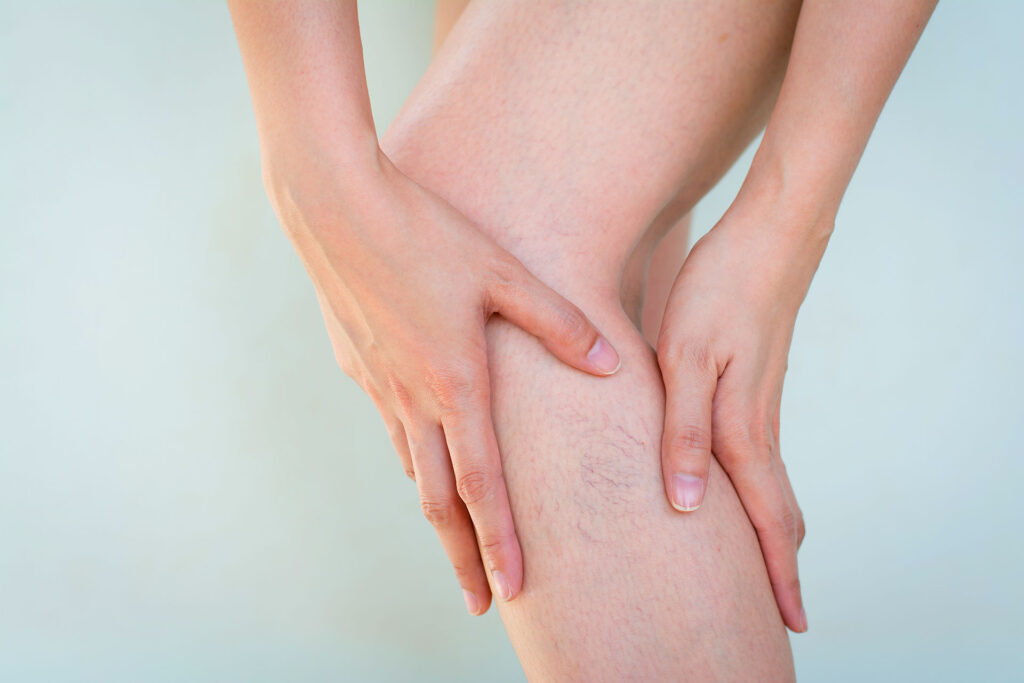
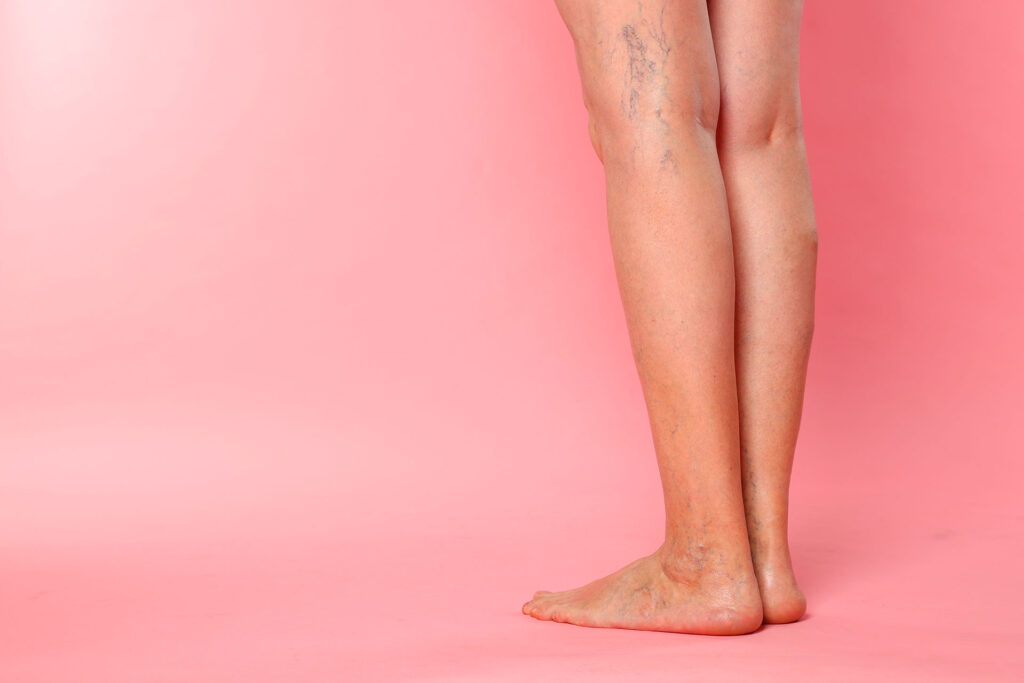
Varicose veins are the most recognizable of all the types of vein disease. They appear as enlarged, raised, twisted vessels running along the inner thigh, calf, or behind the knee. When assessing these symptoms, it is important to account for the fact that knee pain often stems from vascular issues, which can be difficult to distinguish from joint-related soreness. Dark blue or purple in color, they often feel like a cord beneath the skin and look rope-like under the surface.
The cause is valve failure inside the great or small saphenous vein. Blood pools in the superficial venous system, the pressure builds, and the vein wall stretches outward. The condition is progressive. Left alone, varicose veins do not stabilize. They worsen as additional valves come under increasing pressure and eventually fail themselves.
Symptoms to watch for:
- Aching or throbbing that intensifies through the day
- Leg heaviness, particularly in the afternoon
- Ankle swelling that clears overnight and returns the next day
- Itching or burning skin along or near the vein
- Nighttime calf cramps
Treatment today is largely minimally invasive. Endovenous laser ablation and radiofrequency ablation close the diseased vein from the inside under local anesthesia, with most patients resuming normal activity the same day or within 24 hours.
2. Spider Veins
Spider veins occupy the cosmetic end of the spectrum. They are small, flat or barely raised vessels sitting just beneath the skin surface, branching outward in thin red, blue, or purple threads. The web-like pattern they form gives them their name. They are common on the legs, face, and ankles.
Unlike varicose veins, spider veins do not involve major valve failure. They form when small capillaries and venules sustain damage from pressure, hormonal changes, prolonged standing, or localized trauma. Most people with spider veins feel nothing. In rare cases, mild burning or itching appears near the affected area.
Spider veins are treated with sclerotherapy, a direct injection that collapses the vessel, or surface laser therapy for very small or facial veins. They are rarely a medical concern on their own, though their presence near the ankle alongside swelling or skin changes warrants a duplex ultrasound to check for underlying venous pressure.
3. Chronic Venous Insufficiency
Chronic venous insufficiency, or CVI, represents the longer arc of untreated vein disease. It develops when sustained valve failure keeps venous pressure in the leg elevated day after day, month after month. The result is not just a visual problem. The surrounding tissue bears the consequences.
CVI moves through recognizable stages. Early on, the legs swell and ache. Over time, the skin around the lower leg and ankle begins to show the accumulated damage of persistent pressure.
Signs that CVI has progressed beyond typical varicose vein symptoms:
- Brownish or reddish skin staining near the inner ankle, caused by iron deposits from leaked red blood cells
- Skin that feels tight, thickened, or leathery
- Persistent swelling that no longer fully resolves overnight
- Shallow, slow-healing open sores near the ankle, known as venous ulcers
CVI is treatable. Endovenous ablation addresses the underlying valve failure, and compression therapy manages daily symptoms. Venous ulcers require wound care alongside vein treatment. The critical point is that CVI does not reverse on its own. It advances steadily without intervention.
4. Deep Vein Thrombosis
Deep vein thrombosis sits at the dangerous end of the types of vein disease. A clot forms inside one of the deep veins of the leg, usually in the calf or thigh. The clot itself is painful and disabling. But the real danger is what happens if it detaches and travels to the lungs. A pulmonary embolism can be fatal, and it can develop without much warning.
DVT does not always announce itself loudly. Some cases produce significant swelling and pain. Others cause minimal discomfort while the clot grows silently.
Warning signs that require same-day evaluation:
- Sudden swelling in one leg, particularly the calf or thigh
- Pain or tenderness when walking or flexing the foot
- Warmth and redness along the inner leg
- A tight or full feeling that appeared rapidly
If shortness of breath, chest pain, or rapid heartbeat accompanies any of these, call emergency services immediately. Treatment involves anticoagulant medication and, in severe cases, catheter-directed clot removal in a hospital setting.
5. Superficial Vein Thrombophlebitis
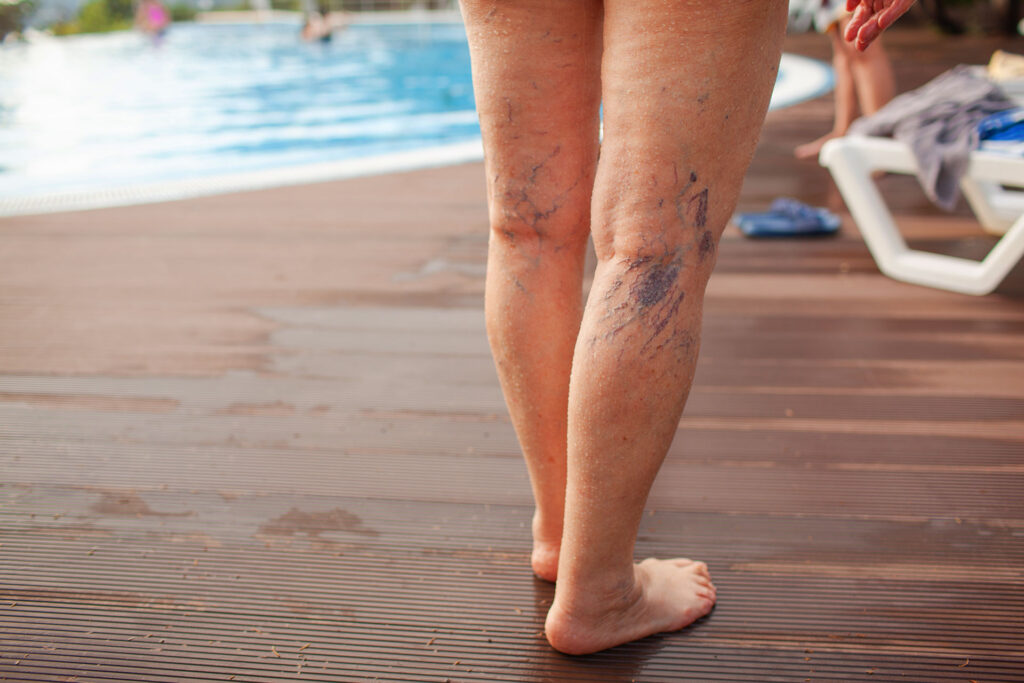
Superficial vein thrombophlebitis is inflammation of a vein near the skin surface, typically combined with a small clot forming inside it. The vein becomes red, warm, hard, and tender along a visible segment. It often feels like a cord under the skin in an area that was previously soft.
It most commonly develops inside varicose veins, where slow, turbulent blood flow creates favorable conditions for clotting. It can also occur after an IV line, a minor leg injury, or prolonged immobility.
Most cases are not life-threatening, but they warrant medical attention. Clots near the junction between a superficial and deep vein carry a risk of extending into the deep venous system, which would change the situation significantly. Anti-inflammatory medication, warm compresses, and compression stockings manage most cases, but imaging is often recommended to confirm the clot has not extended deeper.
6. Pelvic Venous Insufficiency
Pelvic venous insufficiency, also called pelvic congestion syndrome, is one of the least discussed types of vein disease despite being a significant cause of chronic pelvic pain in women. It occurs when the ovarian or pelvic veins develop valve failure, allowing blood to pool in the pelvic region rather than return toward the heart.
The pooling enlarges the pelvic veins and creates persistent, dull pressure that worsens with prolonged standing, walking, or sitting. It typically improves when lying down. It affects an estimated 30 percent of women with chronic pelvic pain, yet it is frequently misattributed to gynecological or musculoskeletal causes for years before the vascular origin is identified.
Symptoms include:
- Chronic pelvic aching, often worse later in the day
- Pain during or after sexual intercourse
- Painful periods
- Varicose veins appearing on the thighs, buttocks, or vulva without an obvious explanation
- Bladder irritation or urinary urgency
Treatment is a minimally invasive catheter-guided procedure called ovarian vein embolization, performed under imaging guidance. The diseased veins are sealed, which reduces pooling and relieves pressure. Recovery is typically short, and most patients notice meaningful symptom improvement within weeks.
How the Six Conditions Compare
| Condition | Location | Main Symptom | Medical Urgency | Primary Treatment |
|---|---|---|---|---|
| Spider veins | Superficial skin | Cosmetic, occasional burning | Low | Sclerotherapy, laser |
| Varicose veins | Superficial venous system | Aching, heaviness, swelling | Moderate | Ablation, sclerotherapy |
| Chronic venous insufficiency | Superficial and perforator veins | Skin changes, ulcers, persistent swelling | High | Ablation, compression, wound care |
| Superficial thrombophlebitis | Superficial veins | Red, tender, hard vein segment | Moderate to high | Anti-inflammatories, imaging |
| Deep vein thrombosis | Deep venous system | Sudden swelling, calf pain, warmth | Emergency | Anticoagulants, hospital care |
| Pelvic venous insufficiency | Pelvic and ovarian veins | Chronic pelvic pain, worse with standing | Moderate | Ovarian vein embolization |

Frequently Asked Questions
When to Worry About Spider Veins?
Spider veins alone rarely require urgent attention. Concern is warranted when they appear near the ankle alongside swelling or skin discoloration, when they arrive with aching or heaviness, or when they develop suddenly and spread rapidly. In those situations, an underlying venous pressure problem may be driving their appearance, and a duplex ultrasound is the right next step.
Does Venous Insufficiency Cause Leg Pain?
Yes. Venous insufficiency causes aching, heaviness, throbbing, and burning in the lower leg, typically worsening through the day and easing with elevation. The pain comes from sustained pressure on the tissue surrounding the failing veins, compounded by inflammation. Nighttime cramps are also common. The pattern is predictable: worse by evening, better by morning.
What Causes Varicose Veins in the Legs?
Varicose veins form when the one-way valves inside the saphenous veins weaken and stop closing properly. Blood drifts back down instead of returning to the heart, pools in the vein, and raises internal pressure until the vein wall stretches and distorts. Genetics, age, pregnancy, prolonged standing, and excess weight all accelerate this process.
How to Improve Venous Insufficiency in Legs?
Compression stockings, regular calf-muscle exercise, and leg elevation reduce symptoms meaningfully. Implementing an acute pain care plan helps organize these conservative measures and provides a framework for tracking daily symptom relief. While these measures manage the condition, they do not correct the underlying valve failure. Endovenous ablation addresses the root cause by closing the diseased vein permanently. Most patients notice substantial symptom improvement within days of the procedure.
Can I Work a Desk Job With Venous Insufficiency?
Yes, but prolonged sitting restricts calf muscle pump activity and worsens pooling. The practical solution is movement breaks every 45 to 60 minutes, calf raises at your desk, and wearing medical-grade compression stockings throughout the workday. Keeping the legs elevated when possible during the day also reduces afternoon swelling and discomfort.
Can I Stand All Day With Varicose Veins?
Standing all day accelerates varicose vein progression and worsens symptoms significantly. If your work requires it, compression stockings are essential, anti-fatigue mats help reduce static load on the legs, and short walking breaks activate the calf pump and push pooled blood upward. Treatment is worth considering sooner rather than later for people in standing occupations.