
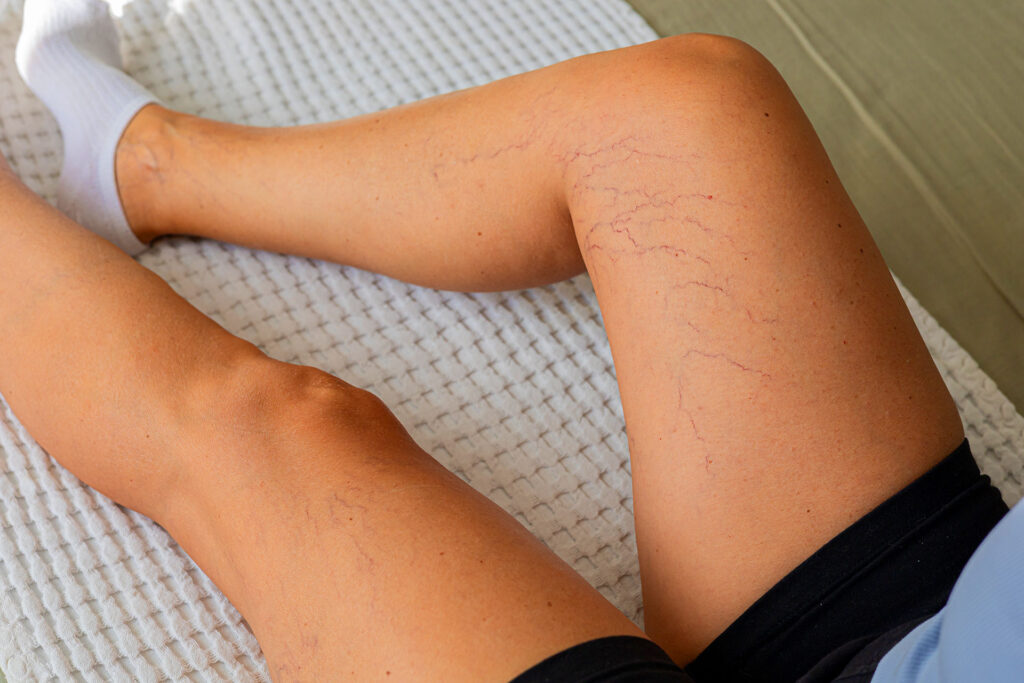
Spider veins show up without much warning. One day, your legs look normal. A few months later, there is a cluster of fine red or purple lines spreading out near your ankle or behind your knee. They are not usually painful. They are just there, and they tend to spread. Most people want them gone. Some wonder if they signal something more serious. The answer to both questions depends on what is driving them, and that is worth understanding before you decide on a treatment path.
How to Eliminate Spider Veins on Legs Safely
To eliminate spider veins on legs, the two most effective clinical options are sclerotherapy, which injects a solution directly into the vessel causing it to collapse, and laser therapy, which uses focused light energy to close fine surface vessels. Both work well when matched to the right vein type. Sclerotherapy clears leg spider veins more consistently across most patients and skin types.
What Spider Veins Actually Are
Spider veins are dilated capillaries and small venules sitting close to the skin surface. They branch outward in patterns that resemble a spider web or tree root, which is where the name comes from. They range in color from red to blue to purple, depending on the size of the vessel and how much blood is pooling inside it.
They form when the wall of a small vessel weakens, and the vessel expands under pressure. That pressure comes from somewhere. Sometimes it is just genetics and age. Sometimes it is a sign that the deeper venous system is not draining properly.
That distinction matters for treatment. Spider veins fed by normal circulatory variation respond well to surface treatment and tend to stay clear. Spider veins fed by underlying venous insufficiency respond to surface treatment initially, then return because the pressure driving them has never been addressed.
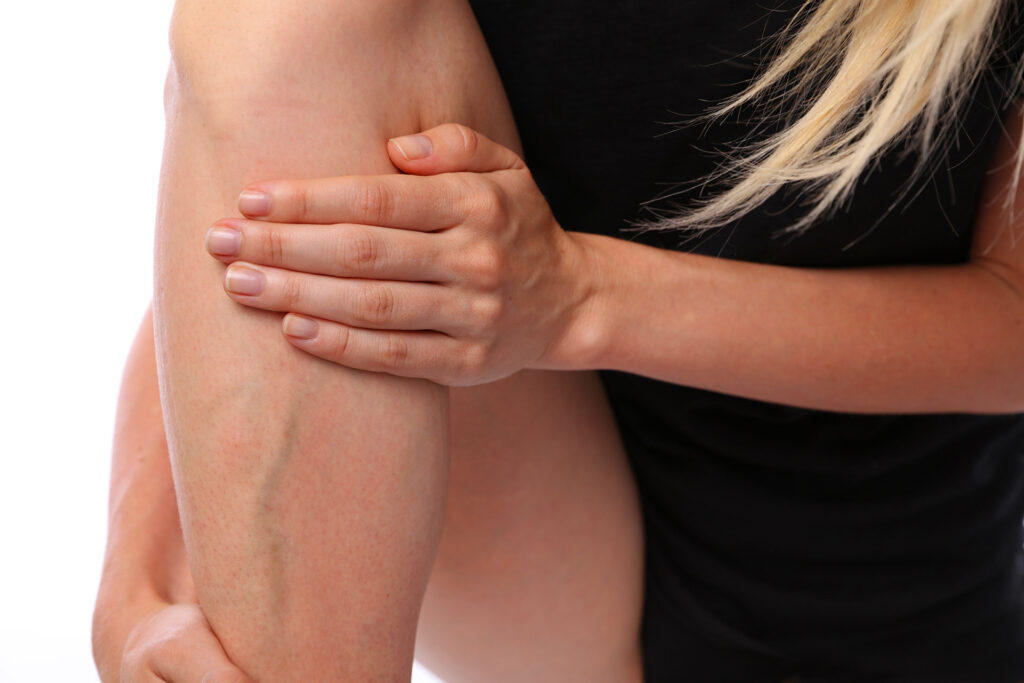
When to Treat and When to Worry: A Quick Reference
| Situation | What It Likely Means | What to Do |
|---|---|---|
| Small clusters, no symptoms, years unchanged | Benign, cosmetic concern | Sclerotherapy or laser when ready |
| Spreading quickly over months | Possible venous insufficiency | Duplex ultrasound before treating |
| Accompanied by leg aching or heaviness | Underlying CVI likely | Diagnostic evaluation first |
| One-sided, appearing after long immobility | DVT risk possible | Medical evaluation urgently |
| Near ankle with skin darkening | Advanced venous disease | Specialist referral, not cosmetic treatment |
| Facial veins, no leg symptoms | Cosmetic, rosacea, or sun damage | Surface laser, no ultrasound needed |
The Most Effective Ways to Eliminate Spider Veins on Legs
Sclerotherapy
Sclerotherapy is the gold standard for leg spider veins. A fine needle injects a sclerosing solution directly into the vessel. The solution irritates the vessel wall, causes it to collapse, and the body gradually clears the treated vein over two to six weeks.
Sessions take 30 to 45 minutes. Most patients need one to three sessions, depending on the area. There is no anesthesia and no downtime. Compression stockings are worn for a few days afterward to support the treated vessels. Results hold well in patients without underlying venous insufficiency driving the problem.
Laser Therapy
Surface laser works by targeting the blood pigment in the vessel. The heat generated closes the vessel from the outside in. It works best on very fine red capillaries, particularly on the face, and on leg spider veins that are too small to inject with a needle.
For medium and larger leg spider veins, sclerotherapy generally produces better clearance. Laser is also more variable across skin tones. Darker skin contains more melanin, which absorbs laser energy alongside the target vessel and raises the risk of pigmentation change. A good provider will assess skin type before recommending a laser.
Venous Ablation
Venous ablation is not a cosmetic procedure. It is a medical one. But for patients whose spider veins keep returning after sclerotherapy or laser, it is often the reason they return: a failed valve in the great or small saphenous vein is feeding abnormal pressure into the surface.
Ablation closes the underlying vein using heat delivered through a thin catheter under local anesthesia. The procedure takes about an hour. Patients walk out afterward. Once the pressure source is removed, surface spider veins that were being fed by it often fade on their own, and treated ones stay clear.
What About Natural Remedies?
Horse chestnut extract, apple cider vinegar, and witch hazel all appear in the top search results for spider vein treatment. Here is an honest assessment.
- Horse chestnut seed extract
- Apple cider vinegar
- Witch hazel
- Leg elevation
- Regular walking
- Compression stockings
None of these eliminate spider veins on legs. For actual clearance of visible vessels, sclerotherapy or laser is needed. Lifestyle measures are worth doing alongside proper treatment, not instead of it.
Why Spider Veins Come Back After Treatment
This is the most common frustration patients bring to vein clinics. They had sclerotherapy. The veins cleared. Six months later, new ones appeared in the same area.
Two things cause this.
First, treatment clears the vessels that were injected or treated. It does not prevent new spider veins from forming in the surrounding tissue. If the underlying venous pressure is elevated, new vessels will develop over time. This is not treatment failure. It is a chronic condition being managed, not cured.
Second, if venous insufficiency is the root cause and was never diagnosed or treated, the pressure that produced the first round of spider veins keeps producing new ones. In this situation, a duplex ultrasound and, if indicated, venous ablation or another deeper treatment change the long-term picture significantly.
Signs That Your Spider Veins Need More Than Cosmetic Treatment
Most spider veins are purely cosmetic. These signs suggest something more is going on:
- Leg heaviness or aching that builds through the day and eases when you lie down
- Swelling around the ankle by evening
- Spider veins spreading across a large area quickly, over months rather than years
- Skin near the inner ankle turning darker or feeling harder than the surrounding area
- Itching or a burning sensation around the veins
- A history of blood clots
Any of these warrant a duplex ultrasound before any surface treatment. Treating the surface without addressing the underlying disease produces short-lived results and occasionally misses something that genuinely needs medical attention, especially when chronic pain persists.

FAQ: Eliminate Spider Veins on Legs
Is it possible to get rid of spider veins on legs?
Yes. Sclerotherapy and laser therapy both clear spider veins effectively. Sclerotherapy works better for most leg spider veins in terms of clearance rate and number of sessions needed. Results last well when there is no underlying venous insufficiency driving new vessel formation. Patients with chronic venous disease may need ongoing management rather than a single course of treatment.
Can I get rid of spider veins naturally?
Natural approaches do not eliminate spider veins. Horse chestnut seed extract has some evidence for reducing venous symptoms but will not close a visible vessel. Lifestyle measures like regular walking, compression stockings, and avoiding prolonged standing reduce venous pressure and may slow the development of new veins. For actual clearance of existing spider veins, sclerotherapy or laser is needed.
What is the root cause of spider veins?
The underlying cause is weakened vessel walls combined with elevated venous pressure. Genetics is the most significant factor. Hormonal changes from pregnancy, menopause, or oral contraceptive use accelerate the process. Jobs requiring long periods of standing or sitting raise baseline venous pressure in the legs over time. In a proportion of patients, chronic venous insufficiency, where deeper valves fail and blood pools, drives spider vein formation from below, sometimes requiring guided treatments to address the underlying issue.
Why am I getting spider veins so quickly?
Rapid development of new spider veins over a short period usually points to one of three causes: a hormonal change, particularly during or after pregnancy; progression of untreated chronic venous insufficiency, increasing pressure across the lower leg; or a period of significant weight gain or prolonged immobility. If new veins are appearing noticeably within weeks or months, a vascular evaluation is worth having before investing in surface treatment that may not hold.
Some Things Are Worth Fixing
Spider veins are not dangerous. But you do not have to keep looking at them either. We offer fast, minimally invasive treatments and a free first consultation to figure out exactly what your legs need.
Book yours at CURA Vein Center or call +1 973-363-2029.