

Reviewed by Dr. Amir Issa, MD, DABVLM, RPhS · CURA Vein Doctors · Updated September 2026
Look down and your legs have a marbled, lace-like pattern that wasn’t there before. It can be startling, especially if you’ve never seen it on yourself. Most of the time it’s harmless. Sometimes it’s telling you something worth paying attention to. Here’s how to know which one you’re dealing with.
What Causes Mottled Skin on the Legs?
Mottled skin on the legs is most often caused by cold temperatures or prolonged sitting or standing, both of which temporarily reduce blood flow near the skin’s surface. Less commonly, it can come from a medication reaction, an autoimmune condition, poor circulation tied to vein disease, or, rarely, a sign of serious illness. Most cases fade once you warm up or move around.
What Does Mottled Skin Look Like?
Doctors call it livedo reticularis, but most people describe it as a lace-like, marbled, or net-like pattern. The color ranges from faint pink to purple or blue, and it tends to stand out more against fair skin or when you’re cold. It can cover a small patch or spread across a larger area of the leg.
Common Causes of Mottled Skin
Some causes are nothing to worry about. Others are worth a closer look.
| Cause | What It Looks Like | Concern Level |
|---|---|---|
| Cold exposure | Fades once you warm up | Low, a normal response |
| Prolonged sitting or standing | Patchy, worse in the lower leg | Low to moderate |
| Medication side effect | Develops after starting a new drug | Moderate, worth a doctor visit |
| Livedo reticularis (idiopathic) | Persistent lace pattern, doesn’t fade with warming | Moderate, needs evaluation |
| Autoimmune disease or vasculitis | Comes with joint pain, fatigue, or tender red patches | Moderate to high |
| Chronic venous insufficiency | Appears with swelling, spider veins, aching | Moderate |
| Severe infection or shock | Sudden onset, cold clammy skin, rapid heartbeat | High, emergency |
How Mottling Relates to Circulation and Oxygen
Everyday mottling, from cold or from sitting too long, is about blood vessels narrowing near the skin, not about how much oxygen is in your blood. Your body is simply redirecting blood flow. In cases of serious illness, though, such as sepsis or shock, mottling can reflect the body pulling blood away from the skin to protect vital organs, which does reduce oxygen delivery to that tissue. That’s why sudden, spreading mottling paired with other symptoms gets taken seriously in a medical setting.
When Mottled Skin Needs Emergency Care
Get emergency care if mottled skin appears along with:
- Cold, clammy, or gray-toned skin
- A rapid or weak pulse
- Confusion or difficulty staying alert
- Low blood pressure or fainting
- Difficulty breathing or chest pain
- Fever alongside sudden mottling
This combination can point to shock or a severe infection, both of which need immediate attention. On its own, temporary mottling from cold or sitting too long is not a red flag.
Mottled Skin and Vein Disease: Is There a Connection?
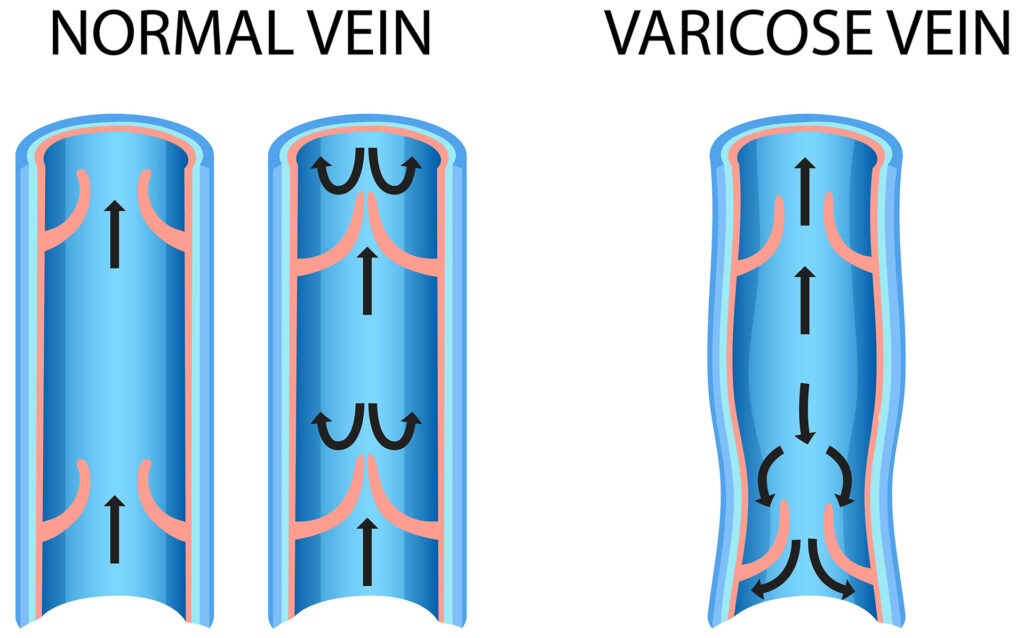
Mottled skin isn’t a primary symptom of venous insufficiency, but the two show up together often enough to be worth mentioning. If mottling comes with swelling, aching, or visible spider or varicose veins, poor venous circulation may be playing a role. It’s easy to confuse mottling with a different vein-related skin change called stasis dermatitis, so here’s how they compare.
| Feature | Mottled Skin (Livedo Reticularis) | Venous Stasis Rash |
|---|---|---|
| Appearance | Lace-like, net-like purplish pattern | Red, scaly, itchy patches |
| Location | Anywhere on the legs, sometimes the arms | Lower legs and ankles specifically |
| Trigger | Cold, poor circulation, autoimmune disease | Chronic venous insufficiency, fluid leakage |
| Texture | Skin usually smooth | Skin often thickened or flaky |
| Fades with warmth | Often, if benign | No, stays regardless of temperature |
Easing Mild, Benign Mottling
If cold or a bit of poor circulation is behind it, a few habits usually help. Stay warm and dress in layers during colder months. Move around regularly instead of sitting or standing in one position for long stretches, stick to joint-friendly exercises if your knees are a factor, and elevate your legs when you’re resting. If you suspect a medication is the cause, don’t stop taking it on your own, talk to the prescribing doctor about alternatives first.
When Should You See a Doctor of Veins About Mottled Skin?
See a doctor of veins if mottled skin sticks around after you’ve warmed up, keeps coming back, or shows up alongside swelling, aching, or visible varicose veins. A vein specialist can check whether circulation is playing a role and rule out venous insufficiency with a simple evaluation.
Reach out to CURA Vein Doctors to find out whether what you’re seeing is simple and temporary, or something that needs a closer look.

Frequently Asked Questions
What does mottled skin indicate?
Mottled skin usually indicates reduced blood flow near the skin’s surface, most often from cold exposure or sitting or standing too long. Less often, it points to a medication reaction, autoimmune condition, or a more serious circulatory problem.
Does mottled skin mean low oxygen?
Not usually. Everyday mottling from cold or poor circulation is about blood vessel constriction, not oxygen levels. In severe illness or shock, mottling can reflect reduced oxygen delivery to the skin.
Is mottled skin a red flag?
On its own, no, especially if it fades once you warm up. It becomes a red flag when paired with cold clammy skin, a rapid pulse, confusion, or difficulty breathing.
Which conditions would most likely cause mottled skin?
Cold exposure and prolonged sitting or standing are by far the most common causes. Less commonly, medications, autoimmune disease, vasculitis, or venous insufficiency are behind it.
Can mottled skin come from a vein problem?
It’s not a primary symptom of venous disease, but it can appear alongside it. If you also notice swelling, aching, or spider veins, it’s worth a vein evaluation.
Does mottled skin go away on its own?
Often, yes, if it’s from cold or temporary poor circulation. Persistent mottling that doesn’t fade with warming deserves a medical evaluation to rule out an underlying cause.
Not sure if your mottled skin is temporary or something more? Contact CURA Vein Doctors or call +1 973-363-2029 to get it looked at.