
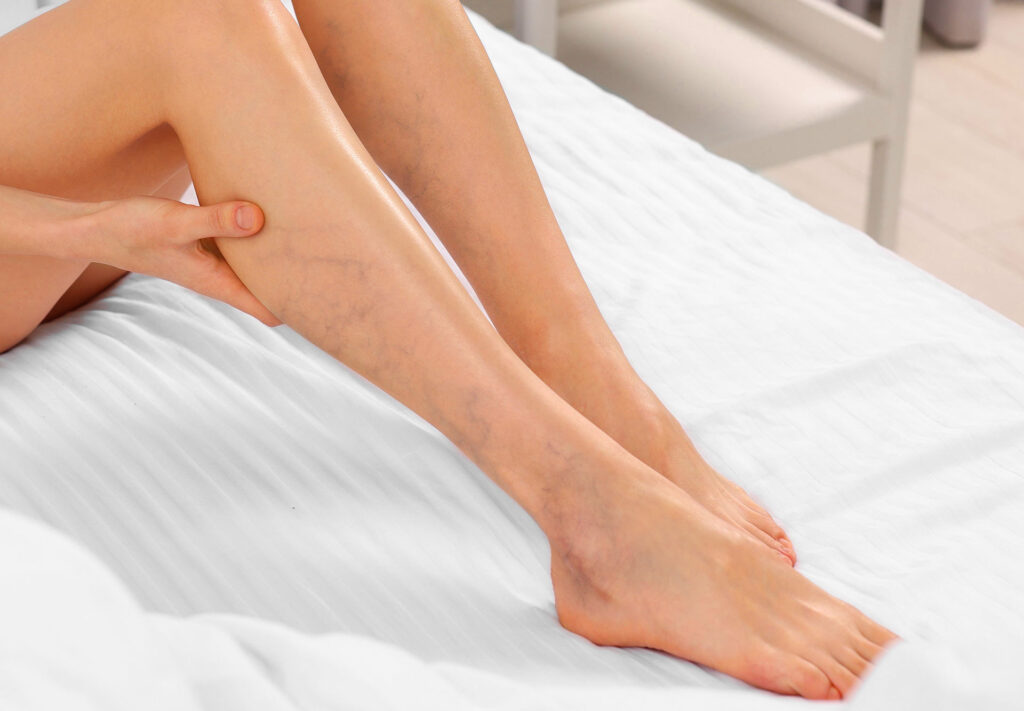
Your legs have been aching since Tuesday. You lift your socks and see nothing. No twisted ropes under the skin, no blue knots behind the knee. Just normal-looking legs that keep bothering you anyway. This is exactly how early stage varicose veins symptoms work, and it is the reason millions of people spend years treating the wrong problem.
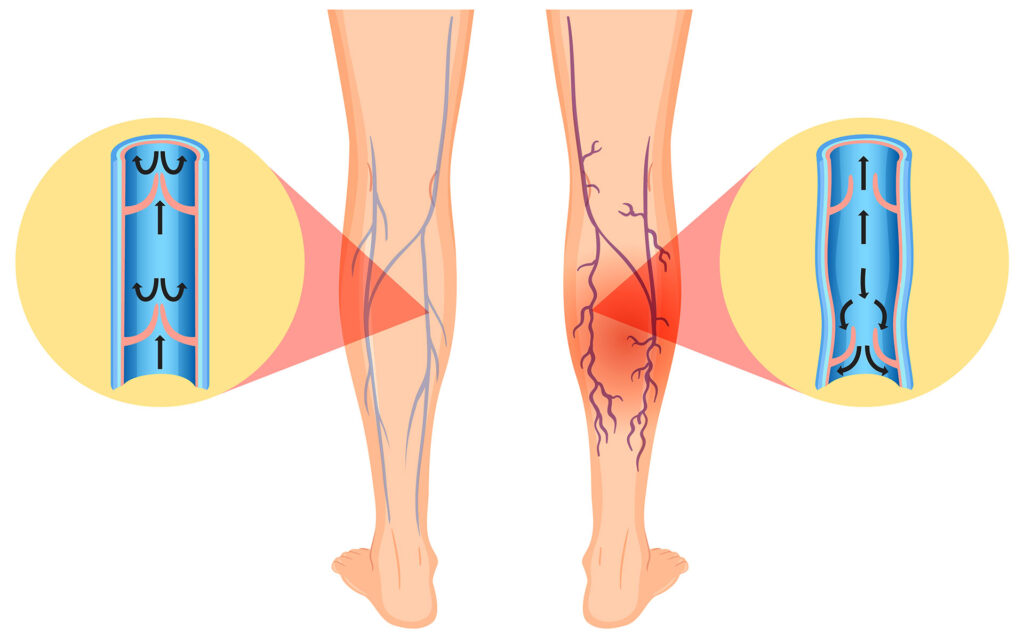
Varicose veins are not just a visible condition. The damage starts deep inside the vein wall, long before anything shows on the surface. By the time the bulging appears, the underlying valve failure has often been going on for months or years. The symptoms below are what that early, invisible dysfunction actually feels like, and most people never connect them to their veins.
What Are the First Signs of Varicose Veins?
The first signs of varicose veins are rarely visible. Early stage varicose veins symptoms usually include leg heaviness in the afternoon, mild ankle swelling that clears overnight, unexplained itching near the inner ankle, and nighttime leg cramps. These appear before any vein becomes visible because valve dysfunction creates pressure problems before it causes structural changes.
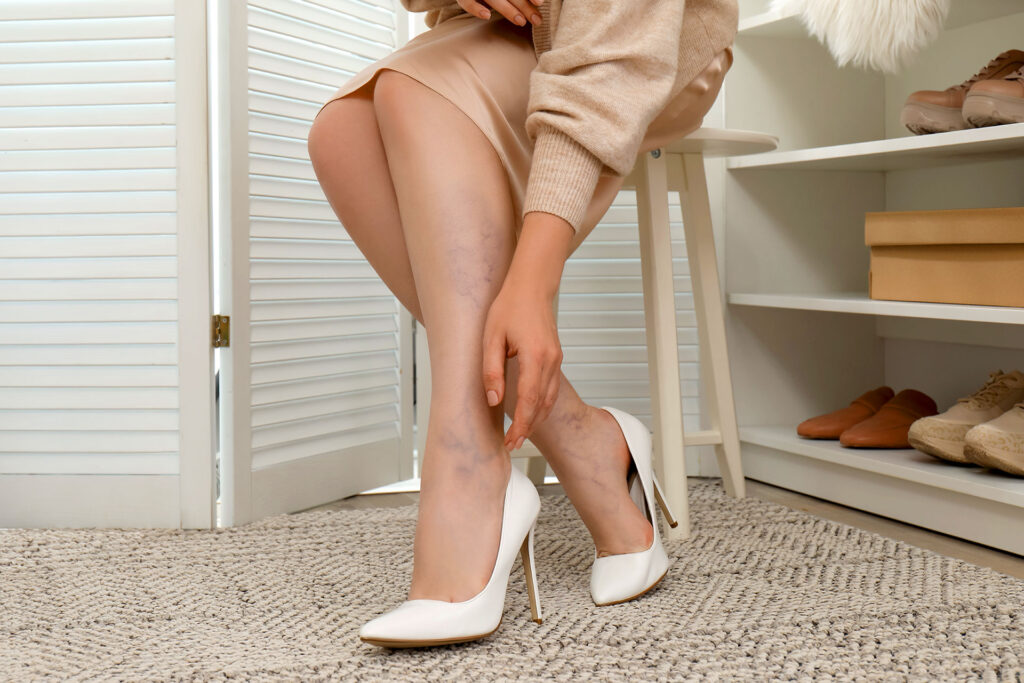
The Difference Between Normal Leg Tiredness and Vein-Related Symptoms
Before getting into the six symptoms, it helps to understand the pattern that runs through all of them. Normal fatigue gets better with rest and has no predictable timing. Vein-related symptoms follow a different rhythm:
| Feature | Normal Leg Fatigue | Vein-Related Symptoms |
|---|---|---|
| Time of day | Random | Worse in afternoon/evening |
| Responds to elevation | Sometimes | Almost always yes |
| Worsens with heat | Not typically | Consistently yes |
| One or both legs | Usually the leg you worked | Often the same leg, every time |
| Skin changes | No | Possible near ankle |
| Family history of veins | Unrelated | Often present |
| Clears overnight | Yes | Yes, then returns next day |
If your symptoms match the right-hand column, the pattern is pointing at your veins. Not your shoes, your mattress, or your workload.
Symptom 1: Leg Heaviness That Follows a Daily Schedule
Legs that feel heavy and fatigued specifically in the afternoon or evening, yet feel fine by morning, are a textbook early sign of venous insufficiency. When vein valves fail, blood pools in the lower leg throughout the day under the force of gravity. That pooling creates pressure on surrounding tissue. The muscle registers it as weight, not pain.
Most patients describe the sensation the same way: “I feel fine when I wake up, but by 3 p.m. my legs feel like they belong to someone twice my weight.”
What makes this symptom distinct:
- It follows the same daily arc regardless of activity level
- It eases when you lie down and raise your legs above your heart
- It worsens significantly on hot days (heat dilates veins, increasing pooling)
- It improves during and immediately after a short walk, but worsens again with prolonged standing
The maddening part is that your legs look completely normal during all of this. No swelling, no visible veins. Just a persistent heaviness that the internet keeps blaming on dehydration.
Symptom 2: Nighttime Leg Cramps
Nighttime leg cramps linked to venous insufficiency occur because blood pooling starves the calf muscles of oxygen and nutrients during the hours when circulation naturally slows. The cramps strike suddenly, usually in the calf, and resolve within a minute or two. They feel sharper and more abrupt than exercise-related cramps.
This is one of the most under-reported early stage varicose veins symptoms because the explanation always seems to land elsewhere first:
- Low magnesium
- Dehydration
- Side effect of medication
- “Just getting older”
All of those can cause night cramps too. The vein connection becomes more likely when cramps appear consistently in the same leg, alongside other symptoms from this list, or in a person with a family history of vein disease.
Signs the cramps may be vein-related:
- They occur specifically during the first few hours of sleep
- The affected leg also feels heavy or swollen during the day
- Elevating the legs before bed reduces their frequency
- The cramping leg matches any visible vein patterns
Symptom 3: Itching Skin Near the Inner Ankle
This is one of the most misdiagnosed early stage varicose veins symptoms. People treat it as dry skin or eczema for months. It persists because the cause is not the skin at all. It is pressure building inside failing veins.
As that pressure rises, small amounts of fluid and red blood cells seep through the vein wall into surrounding tissue. The immune system responds with localized inflammation. That inflammation produces itching that sits in roughly the same spot, near the inner ankle or lower calf, and returns reliably at the end of the day.
Stasis dermatitis vs. ordinary dry skin:
| Dry Skin | Stasis Dermatitis | |
|---|---|---|
| Location | Anywhere | Inner ankle, lower calf |
| Responds to moisturizer | Yes | No |
| Worse at end of day | No | Often yes |
| Associated swelling | No | Possible |
| Skin color change | No | Reddish or brownish patch |
| Cause | Low humidity, aging | Vein pressure |
If you have itching that is localized to the lower leg, returns persistently, and sits in roughly the same spot, it warrants a vein evaluation rather than another trip to the skincare aisle.
Symptom 4: Ankle Swelling That Vanishes Every Morning
The pattern here is what makes this symptom recognizable. Upright posture throughout the day allows blood and fluid to pool in the lower leg. Lying down redistributes that fluid. By morning the ankle looks completely normal. By late afternoon, the cycle has repeated. This is not random swelling. It is directional, driven by venous pressure that gravity makes worse over the course of a day.
Early signs people often miss:
- Shoes that fit fine in the morning feel tight by 5 p.m.
- Sock lines that stay visible for an hour after removing socks
- A puffiness above the ankle that compresses under finger pressure and slowly refills
- One ankle slightly larger than the other, consistently
Left unaddressed, this kind of swelling becomes harder to resolve with elevation alone. The tissue gradually retains more fluid as venous pressure increases over months and years.
Symptom 5: Restless Legs at Night
Venous insufficiency is one of the documented contributing causes of restless leg syndrome, and it is almost never mentioned outside of vascular medicine. The connection is real enough that some vein specialists screen for RLS as a matter of routine.
The sensation patients describe is difficult to name precisely. Not exactly a localized leg pain. Not exactly cramping. An urge to move. A vague, crawling discomfort somewhere between the knee and ankle that demands motion to relieve it.
How to tell if your restless legs may be vein-related:
- Symptoms are concentrated below the knee, not in the hip or thigh
- They peak in the evening and at night
- Brief walking relieves them temporarily
- The same leg also experiences heaviness or swelling during the day
- A first-degree relative has varicose veins or vein disease
Restless leg syndrome has multiple causes, and not every case traces back to veins. But when RLS appears alongside other early stage varicose veins symptoms, it adds a meaningful data point.
Symptom 6: Skin Discoloration Around the Ankle (Before Any Vein Shows)
Dark patches near the inner ankle are easy to mistake for sun damage, an old bruise, or age spots. The medical term is hemosiderin staining, brownish or reddish deposits left behind when red blood cells leak out of high-pressure vein walls and break down in the tissue. It often appears years before any vein becomes visibly enlarged.
This symptom carries the most urgency on this list. It signals that the vein wall has been under elevated pressure long enough to lose structural integrity. Once staining begins:
- The skin in that zone becomes progressively more fragile
- Bruising happens more easily
- Minor wounds heal slowly
- The risk of venous ulcers, which are difficult and slow to treat, increases substantially
Most people mistake hemosiderin staining for sun damage, a bruise that won’t clear, or age spots. It is none of those things. It is a vascular signal that deserves a prompt evaluation.
A Quick Checklist: Do Your Symptoms Match Early Vein Disease?
Use this to assess your own pattern before a clinic visit:
- Legs feel heavier or more fatigued in the afternoon than in the morning
- Ankle or lower leg swelling that clears overnight and returns the next day
- Itching near the inner ankle that does not respond to moisturizer
- Leg cramps that wake you in the first few hours of sleep
- Restless, uncomfortable legs specifically at night
- A reddish or brownish patch of skin near the ankle
- A family history of varicose veins or vein disease
- Symptoms worsen noticeably on hot days or after long periods of standing
If you checked three or more, especially the skin discoloration item or the family history item, a consultation with a vein specialist is a reasonable and low-stakes next step.
Frequently Asked Questions
What Happens at Your First Vein Clinic Appointment?
A health history review followed by a painless duplex ultrasound. The ultrasound maps blood flow and identifies any failing valves. No needles, no procedures at this visit. Most appointments wrap up in under an hour.
Do I Really Need to See a Vein Specialist?
If you have persistent heaviness, swelling, skin changes, or discomfort, yes. A specialist has the imaging tools and treatment options a general practitioner does not. Waiting tends to make the condition more involved, not less. Even if your symptoms seem manageable now, developing a proactive care plan is essential to ensuring you address the root cause before it progresses.
How Long Does a Vein Treatment Take?
Between 30 and 60 minutes for most procedures. Treatments like laser ablation and sclerotherapy are done in-office under local anesthesia. Most patients resume normal activity the same day.
Why Do My Veins Stick Out So Much?
Valve dysfunction allows blood to pool instead of returning to the heart, and the vein wall stretches under that sustained pressure. Genetics, prolonged standing, pregnancy, and age all contribute.
Is It Normal to Have Very Visible Veins?
Sometimes. Lean builds and fair skin make veins naturally more visible. The concern starts when visibility comes with symptoms: aching, swelling, heaviness, or skin changes. Visible veins without symptoms usually need monitoring, not treatment.
Why Are My Veins More Visible Than Other People’s?
Skin tone, body fat, age, genetics, and venous pressure all play a role. Less tissue between the skin and the vein means more visibility. Higher pressure from standing occupations or hereditary valve weakness pushes veins closer to the surface.