
By CURA Vein Doctors · Last updated September 2026 · Compiled from dermatologic and vascular medicine literature
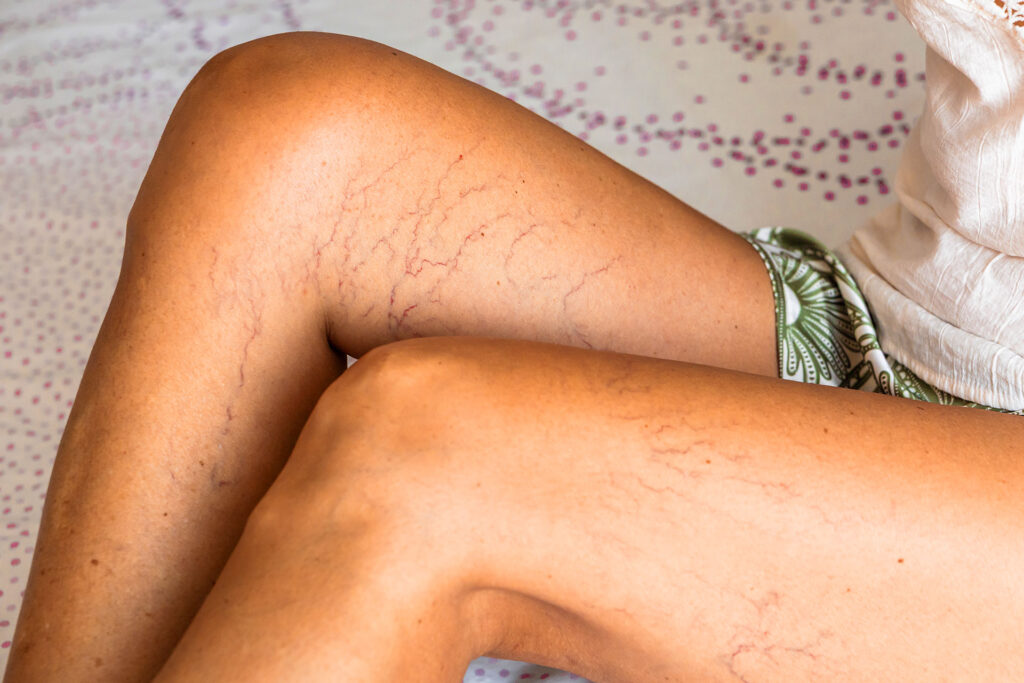
Small red or bluish threads showing up on your legs aren’t just a cosmetic annoyance; they’re often an early signal from your veins. Broken capillaries on the legs frequently connect to how well blood is flowing back up toward your heart, which is exactly why they’re worth understanding, not just covering up.
What Causes Broken Capillaries?
Broken capillaries, medically called telangiectasia, form when small blood vessels near the skin’s surface dilate and lose their ability to close back down. On the legs, this usually comes from prolonged standing or sitting, pregnancy, hormonal shifts, genetics, or pressure from an underlying vein condition like venous insufficiency.
Types of Broken Capillaries on the Legs
Not all leg capillaries form for the same reason, and the pattern can hint at the underlying cause.
| Type | Common Location | Typical Cause |
|---|---|---|
| Venous insufficiency-related | Ankle, back of the knee, medial thigh | Underlying vein reflux, weakened valves |
| Hormonal | Inner and front of the thigh | Pregnancy, menopause, hormonal birth control |
| Constitutional (weak capillary walls) | Lower leg, closer to the ankle | Genetics, triggered by temperature extremes |
| Matting (post-treatment) | Around a previously treated vein | Can appear after sclerotherapy or injury, usually temporary |
Will Broken Capillaries Go Away?
Once a capillary has fully dilated and lost its ability to constrict, it typically won’t fade back to invisible on its own. Very faint, early ones occasionally become less noticeable if the trigger, like prolonged standing or hormonal changes, is reduced, but established broken capillaries generally need treatment to actually disappear rather than just time.
What Are the Symptoms of Weak Capillaries?
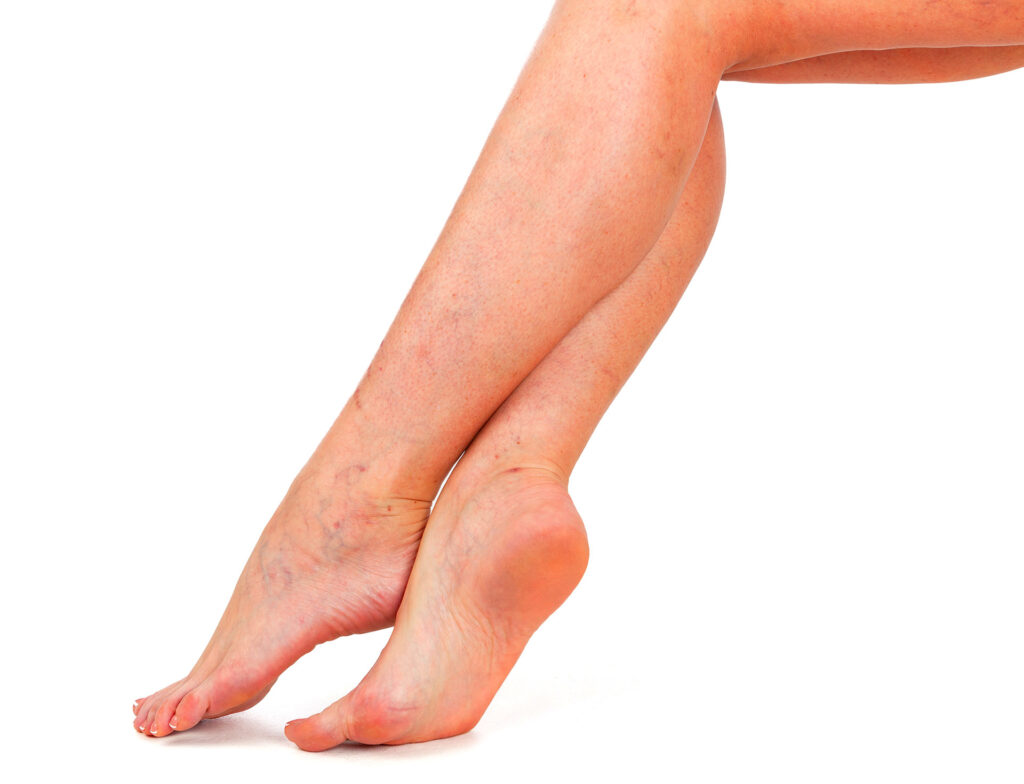
- Small red, blue, or purple thread-like lines visible through the skin
- Skin that bruises more easily than expected
- A tendency for the area to redden quickly with heat or pressure
- Aching or heaviness in the leg alongside visible vessels, which can point to a vein issue rather than isolated capillary fragility
Broken Capillaries or Something More?
Not every visible vessel on your leg is a simple broken capillary. Larger, bulging, rope-like veins are varicose veins, a different condition tied to failed vein valves deeper in the leg. Broken capillaries are smaller, flatter, and closer to the surface, but they can appear alongside varicose veins when the same underlying vein disease is driving both.
Can Blood Vessels Be Repaired?
Not in the sense of shrinking back to their original size on their own. Once a small vessel has dilated and stayed that way, the vessel itself needs to be closed off, not repaired. Laser treatment and sclerotherapy both work by sealing the vessel shut so the body reabsorbs it, redirecting blood through healthier vessels nearby. This is different from healing a wound; the vessel’s job is being retired, not restored.
How Do I Treat Broken Capillaries?
Leg capillaries and spider veins are typically treated with sclerotherapy, a simple injection that closes the vessel so it fades over several weeks. If a larger underlying vein is feeding the area, treating that vein first often improves results and helps prevent new capillaries from forming nearby. For a full breakdown of options, see our guide on spider vein treatment options compared.
Preventing Broken Capillaries
Staying active, avoiding long stretches of standing or sitting without a break, and wearing compression stockings if you’re prone to vein issues all help protect the vessels feeding visible capillaries. Managing weight and treating any underlying vein disease early also reduces how many new ones develop over time.
When Should You See a Doctor of Veins About Broken Capillaries?
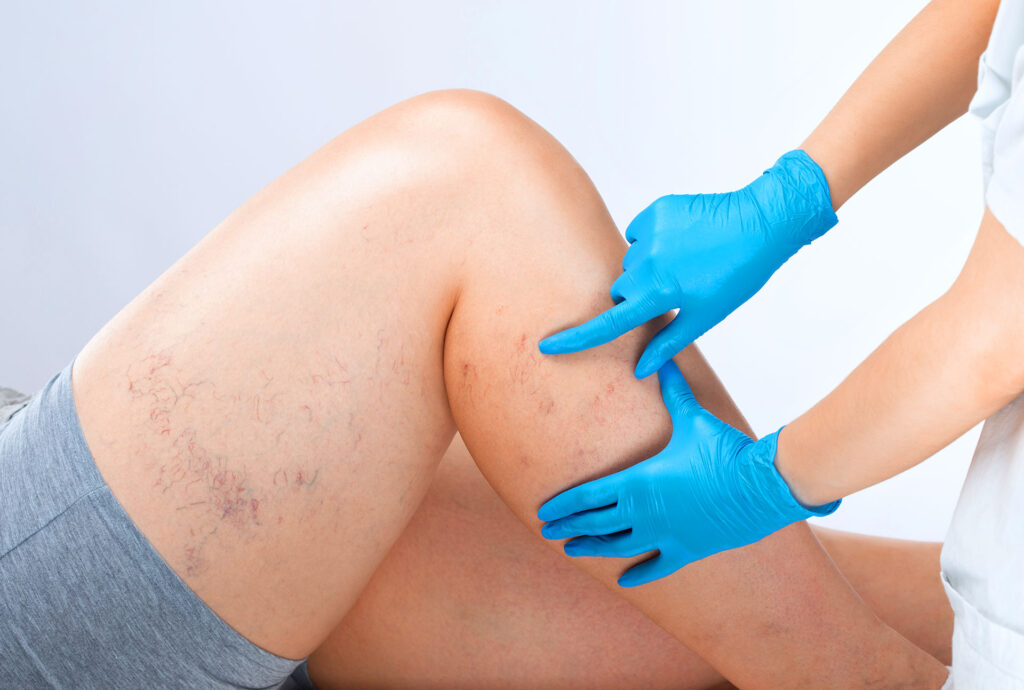
See a doctor of veins if broken capillaries on your legs come with aching, swelling, or a feeling of heaviness, since that combination can point to venous insufficiency rather than isolated capillary fragility. A vein specialist can check the larger veins feeding the area with a simple ultrasound.
Frequently Asked Questions
Will broken capillaries go away?
Rarely on their own once fully formed. Reducing the trigger can help faint, early ones, but established broken capillaries generally need treatment to disappear.
What causes broken capillaries?
Prolonged standing, pregnancy, hormonal shifts, genetics, and underlying vein disease are the most common drivers on the legs.
What are the symptoms of weak capillaries?
Visible thread-like red, blue, or purple lines, easy bruising, and quick reddening are the main signs. Aching alongside these signs can point to a vein issue.
How do I treat broken capillaries?
Sclerotherapy is the standard treatment for leg capillaries and spider veins, sometimes alongside treating an underlying vein feeding the area.
CURA Vein Doctors evaluates broken capillaries and spider veins on the legs, including whether an underlying vein condition is involved. Call +1 973-363-2029 or use the contact page to schedule an assessment.
References
- DermNet NZ. Telangiectasia. dermnetnz.org/topics/telangiectasia
- ClinicalTrials.gov. Foam and Liquid Sclerotherapy for Small Vein Treatment, CEAP Classification of Chronic Venous Disorders. clinicaltrials.gov/study/NCT07162844