
Reviewed by Dr. Amir Issa, MD, DABVLM, RPhS · CURA Vein Doctors · October 2026
Varicose eczema looks like ordinary eczema and often gets treated like it. The difference is the cause. This rash is the skin’s response to pressure building inside the leg veins, which is why moisturizers and steroid creams calm it without ending it. An itchy, darker patch near the inner ankle is easy to blame on dry skin or a new detergent. Treated that way, it often settles for a while and then comes back. When it keeps returning, the skin is usually reacting to something deeper: blood that isn’t draining well out of the leg.
What drives the rash? What does each stage look like? How do you tell it from cellulitis, which creams are worth using, and when does treating the veins make sense?
What Is Varicose Eczema?
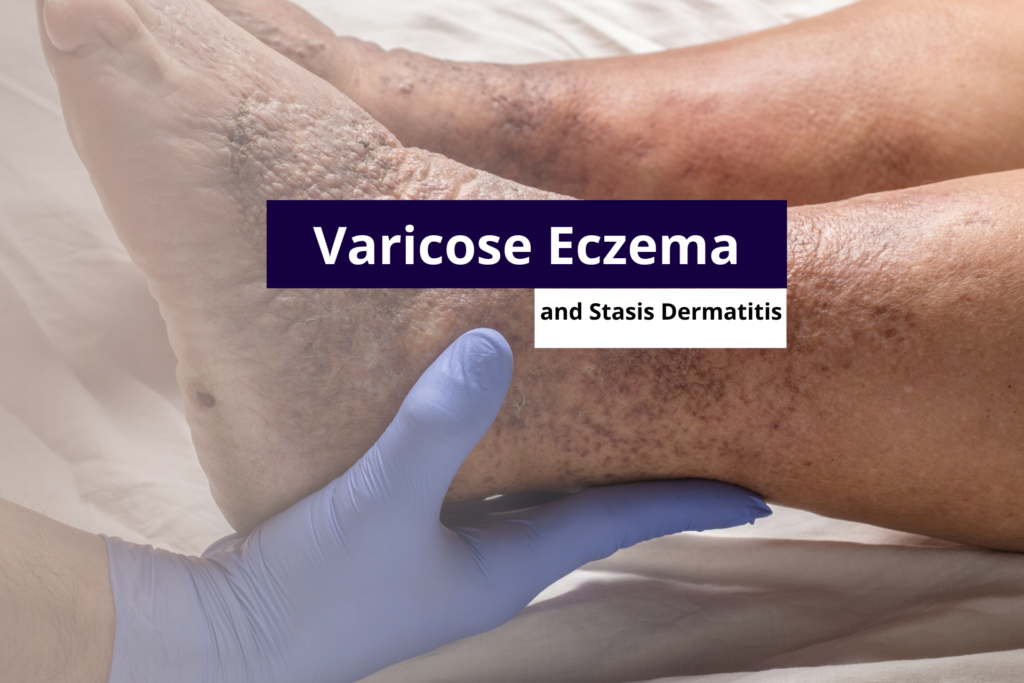
Varicose eczema, also called stasis dermatitis or venous eczema, is a chronic inflammatory skin condition of the lower legs caused by high pressure inside the leg veins. It usually starts as itchy, scaly, red or darker patches around the inner ankle, and it affects an estimated 6 to 7 percent of people over 50.
It is usually the earliest skin sign of chronic venous insufficiency, and it becomes more common with every decade of life. Estimates suggest it may exceed 20% of adults over 70 in developed countries. A slight female predominance has been reported, most likely because of pregnancy-related strain on leg veins. Gravitational eczema and stasis eczema are two more names for the same condition.
What Is the Main Cause of Stasis Dermatitis?
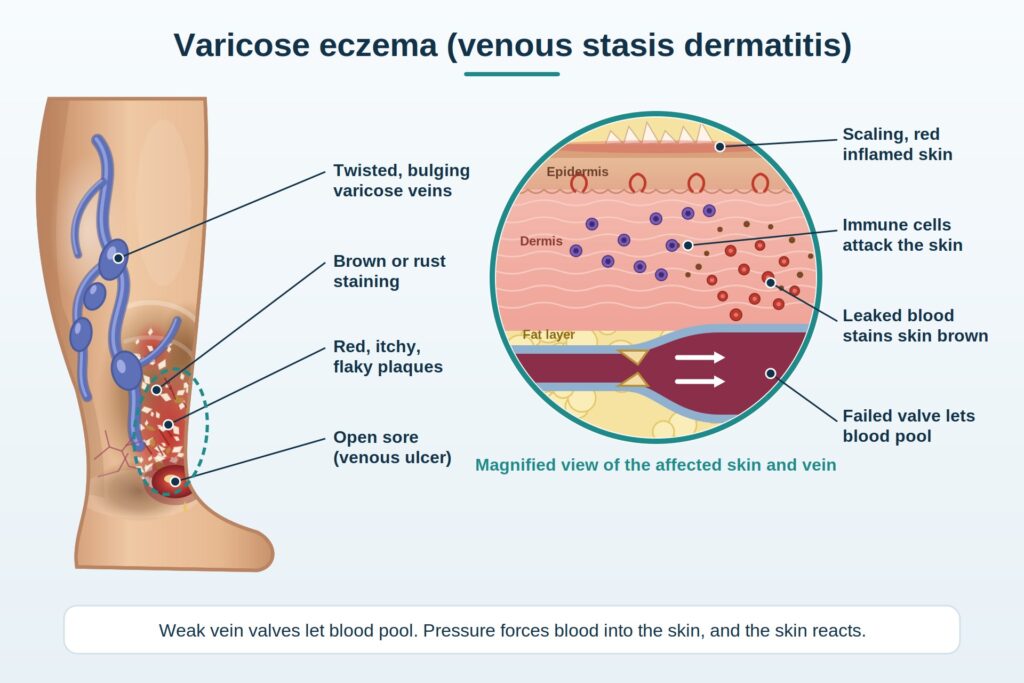
Venous hypertension: sustained high pressure inside the leg veins, usually from failing valves and less often from a blockage such as a past clot. The pressure pushes fluid and red blood cells into the skin, and iron released from those cells drives chronic inflammation. That inflammation is the eczema.
| Step | What Happens |
|---|---|
| 1. Valves fail | One-way valves stop closing, so blood flows backward and pools in the lower leg |
| 2. Pressure builds | Pressure stays high whenever you’re upright, and it is transmitted to the tiny vessels in the skin |
| 3. Leakage | Fluid and red blood cells escape into the surrounding tissue, which causes swelling |
| 4. Inflammation | Iron from the broken-down red cells switches on inflammatory enzymes called matrix metalloproteinases |
| 5. Skin changes | Itching, scaling, and red or darker patches appear, most often at the inner ankle |
| 6. Chronic damage | Over time: brown pigment, hardened skin, and in some people open ulcers |
Anything that damages the veins can start this chain. A past deep vein clot, vein surgery, or a leg injury can start the chain, and risk rises with age, obesity, immobility, pregnancy, and varicose veins.
What Does Varicose Eczema Look Like?
Searching for varicose dermatitis pictures can mislead, because the same condition looks different at each stage and different again on each skin tone. This is how it changes.
| Stage | What You See | Clue |
|---|---|---|
| Early flare | Poorly defined red or darker patches with fine scale and mild swelling, usually at the inner ankle | Itchy, dry, sometimes warm |
| Active flare | Blisters, weeping, or crusting on top of the patches | Itchy, may ooze |
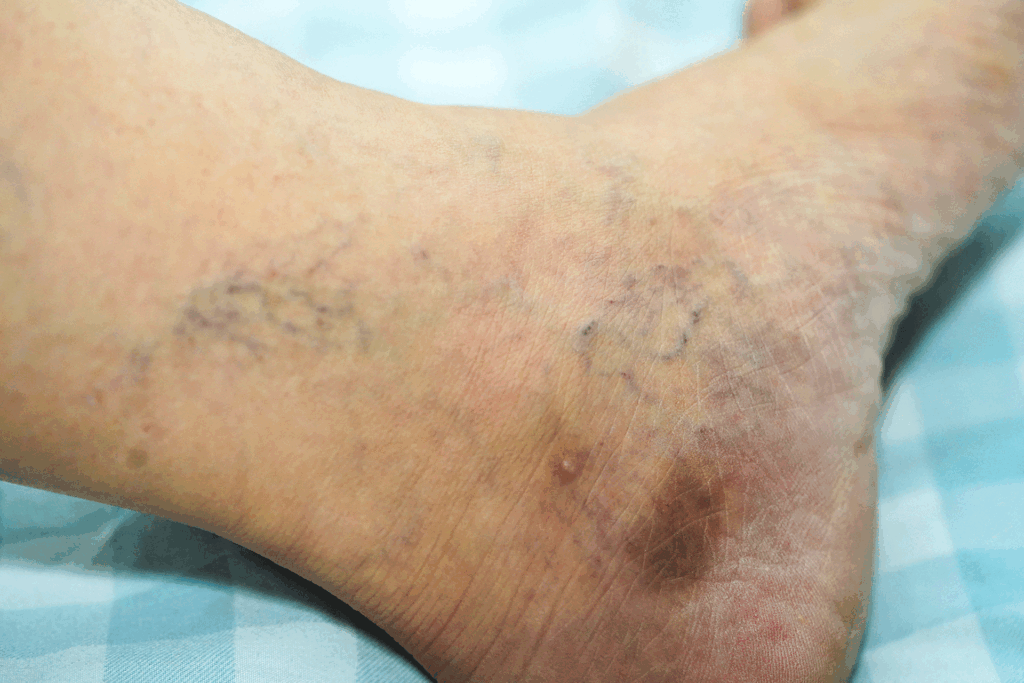
| Chronic phase | Brown discoloration from iron deposits, with thickened or rough skin | Skin looks darker and rougher |
| Lipodermatosclerosis | Tight, hardened red or brown skin, often on the inner calf, sometimes shaped like an inverted champagne bottle | Tender, feels woody to the touch |
| Ulcer | Open, slow-healing sore near the ankle | Needs prompt medical care |
On darker skin, varicose eczema may not look red. The inflamed patches can appear violaceous, brown, or gray, and redness is harder to see on richly pigmented skin, which contributes to missed or delayed diagnosis of inflammatory skin conditions. Look for the pattern instead: itchy, scaly, or darkened skin around the inner ankle, with swelling or visible varicose veins.
The brown part of the picture comes from iron left behind by leaked red blood cells, known as hemosiderin staining, and it has its own treatment considerations.
How Serious Is Varicose Eczema?
On its own it isn’t dangerous, but it is a warning sign. It is usually the earliest skin sign of chronic venous insufficiency and can progress to hardened skin, venous ulcers, and allergic reactions to the products used on it. The rash is the symptom; the vein pressure is what needs treating.
Get medical care promptly if you notice:
- An open sore, or a patch that weeps and won’t heal
- Skin that turns hot, swollen, and very painful, or redness that spreads quickly, especially with a fever, which can mean infection
- Sudden swelling or pain in just one leg
- Chest pain or shortness of breath
Sudden one-leg swelling can be a clot, and a spreading, hot, red leg can be cellulitis. Neither should be treated as an eczema flare.
Varicose Eczema vs Conditions That Look Like It
Several conditions mimic varicose eczema, and mistaking one for another changes the treatment. Stasis dermatitis is frequently misdiagnosed as cellulitis, which can lead to antibiotics that don’t help.
| Condition | How It Differs | Clue |
|---|---|---|
| Cellulitis | A bacterial skin infection, usually in one leg, that comes on quickly and is painful and hot, sometimes with fever | Antibiotics help cellulitis but not the eczema itself. Varicose eczema is usually in both legs, chronic, and itchy rather than sharply painful |
| Allergic contact dermatitis | A reaction to a cream, dressing, or stocking material, often layered on top of varicose eczema | The rash worsens after starting a product, and patch testing can find the cause |
| Lipodermatosclerosis | The later, hardened stage of the same vein disease | Tight, woody skin on the inner calf |
| Deep vein thrombosis | A blood clot, not a skin condition | Sudden swelling, pain, and warmth in one leg, which needs urgent care |
Allergic contact dermatitis is the hardest to rule out, because it often develops on top of venous eczema. The damaged skin barrier makes sensitization to creams and dressings more likely.
What Is the Best Cream for Venous Stasis Dermatitis?
No single cream is best. Guidelines pair an emollient used several times daily with a clinician-prescribed moderate steroid, often as an ointment, for flares. Choose products free of fragrance, balsam of Peru, and lanolin, and avoid neomycin, since all of these commonly sensitize this skin. No cream fixes the vein pressure behind the rash.
| Product | Role | What to Know |
|---|---|---|
| Emollient (moisturizer) | Restores the skin barrier | Apply liberally, 3 to 4 times a day if possible. Wash with water and emollient rather than soap. Pick fragrance-free and lanolin-free |
| Moderate-strength topical steroid | Calms inflammation and itch during flares | Prescribed. NHS guidance: apply emollient first, wait about 30 minutes, treat only the affected skin, and use for 7 to 14 days plus 48 hours after the flare clears. An ointment may suit dry or broken skin better than a cream |
| Very potent steroid | Sometimes needed for flares of lipodermatosclerosis | Only under clinician direction |
| Topical antibiotic ointments | Only when a clinician prescribes them for infection | Neomycin and bacitracin are known sensitizers, and neomycin was a positive patch-test reaction in 5.0% of people tested in the German data |
Skin on a venous leg is easy to sensitize. In a large German patch-test network of people with chronic leg ulcers or stasis dermatitis, the most frequent positive reactions were to balsam of Peru (14.8%), fragrance mix (11.4%), and lanolin alcohol (7.8%). If the rash worsens after you start a new cream or dressing, tell your clinician. Patch testing can identify the cause.
Trial data supporting topical treatments are scant, according to one dermatology review. That is why guidance leads with compression and treating the veins.
How Is Varicose Eczema Treated?
Treatment works on three things: the pressure, the skin, and the veins. The skin side is covered above, so this section focuses on the other two.
Pressure. Graduated compression stockings are the first-line treatment because they counter the pressure driving the rash. Before starting, clinicians check arterial blood flow with an ankle-brachial index. Very low or very high readings rule stockings out, and borderline readings limit you to light compression. Stocking materials can also trigger contact dermatitis, so a rash that appears under the stocking is worth reporting.
The veins. Treating the diseased veins goes after the cause. A UK dermatology guideline built on NICE advice calls treating the underlying venous insufficiency key to stopping eczema from worsening, and it advises considering referral when superficial varicose veins are present. The strongest trial evidence comes from the advanced stage, venous ulcers. In the ESCHAR trial, adding vein surgery to compression lowered four-year ulcer recurrence from 56% to 31%. In the EVRA trial, early endovenous ablation shortened median ulcer healing from 82 to 56 days. Those trials studied ulcers rather than eczema alone, so they show what treating reflux can achieve, not a guaranteed result for the rash.
Does Venous Stasis Dermatitis Ever Go Away on Its Own?
Individual flares can settle with moisturizing and a short steroid course, but the condition itself is chronic. While vein pressure stays high, it tends to linger, return, or progress. Lasting control usually needs compression and sometimes treatment of the diseased vein. Skin care alone treats the surface, not the source.
What Can You Do at Home?
- Raise your legs frequently and stay active, since movement and elevation both help circulation.
- Moisturize daily with a fragrance-free, lanolin-free emollient, and wash with water and emollient instead of soap.
- Wear prescribed compression every day.
- Check the label on any new product, and skip fragrance, balsam of Peru, lanolin, and neomycin.
- Protect the area from scratches and knocks, since fragile skin breaks easily.
When Should You See a Doctor of Veins About Varicose Eczema?
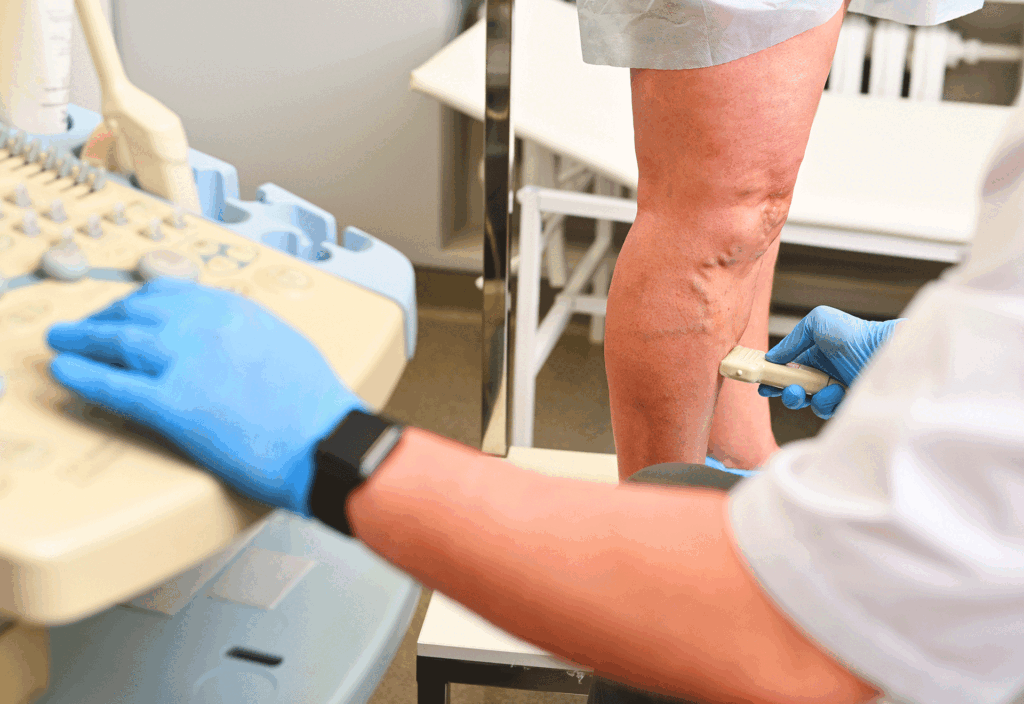
See a doctor of veins if itchy, scaly, or discolored patches keep returning on your lower legs, especially with swelling, heaviness, or visible varicose veins. A duplex ultrasound shows whether reflux is driving the rash, so treatment can target the veins instead of only the skin. Open sores, fast spread, or fever need urgent care.
Frequently Asked Questions
How serious is varicose eczema?
It isn’t dangerous by itself, but it signals chronic vein pressure and can progress to hardened skin and venous ulcers if the veins go untreated. It also leaves the skin prone to allergic reactions to creams and dressings. Sudden pain, heat, fever, or an open sore needs prompt care.
Does venous stasis dermatitis ever go away on its own?
Individual flares can calm down with skin care and a short steroid course, but the condition is chronic. While vein pressure stays high it tends to persist or return, so lasting control usually needs compression and sometimes vein treatment.
What is the main cause of stasis dermatitis?
Venous hypertension: sustained high pressure in the leg veins, usually from failing valves. The pressure pushes fluid and red blood cells into the skin, and iron from those cells drives chronic inflammation.
What is the best cream for venous stasis dermatitis?
No single cream is best. Guidelines pair an emollient used several times daily with a clinician-prescribed moderate steroid, often as an ointment, for flares. Avoid fragrance, balsam of Peru, lanolin, and neomycin, which commonly sensitize this skin.
Is varicose eczema contagious?
No. It is driven by vein pressure and inflammation, not infection, so it can’t pass from person to person.
To have your leg skin changes checked for vein reflux, call CURA Vein Doctors at +1 973-363-2029 or request a visit through the contact page.
References
- Stasis Dermatitis: Practice Essentials, Etiology, Epidemiology. Medscape. emedicine.medscape.com/article/1084813-overview
- Stasis Dermatitis: Pathophysiology, Evaluation, and Management. American Journal of Clinical Dermatology. link.springer.com/article/10.1007/s40257-016-0250-0
- Stasis Dermatitis: An Overview of Its Clinical Presentation, Pathogenesis, and Management. American Journal of Clinical Dermatology, 2023;24:275-286. pmc.ncbi.nlm.nih.gov/articles/PMC9968263
- Venous Eczema and Lipodermatosclerosis. NICE Clinical Knowledge Summaries. cks.nice.org.uk/topics/venous-eczema-lipodermatosclerosis
- Venous Insufficiency. NHS Lothian dermatology guideline, summarizing NICE guidance. apps.nhslothian.scot/refhelp/guidelines/dermatology/venous-insufficiency