
The two terms get used interchangeably in clinic waiting rooms and online searches. They are not the same thing. Understanding the difference changes how you think about symptoms, treatment, and what happens if you wait.
Varicose veins are visible. You can see them. Varicose vein disease is the underlying process that produces them. One is the symptom. The other is the condition. And the condition does not stop when the visible veins are treated.
What Is Varicose Vein Disease?
Varicose vein disease, also called chronic venous insufficiency (CVI), is a progressive condition where the one-way valves inside the leg veins fail and blood flows backward instead of toward the heart. Varicose veins are one visible sign of this disease, but the disease itself includes swelling, skin changes, ulceration, and clotting risk. It worsens over time without treatment.
The Spectrum of Varicose Vein Diseases
Venous disease is not a single condition. It is a spectrum. Varicose veins sit in the middle of that spectrum. Other conditions sit below and above them in severity.
| Condition | Where It Sits | Key Feature | Treatment Needed |
|---|---|---|---|
| Spider veins | Mild / surface | Fine red or blue web-like clusters near the skin | Optional, cosmetic |
| Reticular veins | Mild / surface | Flat blue-green feeder veins beneath spider veins | Optional, can feed spider veins |
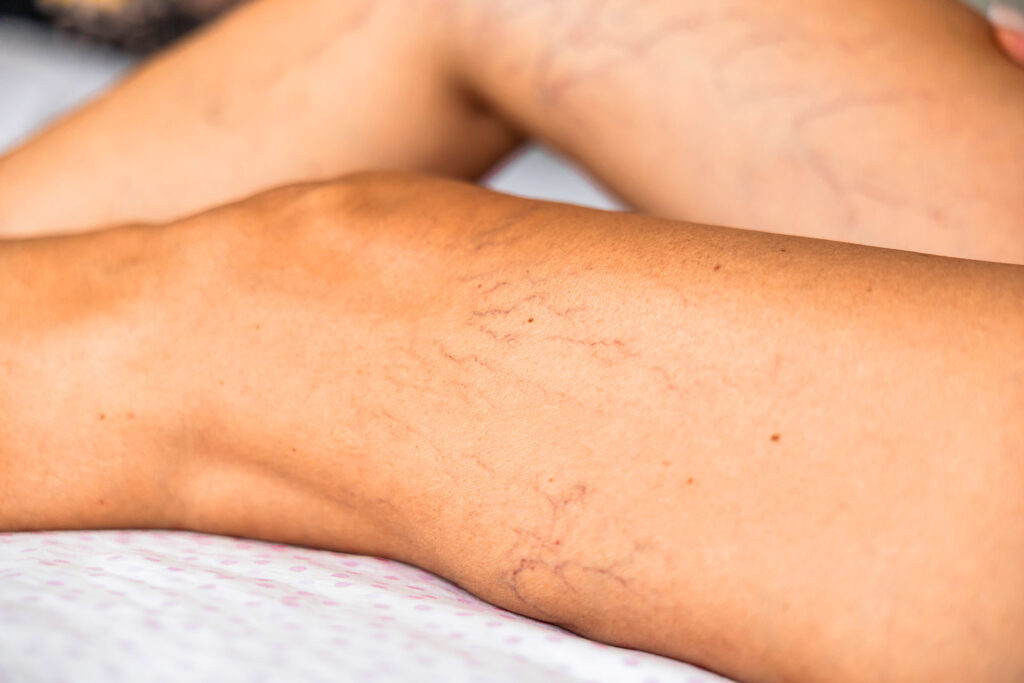
| Varicose veins | Moderate | Twisted, bulging, rope-like surface veins | Often yes, especially if symptomatic |
| Chronic venous insufficiency | Moderate to advanced | Valve failure, swelling, skin changes | Yes |
| Superficial thrombophlebitis | Moderate, acute | Clot in a surface vein, hard and tender | Yes |
| Deep vein thrombosis (DVT) | Serious | Clot in a deep vein, swelling, DVT risk | Urgent |
| Venous ulcers | Advanced | Open wound near ankle from chronic venous pressure | Yes, urgent |
| Pelvic venous insufficiency | Separate condition | Chronic pelvic pain from failed pelvic veins | Yes |
How Varicose Vein Disease Actually Develops
It starts inside the vein, invisibly. The tiny one-way valves that keep blood moving upward toward the heart begin to weaken. Blood slips backward with each heartbeat instead of being pushed forward. It pools in the lower leg.
That pooled blood creates pressure. The pressure stretches the vein wall outward. The wall weakens further. More valves fail. The stretched vein eventually becomes visible beneath the skin as a varicose vein.
But the disease process does not stop there. The sustained venous pressure pushes fluid through the capillary walls into surrounding tissue. Legs swell. Skin changes color. The tissue becomes harder and less able to heal minor injuries. In advanced cases, a small wound near the ankle becomes a venous ulcer that may take months to close.
This is why treating only the visible varicose vein, without addressing the underlying valve failure, produces incomplete and often temporary results.
Varicose Veins vs. Varicose Vein Disease: Key Differences
| Varicose Veins | Varicose Vein Disease (CVI) | |
|---|---|---|
| What it is | A visible, enlarged, twisted surface vein | A progressive condition of valve failure and venous pressure |
| Diagnosis | Visual examination | Duplex ultrasound to assess valve function |
| Symptoms | Visible bulging vein, possible aching | Swelling, skin changes, heaviness, ulceration risk |
| Treatment target | The individual vein | The underlying reflux driving the disease |
| Progression | May or may not worsen | Worsens predictably without intervention |
| Covered by insurance | Sometimes, if symptomatic | Usually yes, when CVI is confirmed on ultrasound |
The Six CEAP Stages of Venous Disease
Vascular medicine uses a standardized classification system called CEAP to describe the progression of venous disease. It runs from C0 to C6.
- C0: No visible signs. Symptoms may still be present.
- C1: Spider veins and reticular veins visible.
- C2: Varicose veins present.
- C3: Edema (swelling) without skin changes.
- C4: Skin changes including pigmentation, eczema, or lipodermatosclerosis.
- C5: Healed venous ulcer.
- C6: Active, open venous ulcer.
Most patients who arrive at a vein clinic sit between C2 and C4. The earlier the disease is identified and treated, the simpler the intervention and the more complete the outcome.
⚠️ Stage C4 and above requires medical treatment, not compression alone. Skin changes near the ankle mean the tissue is already damaged from chronic venous pressure. Waiting at this stage accelerates progression to ulceration. A vascular evaluation is urgent, not optional.
Conditions Often Confused With Varicose Vein Disease
Peripheral Arterial Disease (PAD)
PAD involves the arteries, not the veins. It reduces blood flow to the legs from blockages in the arterial system. Leg pain, particularly pain when walking that eases with rest, is the hallmark symptom. When trying to decode different pain types like sharp, aching, or burning sensations, PAD and venous disease can sometimes present diagnostic challenges. However, they require entirely different treatments. Compression stockings, appropriate for venous disease, can worsen PAD if arterial flow is compromised.
Lymphedema
Lymphedema is swelling caused by a damaged or blocked lymphatic system rather than venous pressure. The swelling is typically firmer, does not improve as much with elevation, and often involves the foot and toes more than venous edema does. It frequently coexists with chronic venous insufficiency and requires a different management approach.
Deep Vein Thrombosis (DVT)
DVT is a clot in the deep venous system. It can cause sudden unilateral leg swelling, warmth, and pain that resembles advanced venous disease. The distinction matters because DVT carries a risk of pulmonary embolism and requires anticoagulation, not vein procedures. Any sudden, one-sided leg swelling warrants same-day evaluation.
Can Varicose Vein Disease Be Treated?
Yes. Reliably, and with minimally invasive techniques that have largely replaced surgical stripping.
The treatment targets the source of the reflux, typically the great or small saphenous vein, not just the visible surface veins. Closing the saphenous vein removes the abnormal pressure that produces varicose veins and drives the disease forward.
- Endovenous laser ablation (EVLA): Heat delivered through a catheter closes the vein from inside. One session, local anesthesia, walk-out procedure.
- Radiofrequency ablation (RFA): Same concept using radiofrequency energy instead of laser. Slightly lower heat, similar outcomes.
- VenaSeal: Medical adhesive seals the vein without heat or tumescent anesthesia. No compression required immediately after.
- Sclerotherapy: Injected solution collapses smaller varicosities and feeder veins. Often used alongside ablation to treat the full extent of the disease.
- Microphlebectomy: Removal of surface varicosities through tiny incisions. Leaves minimal scarring.
✓ Insurance often covers varicose vein treatment when chronic venous insufficiency is confirmed on duplex ultrasound and conservative measures like compression have been tried. A free consultation with a vein specialist clarifies coverage before any procedure begins.
FAQ: Varicose Vein Diseases
What diseases are associated with varicose veins?
Varicose veins are most commonly associated with chronic venous insufficiency, superficial thrombophlebitis, deep vein thrombosis, and venous ulcers. They can also be linked to pelvic venous insufficiency in women. Each condition sits on the same disease spectrum and shares the same root cause: failing venous valves and elevated venous pressure.
What is stage 4 venous insufficiency?
Stage C4 in the CEAP classification means the skin around the lower leg or ankle is already showing damage from chronic venous pressure. This includes darkening (hyperpigmentation), hardening of the tissue (lipodermatosclerosis), or varicose eczema. It is beyond cosmetic and requires active vein treatment to prevent progression to ulceration.
Can you get rid of varicose veins?
Yes. Endovenous ablation, sclerotherapy, and microphlebectomy all produce permanent closure of treated veins. New veins can develop over time if the underlying venous disease is not addressed, which is why treating the source of reflux rather than just the visible veins produces more durable results.
What is varicose veins disease?
Varicose vein disease refers to chronic venous insufficiency, the progressive condition where leg vein valves fail and blood pools under pressure. Varicose veins are one visible sign of this disease. The disease itself also produces swelling, skin changes, clotting risk, and in advanced stages, venous ulcers that are difficult to heal.
Know What You Are Treating Before You Treat It
Varicose veins are visible. The disease behind them is not. At CURA Vein Centers, every patient starts with a duplex ultrasound so we know exactly what is driving the problem before recommending anything.
Free consultations available across New Jersey. No commitment required.