
Reviewed by Dr. Amir Issa, MD, DABVLM, RPhS · CURA Vein Doctors · October 2026
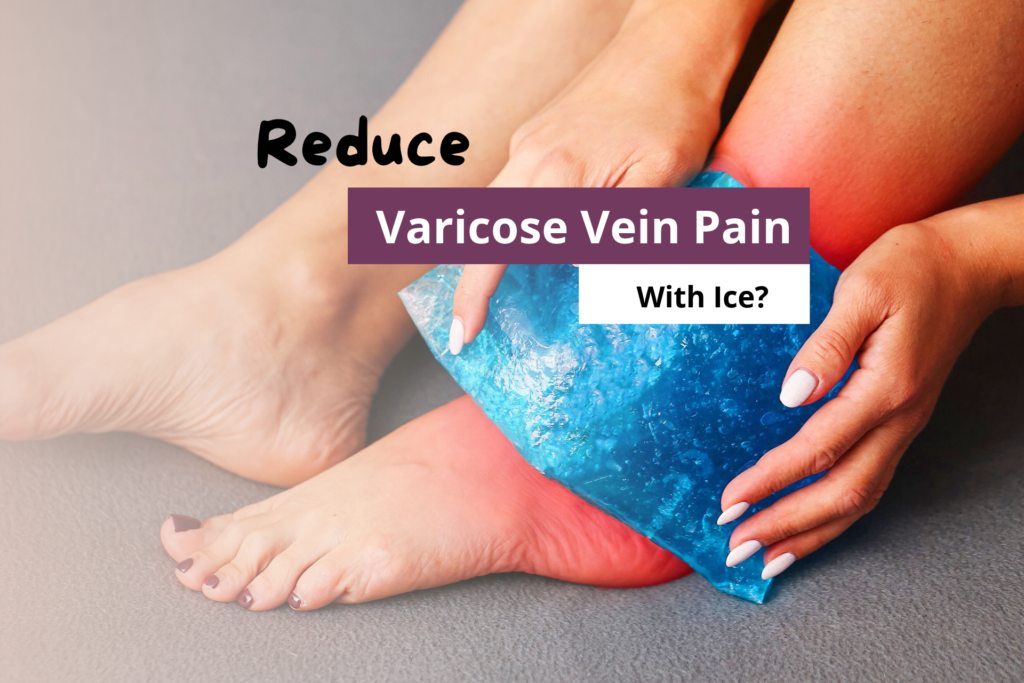
You press an ice pack to your aching legs, and it works. For a while. The throbbing fades, the heaviness lifts. Then you take it off and everything comes back. So is cold actually doing something for varicose veins, or just masking the discomfort? Does the temperature you choose even matter? And when does reaching for the ice pack stop being enough?
Can I Use Ice Pack for Varicose Veins?
How Cold Temporarily Relieves Vein Pain
Cold does three things when applied to a swollen vein. First, it signals smooth muscle in the vessel wall to contract, temporarily reducing the vein’s caliber and the pressure of pooled blood inside it. Second, it slows sensory nerve conduction velocity, the same mechanism that makes ice packs useful for any acute leg pain. Third, it lowers local tissue temperature enough to dampen the inflammatory cascade that causes the itching, throbbing, and heaviness around dilated veins.
None of that touches the root problem. Varicose veins enlarge because valves inside the vein fail, allowing blood to pool with every heartbeat instead of traveling back toward the heart. Cold cannot repair a valve. Once the ice comes off and the skin warms, the vein returns to its dilated state. The relief is real; the cure is not.
Hot or Cold Compress for Varicose Veins?
This is not a close call.
Heat is consistently listed as an aggravating factor in clinical vein guidelines. If you have varicose veins, heat on the legs is something to avoid, not use. Cold is the right choice for symptom management, but it has a ceiling.
Does Icing Help Varicose Veins? What the Evidence Shows
A quasi-experimental study at Cairo University’s Faculty of Nursing enrolled 60 adults with primary varicose veins and measured both symptom burden (VVSymQ) and pain (NPRS) before and after a structured hot/cold water therapy protocol. The study group showed significantly lower symptom scores and pain scores across two follow-up points versus the control group (F = 336.74 for symptoms, F = 37.41 for pain, both p < 0.001). The authors concluded that temperature therapy reduces varicose vein symptoms meaningfully and recommended integrating it into standard care protocols as an adjunct.
That is meaningful for symptom relief. It does not mean cold therapy replaces treatment for the venous reflux causing the veins in the first place. The Society for Vascular Surgery guidelines make this distinction clearly: conservative measures reduce discomfort and slow progression; ablation is what ends it.
When NOT to Use Ice on Varicose Veins
This is the most clinically important section on this page. Every competing article on this topic skips it entirely.
Peripheral artery disease (PAD): Arterial insufficiency already limits blood flow to the feet. Cold causes further vasoconstriction in arterial vessels, worsening ischemia rather than relieving it. Applying ice to the legs of a PAD patient is not just unhelpful; it is dangerous.
Open wounds and venous ulcers: Never apply cold to broken skin, ulcers, or open wounds. Cold reduces the local blood flow needed for wound repair and creates infection risk at the wound margin.
Peripheral neuropathy: Diabetes and other conditions reduce skin sensation. If you cannot detect temperature normally, you cannot detect frostbite beginning. Injury happens without warning.
Raynaud’s phenomenon and cold urticaria: Cold-triggered vasospasm or hypersensitivity reactions. Cold application can provoke an acute episode in either condition.
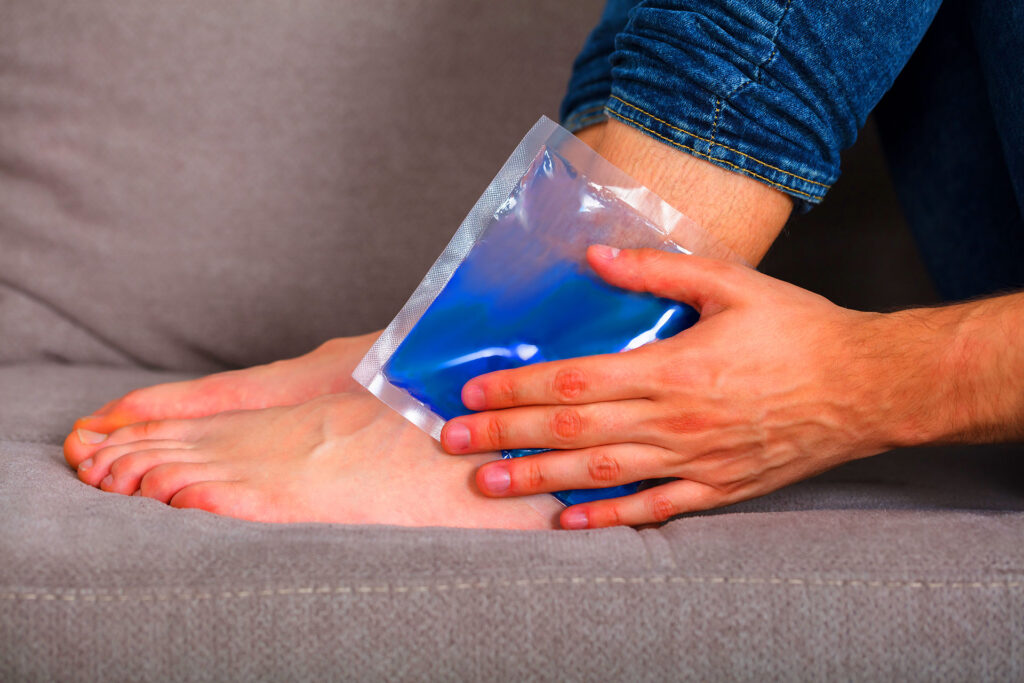
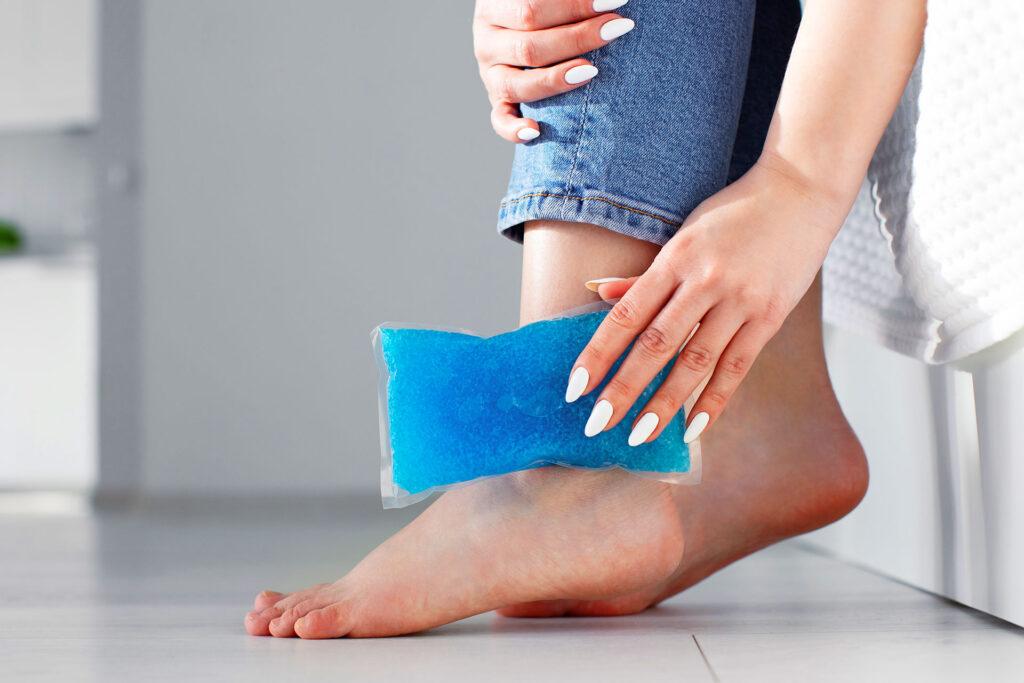
For everyone else: always wrap ice in a cloth barrier. Never apply directly to skin. Fifteen to 20 minutes maximum per session. Let the skin return to normal temperature before reapplying.
| Self-care method | What it does | Relief duration | Treats root cause? |
|---|---|---|---|
| Cold pack (wrapped, 15-20 min) | Vasoconstriction; blunts pain signals | 20-40 minutes | No |
| Leg elevation above heart level | Reduces hydrostatic pressure; drains pooled blood | While elevated | No |
| Graduated compression (20-30 mmHg) | Supports vein walls; reduces reflux during activity | While worn | No, but slows progression |
| Calf exercise (walking 30 min) | Activates muscle pump; propels venous blood upward | Hours after activity | No, but improves function |
| Cool shower on lower legs | Mild vasoconstriction; surface temperature relief | 10-20 minutes | No |
What Shrinks Varicose Veins?
Nothing topical or cold permanently eliminates a varicose vein. Compression manages symptoms but does not close the vein. The three approaches that actually close or remove diseased veins are:
Thermal ablation (EVLA/RFA): Laser or radiofrequency energy delivered inside the vein wall collapses the diseased great saphenous vein. The body reabsorbs it over weeks. Success rates above 95% at five years in most patient series. This is the first-line intervention for truncal venous reflux according to SVS guidelines.
Sclerotherapy: A chemical agent (polidocanol or sodium tetradecyl sulfate) irritates the vein lining, causing it to close and fibrose. Used for smaller varicose veins and spider veins. Often combined with ablation for comprehensive treatment.
Ambulatory phlebectomy: Removal of surface varicose veins through tiny microincisions under local anesthesia. Used for large, bulging veins that are too superficial for laser treatment.
Cold is what you use while waiting for the appointment that ends the problem.
| Approach | Mechanism | Best for | Permanence |
|---|---|---|---|
| Cold pack | Temporary vasoconstriction; nerve blunting | Daily symptom relief between visits | None |
| Compression stockings | External pressure reduces reflux during activity | All CEAP stages as adjunct | While worn only |
| Sclerotherapy | Chemical closure of vein wall | Spider veins and small varicose veins | High |
| Thermal ablation (EVLA/RFA) | Heat-seals diseased saphenous trunk | Truncal reflux, large varicose veins | Very high (>95% at 5 yr) |
| Ambulatory phlebectomy | Direct removal via microincisions | Large surface varicose veins | Permanent |
When to Stop Using Ice and See a Vein Specialist
Cold keeps symptoms tolerable. It does not prevent the progression of venous disease, and there are situations where using it delays care that is genuinely urgent. Know the difference.
Ice is not the right response for any of these
Sudden swelling in one leg that is warm and tender along the calf: possible DVT
Skin over a varicose vein turns hard, red, and hot: phlebitis requiring anticoagulation evaluation
A varicose vein ruptures and bleeds: even small ruptures bleed significantly under skin pressure
Ankle sores or ulcers not healing after 2 weeks: venous ulcers require wound care, not cold
Varicose eczema or stasis dermatitis spreading despite elevation: advanced skin change that precedes ulceration
What Not to Do With Varicose Veins
Avoiding the wrong things matters as much as doing the right ones. Heat, prolonged standing, and certain habits consistently accelerate pooling and widen already-dilated veins. The full list of evidence-based prevention strategies is covered in our guide on how to avoid varicose veins in your legs, but the three most damaging habits are: hot baths or saunas (dilate veins directly), standing still for more than 30 minutes without calf movement (no muscle pump), and tight waistbands or shapewear (increases abdominal pressure, backs up venous return).
Frequently Asked Questions
Is it better to put ice or heat on varicose veins?
Cold, not heat. Heat dilates vein walls further and worsens pooling. Cold temporarily narrows them and blunts pain. Neither repairs the underlying valve failure, but cold does not make the veins worse.
What shrinks varicose veins?
Nothing topical or cold permanently eliminates them. Thermal ablation (EVLA/RFA) and sclerotherapy close the diseased vein walls with success rates above 95% at five years. Compression reduces symptoms but does not shrink veins structurally.
What not to do when you have varicose veins?
Avoid heat on the legs, prolonged standing without movement, and tight non-medical garments at the waist. Those three compound venous pooling the most and accelerate progression.
Can an ice pack help with varicose veins?
Yes, for short-term pain relief. Wrap the ice in cloth, apply for 15 to 20 minutes, and let the skin return to normal temperature before reapplying. Do not use if you have peripheral artery disease, reduced skin sensation, or open wounds near the vein.
Cold helps today. Treatment ends the problem.
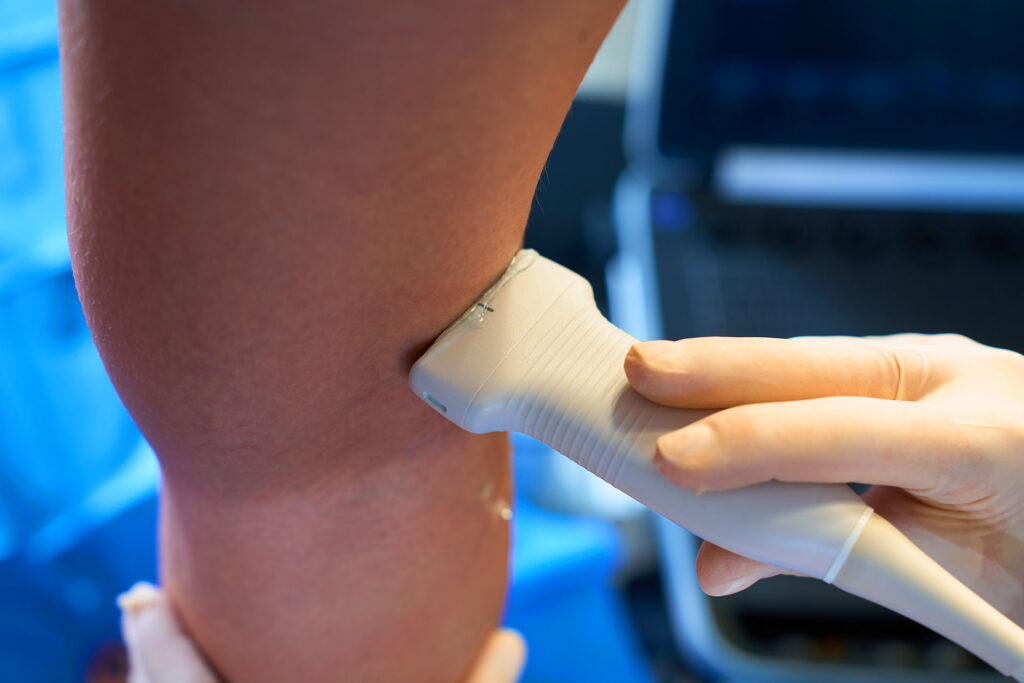
A 30-minute duplex ultrasound maps venous reflux, grades severity, and determines whether ablation is appropriate. Most insurance covers evaluation when vein symptoms are documented. CURA Vein Doctors provides same-day vein assessments in New Jersey.
References
- Gloviczki P, Comerota AJ, Dalsing MC, et al. The care of patients with varicose veins and associated chronic venous diseases: clinical practice guidelines of the Society for Vascular Surgery and the American Venous Forum. J Vasc Surg. 2011;53(5 Suppl):2S–48S.
- Eberhardt RT, Raffetto JD. Chronic venous insufficiency. Circulation. 2014;130(4):333–346.
- Rabe E, Partsch H, Hafner J, et al. Indications for medical compression stockings in venous and lymphatic disorders: an evidence-based consensus statement. Phlebology. 2018;33(3):163–184.