
Reviewed by Dr. Amir Issa, MD, DABVLM, RPhS · CURA Vein Doctors · November 2026
The skin on your ankle has been breaking down for weeks. A shallow wound that refuses to close, no matter what you put on it. You’ve tried antiseptic, bandages, over-the-counter cream. Nothing works. Normal wound care wasn’t designed for this. Could it be a venous stasis ulcer?
What Is a Stasis Ulcer
Stasis ulcers begin with the veins, not the skin. When the valves inside the leg veins stop working correctly, blood flows backward and collects in the lower leg. That pooling raises the pressure inside the smallest blood vessels until the surrounding tissue breaks down. Chronic venous insufficiency is the underlying condition in the vast majority of cases.
What Causes Venous Stasis Ulcers?
Stasis ulcers are the endpoint of a progression that starts with valve failure and builds over months or years. The most common contributors are chronic venous insufficiency, previous deep vein thrombosis, varicose veins, obesity, and prolonged standing or sitting. Each adds to the sustained venous pressure that overwhelms the skin’s ability to stay intact. The progression from early vein disease to open venous ulcers follows recognizable stages, beginning with hemosiderin staining and skin thickening before the wound itself appears.
Stasis Ulcer vs Pressure Ulcer
Not all leg wounds are the same. Treating a stasis ulcer like a pressure ulcer leads to the wrong care plan and delays healing. The two conditions differ in location, appearance, cause, and how they respond to treatment.
Characteristics of a Venous Stasis Ulcer
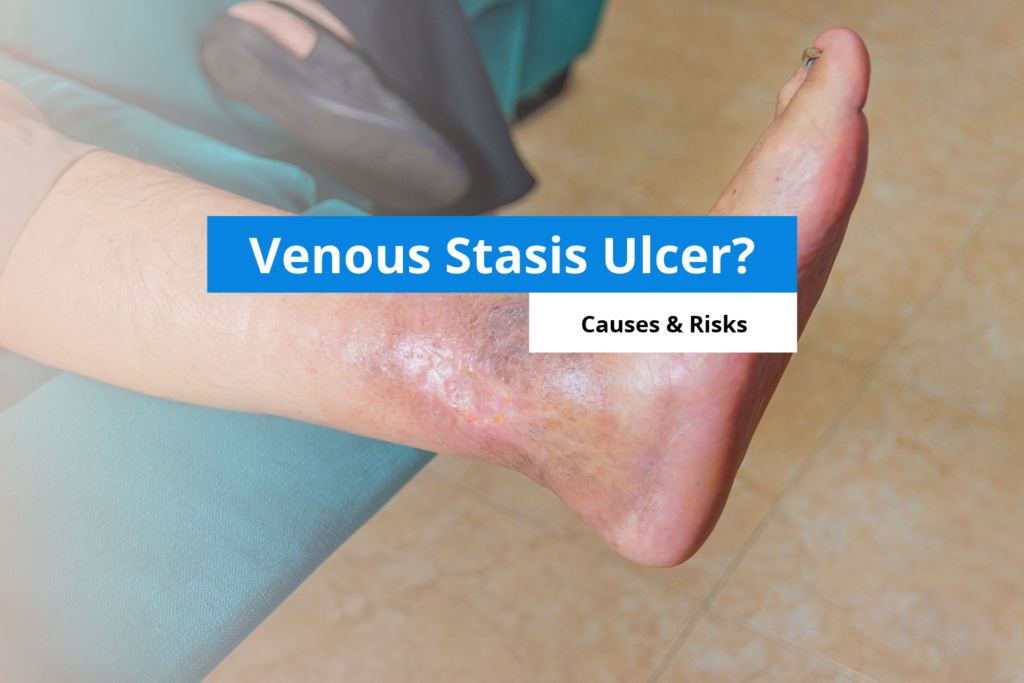
A venous stasis ulcer is typically shallow with irregular, poorly defined edges. The wound bed is moist, often covered in yellow fibrinous tissue, and may produce significant drainage. The surrounding skin is the most reliable diagnostic clue: darkened, thickened, and discolored from hemosiderin deposits left behind by blood leaking into tissue. That skin change is called stasis dermatitis, and it almost always develops before the ulcer itself opens. In earlier stages, venous stasis blisters can form as fluid builds under the damaged skin before it finally breaks through. The inner ankle and lower leg are the most common sites.
Wound Care for Stasis Ulcers
Wound care alone does not heal a stasis ulcer. The underlying venous pressure must be treated at the same time. These steps manage the wound while that treatment takes hold.
Clean gently with saline or clean water
Avoid hydrogen peroxide and iodine. Both damage the new tissue forming at the wound edges and slow healing.
Apply a moisture-retaining, non-adherent dressing
A moist wound environment heals faster than a dry one. The dressing type should be chosen based on drainage level; your provider can guide the right choice.
Wear graduated compression consistently
Compression directly reduces the venous pressure driving the wound. The correct pressure level must be confirmed by a vascular specialist before starting, since compression can be harmful if arterial disease is also present.
Elevate the leg above heart level as often as possible
Elevation reduces fluid buildup and lowers the venous pressure in the lower leg. Even short periods throughout the day make a difference.
Watch for infection
Increasing redness, expanding warmth, bad odor, cloudy discharge, or fever all require prompt medical attention. An infected stasis ulcer can progress to cellulitis or sepsis if left untreated.
When to See a Varicose Vein Specialist
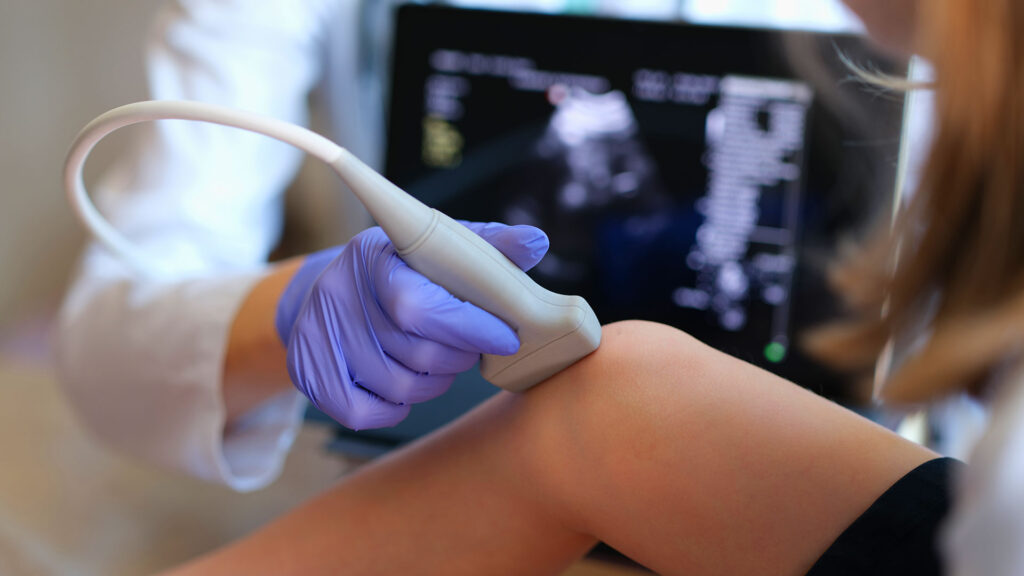
A stasis ulcer that has been present for more than two weeks, or one that is growing rather than shrinking, needs a vascular evaluation. Finding a varicose vein specialist is not just about closing the wound. It is about diagnosing the venous reflux behind it and stopping the wound from reopening. A duplex ultrasound maps the failing vein segments; an ankle-brachial index rules out arterial disease before compression is started.
Without treating the underlying vein disease, recurrence rates exceed 70 percent within five years. Patients who do achieve closure often notice the skin around the scar stays numb or hypersensitive for months. Local nerves damaged by chronic pressure and poor circulation take time to recover, and how long that recovery takes depends on how deep the injury went and how long the tissue was deprived.
Frequently Asked Questions
What causes venous stasis ulcers?
Venous stasis ulcers develop when chronically elevated pressure in the leg veins damages the skin and surrounding tissue. The root cause is almost always chronic venous insufficiency, where damaged vein valves allow blood to pool in the lower leg instead of returning to the heart. Over time, that sustained pressure breaks down the skin.
How to treat a venous ulcer at home?
At home, keep the wound clean, apply a moisture-retaining non-adherent dressing, and elevate the leg above heart level as often as possible. Compression is the most important element of treatment, but the correct type and pressure level should be confirmed by a vascular specialist before starting. Wound care alone will not close a stasis ulcer if the underlying venous disease is not addressed.
Are vascular ulcers painful?
Venous stasis ulcers are often surprisingly mild in pain compared to their appearance, though some patients describe a dull aching or burning that worsens at the end of the day. Arterial ulcers tend to be significantly more painful, particularly at night or when the leg is elevated. Pain level is one of several clues clinicians use to tell the two types apart.
How should I care for a venous stasis ulcer?
Keep the wound moist but not wet, change dressings regularly, and wear graduated compression as directed by your provider. Elevate the leg whenever possible to reduce venous pressure. Avoid smoking, prolonged standing, and tight footwear, as these slow healing and raise the risk of recurrence.
CURA Vein Doctors
A wound that won't close is a vein problem first.
Our board-certified vein specialists use duplex ultrasound to identify the failing vein segments driving your ulcer and treat the source, not just the surface.
References
- O’Meara S, Cullum N, Nelson EA, Dumville JC. Compression for venous leg ulcers. Cochrane Database Syst Rev. 2012;11:CD000265.
- Marston W, Tang J, Kirsner RS, Ennis W. Wound healing society 2015 update on guidelines for venous ulcers. Wound Repair Regen. 2016;24(1):136–144.
- Moffatt CJ, Franks PJ, Doherty DC, et al. Prevalence of leg ulceration in a London population. QJM. 2004;97(7):431–437.