
Reviewed by Dr. Amir Issa, MD, DABVLM, RPhS · CURA Vein Doctors · October 2026
Not every burst blood vessel is an emergency, and not every one is harmless. The difference comes down to size, depth, and what caused it, and getting that distinction right changes everything about what you should do next.
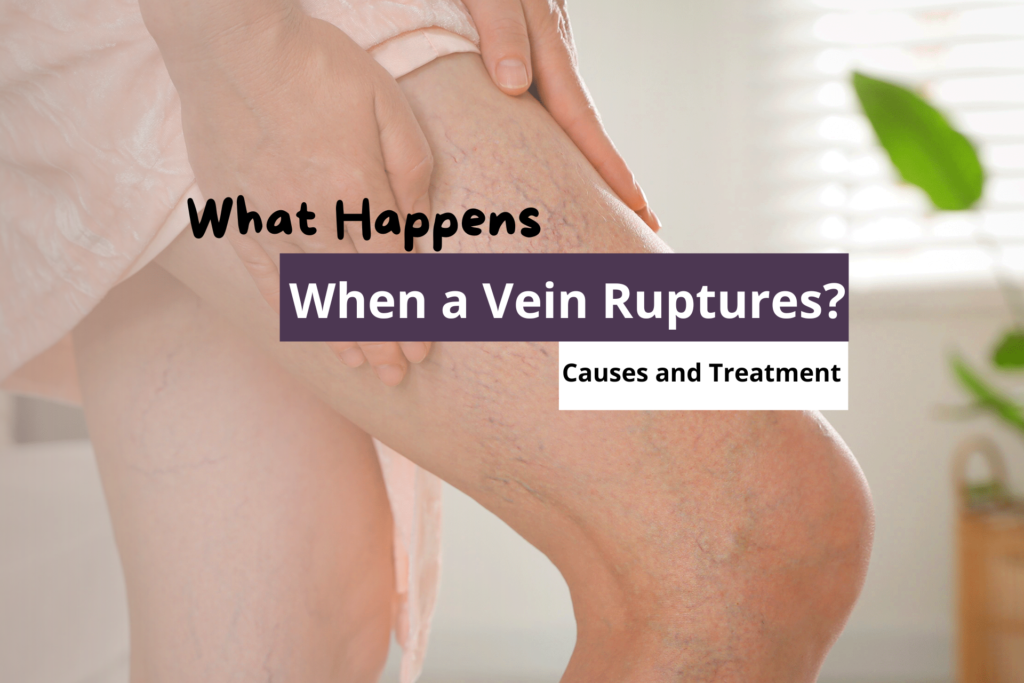
What Happens When a Vein Ruptures?
When a vein ruptures, its wall tears and blood escapes into the surrounding tissue instead of staying contained. A small, superficial vessel produces a bruise that resolves on its own. A larger vein, especially a varicose vein under chronic pressure, can bleed heavily beneath or through the skin and needs direct pressure and medical attention.
How Serious Is a Burst Blood Vessel in the Leg?
| Type | What It Looks Like | Seriousness |
|---|---|---|
| Small superficial vessel | A bruise or small red or purple patch | Minor, resolves on its own |
| Broken capillary | Thin red or purple thread, no swelling | Minor, cosmetic only |
| Ruptured varicose vein (internal) | Rapid bruising, dizziness, no visible wound | Moderate to serious, needs evaluation |
| Ruptured varicose vein (through skin) | Active, visible bleeding | Medical emergency, call 911 if bleeding won’t stop |
What Causes a Vein to Rupture?
- Pressure buildup from varicose veins. Chronically weakened valves let pressure build until the vein wall gives way.
- Prolonged standing. Adds sustained pressure to already-weakened veins over the course of a day.
- Weight gain. Extra pressure on leg veins compounds existing weakness.
- Trauma or injury. A direct blow to a fragile, already-dilated vein can cause it to burst.
- Blood-thinning medications. Make bleeding more likely and harder to stop once a vessel is damaged.
What Should You Do Immediately After a Vein Ruptures?
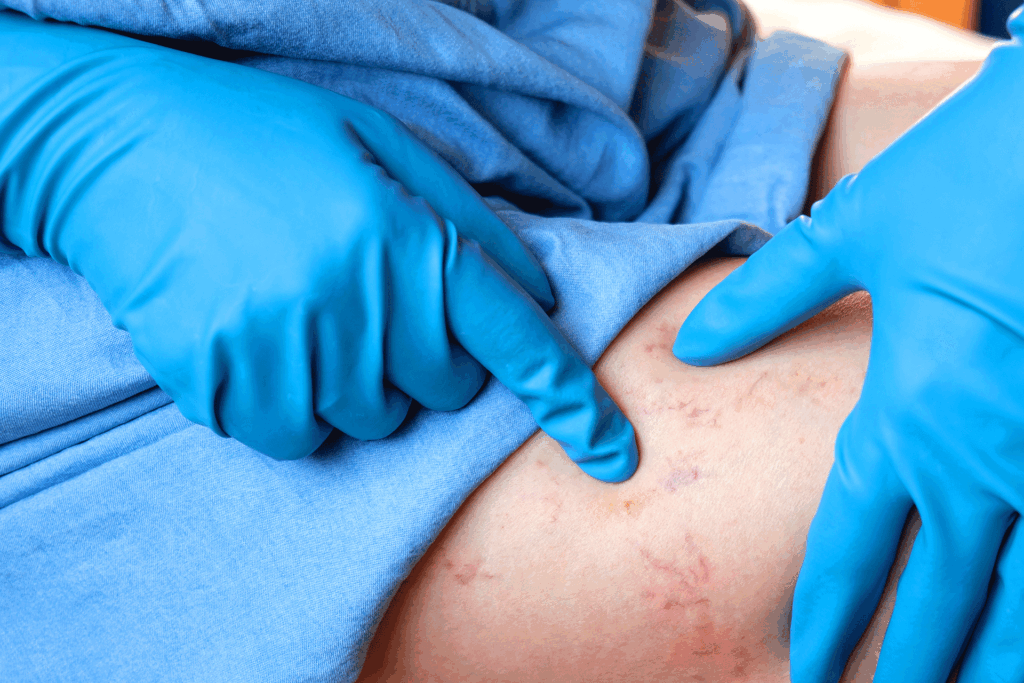
- Elevate the affected leg above heart level right away
- Apply firm, direct pressure to the site with a clean cloth
- Keep steady pressure on until bleeding slows or stops
- Call 911 if bleeding is heavy, won’t stop after several minutes, or you feel faint or dizzy
- Seek medical attention even after bleeding stops, the underlying vein still needs evaluation
How Do You Treat a Ruptured Vein in the Leg?
| Severity | Treatment |
|---|---|
| Minor bruise or broken capillary | None needed, or sclerotherapy later for cosmetic fading |
| Internal rupture, no skin break | Compression, elevation, monitoring, ultrasound to confirm extent |
| Active bleeding through skin | Emergency direct pressure and wound care, then treat the underlying vein to prevent recurrence |
Can a Ruptured Blood Vessel Heal Itself?
Small ones, yes. A minor broken capillary or light bruise heals completely on its own as your body reabsorbs the leaked blood. A larger rupture, especially from an untreated varicose vein, can stop bleeding and close over, but the underlying weak vein doesn’t fix itself, it will keep rupturing again under the same pressure until that vein is actually treated.
How Long Does It Take for a Broken Blood Vessel in the Leg to Heal?
A small bruise or broken capillary typically fades within one to two weeks. A larger rupture that required direct pressure or stitches can take two to four weeks for the skin to fully heal, though the underlying vein problem, if left untreated, remains indefinitely and raises the risk of it happening again in the same spot.
When Should You See a Doctor of Veins About a Ruptured Vein?
See a doctor of veins after any rupture tied to a varicose vein, even a minor one, since the underlying pressure problem will cause it to happen again until it’s treated. For the specific warning signs vein specialists watch for before a rupture happens, see our guide on burst vein in leg warning signs. For a broader look at vessel rupture anywhere in the body, see our guide on why blood vessels burst.
Frequently Asked Questions
How serious is a burst blood vessel in the leg?
It depends on size and depth. A small broken capillary is harmless, while a bleeding varicose vein rupture is a medical emergency requiring direct pressure and prompt care.
How do you treat a ruptured vein in the leg?
Minor cases need no treatment. Active bleeding needs immediate direct pressure, and the underlying vein should be evaluated afterward to prevent it happening again.
How long does it take for a broken blood vessel in the leg to heal?
A minor bruise fades in one to two weeks. A larger rupture can take two to four weeks for the skin itself to heal completely.
Can a ruptured blood vessel heal itself?
Small ones heal completely on their own. Larger ruptures from a varicose vein will close over but the weak vein itself needs treatment to stop it recurring.

A vein that’s ruptured once will likely do it again until the underlying pressure is addressed, often accompanied by persistent chronic pain. Call CURA Vein Doctors at +1 973-363-2029 or use the contact page to get it evaluated.