
Medically reviewed by CURA Vein Doctors · Updated November 2026
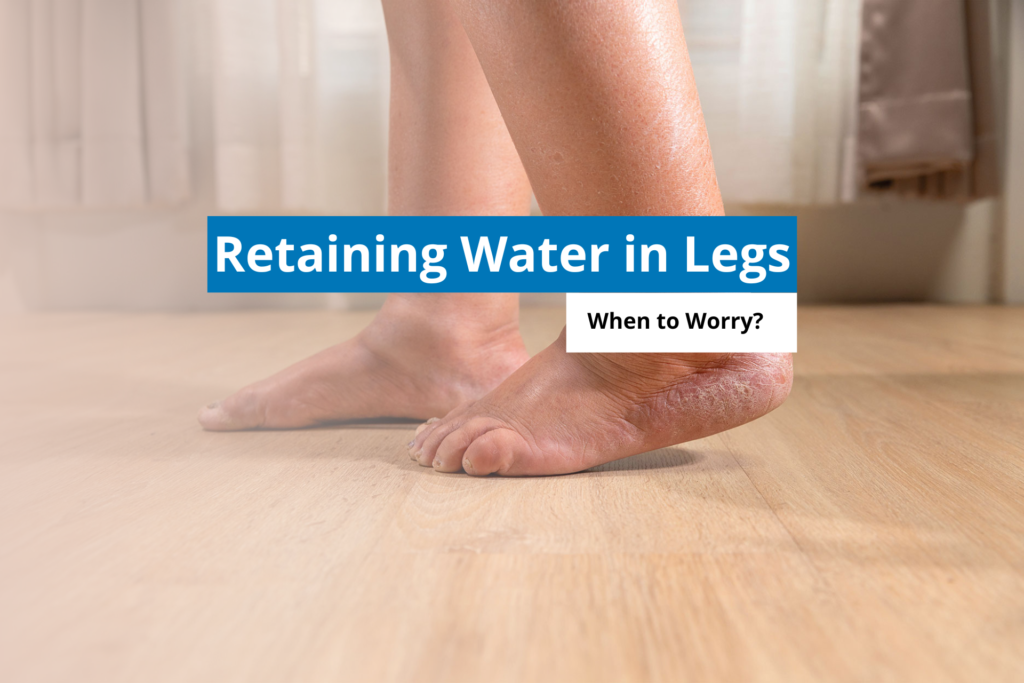
Your legs feel heavy. The ankles look puffy by mid-afternoon. By evening, your shoes barely fit. Retaining water in legs is one of the most common vascular complaints in clinical practice, and the causes range from a salty meal to early heart failure. Getting that distinction right determines the right treatment. So what is actually driving yours?
Retaining Water in Legs
Retaining water in legs occurs when fluid leaks from blood vessels into surrounding tissue faster than the lymphatic system can clear it. Chronic venous insufficiency, heart or kidney disease, prolonged inactivity, and certain medications are the most common causes. Most mild cases respond to elevation and compression; swelling that persists or worsens requires a clinical evaluation.
Three systems govern fluid balance in the lower leg: the veins (returning blood to the heart), the lymphatics (clearing interstitial fluid), and the kidneys (controlling total body fluid volume). When one fails, fluid accumulates. The pattern of swelling reveals which system is involved.
What Causes Water Retention in Legs?
Bilateral swelling (both legs at once) usually signals a systemic cause: heart failure, kidney disease, liver disease, or a medication side effect. Unilateral swelling (one leg only) is more likely vascular or structural: a blood clot, damaged vein valves, or a local injury. That bilateral versus unilateral pattern is the fastest first diagnostic step.
| Cause | Pattern | Key Associated Sign | Urgency |
|---|---|---|---|
| Chronic venous insufficiency | Both legs | Ankle pitting, skin discoloration, worse by evening | Book evaluation |
| Deep vein thrombosis | One leg | Warmth, aching calf, rapid onset | Same-day care |
| Heart failure | Both legs | Shortness of breath, fatigue, bilateral pitting edema | Urgent |
| Kidney or liver disease | Both legs, often face | Foamy urine, abdominal bloating, low albumin | Prompt workup |
| Medications | Both legs | Onset after amlodipine, corticosteroids, or NSAIDs | Review with prescriber |
| Lymphedema | Usually one limb | Non-pitting, skin progressively thickens | Specialist referral |
When Does Fluid Retention in Legs Signal Something Serious?
Chronic venous insufficiency (CVI) is the most common venous cause seen in a vein clinic. Faulty vein valves allow blood to pool in the lower legs, raising hydrostatic pressure inside the vessel wall and pushing fluid into surrounding tissue. The swelling builds through the day and typically improves overnight when legs are horizontal. Left untreated, CVI progresses from pitting edema to skin thickening, discoloration, and eventually venous ulcers. Fluid that pools above the ankle can also collect around the knee joint, contributing to knee stiffness alongside the visible swelling. Venous insufficiency at the valve level is treatable with minimally invasive in-office procedures that address the structural problem directly.
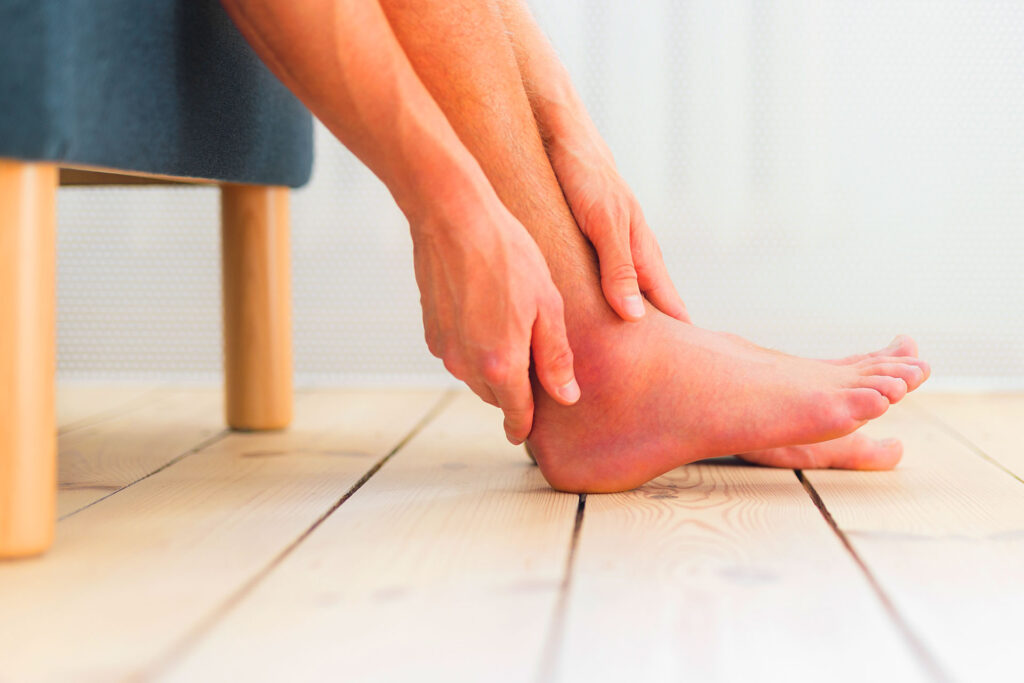
Unilateral swelling that appears suddenly is more urgent. A deep vein thrombosis causes one leg to swell rapidly, often with warmth, aching, and redness. Prolonged immobility, surgery, pregnancy, and clotting disorders all raise the risk. If a clot breaks free and reaches the lungs, a pulmonary embolism can develop within hours. Any sudden one-sided swelling with warmth or pain warrants same-day evaluation.
| Warning Sign | Possible Cause | What to Do |
|---|---|---|
| Sudden swelling in one leg with warmth or aching | Deep vein thrombosis | Same-day evaluation |
| Bilateral swelling with shortness of breath or waking unable to lie flat | Heart failure | Emergency care |
| Leg swelling with fever, redness, and skin hot to the touch | Cellulitis | Same-day care |
| Leg and face swelling with headache or vision changes during pregnancy | Preeclampsia | Emergency care |
| Pitting edema that does not improve overnight | Systemic cause | Book within days |
When to See a Doctor
How Urgent Is Your Swelling?
Monitor at Home
Mild bilateral ankle swelling that resolves overnight. Likely from diet, heat, or long hours on your feet. Elevation, reduced sodium, and compression for 1–2 weeks.
Book a Vascular Evaluation
Swelling persisting more than two weeks, recurring without a clear trigger, accompanied by skin changes or aching, or worsening progressively through the day.
Seek Urgent Care Today
Sudden one-sided swelling with warmth or pain, difficulty breathing alongside any leg swelling, fever with redness, or swelling in the face and hands during pregnancy.
Pregnancy deserves its own mention. Mild bilateral ankle swelling in the third trimester is common and usually harmless. Swelling that extends above the knee, involves the face or hands, or accompanies a severe headache, visual changes, or upper abdominal pain may indicate preeclampsia and requires emergency evaluation. Varicose veins during pregnancy add additional venous pressure and can accelerate fluid retention throughout all three trimesters.
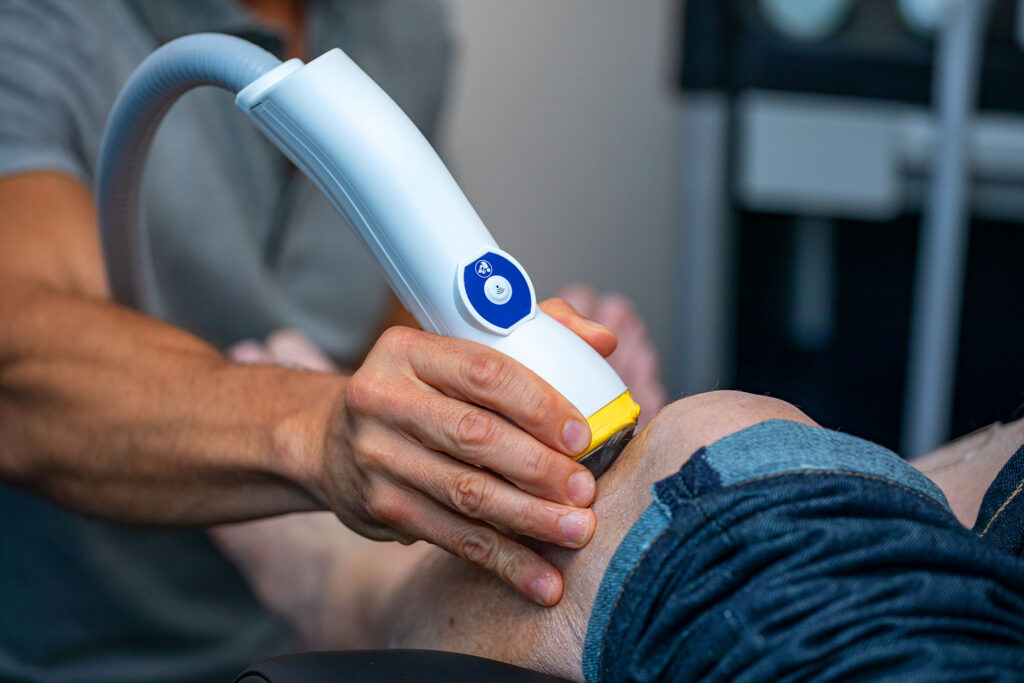
What to Do About Retained Water in Legs
These measures work best for mild, positional, or diet-driven swelling. They reduce symptoms but do not treat vascular or systemic causes.
Diuretics reduce total fluid volume but do not fix a leaking vein valve or a blocked lymphatic vessel. For venous-driven swelling they provide temporary relief while increasing the risk of dehydration and electrolyte imbalance. A vascular evaluation determines whether the cause is structural and can be corrected rather than managed indefinitely.
Frequently Asked Questions
How can I get rid of water retention in my legs?
Leg elevation, graduated compression stockings (20–30 mmHg), and limiting sodium to under 2,300 mg per day help most mild cases resolve within days. Swelling that persists beyond two weeks or returns without a clear trigger warrants a vascular evaluation to identify an underlying cause.
What is the fastest way to flush water retention?
Elevating both legs above heart level for 30 minutes reduces hydrostatic pressure and allows fluid to shift back into circulation within hours. Combining elevation with graduated compression and light walking produces the fastest results for venous-driven swelling.
What to drink to stop leg swelling?
Adequate water intake keeps the kidneys from retaining sodium and fluid; most adults need 2–3 liters per day. Alcohol and high-sodium drinks worsen swelling, and electrolyte-balanced fluids work better than plain water alone when activity or heat is the trigger.
How long does it take for fluid retention in legs to go away?
Swelling from a long flight, hot weather, or a salty meal typically resolves within 24–48 hours with rest and elevation. Swelling from venous insufficiency or a systemic condition requires treatment of the underlying cause and may take weeks to months to fully improve.
Leg Swelling That Won’t Go Away?
Persistent fluid retention in legs often points to a vein problem that is treatable in a single office visit. CURA Vein Doctors offers a free, no-obligation evaluation in New Jersey.
Book Your Free Consultation Call +1 973-363-2029References
- Ely JW, Osheroff JA, Chambliss ML, Ebell MH. Approach to leg edema of unclear etiology. J Am Board Fam Med. 2006;19(2):148–160. doi:10.3122/jabfm.19.2.148
- Cho S, Atwood JE. Peripheral edema. Am J Med. 2002;113(7):580–586. doi:10.1016/S0002-9343(02)01322-0
- Rabe E, Partsch H, Hafner J, et al. Indications for medical compression stockings in venous and lymphatic disorders. Phlebology. 2018;33(3):163–184. doi:10.1177/0268355516689631