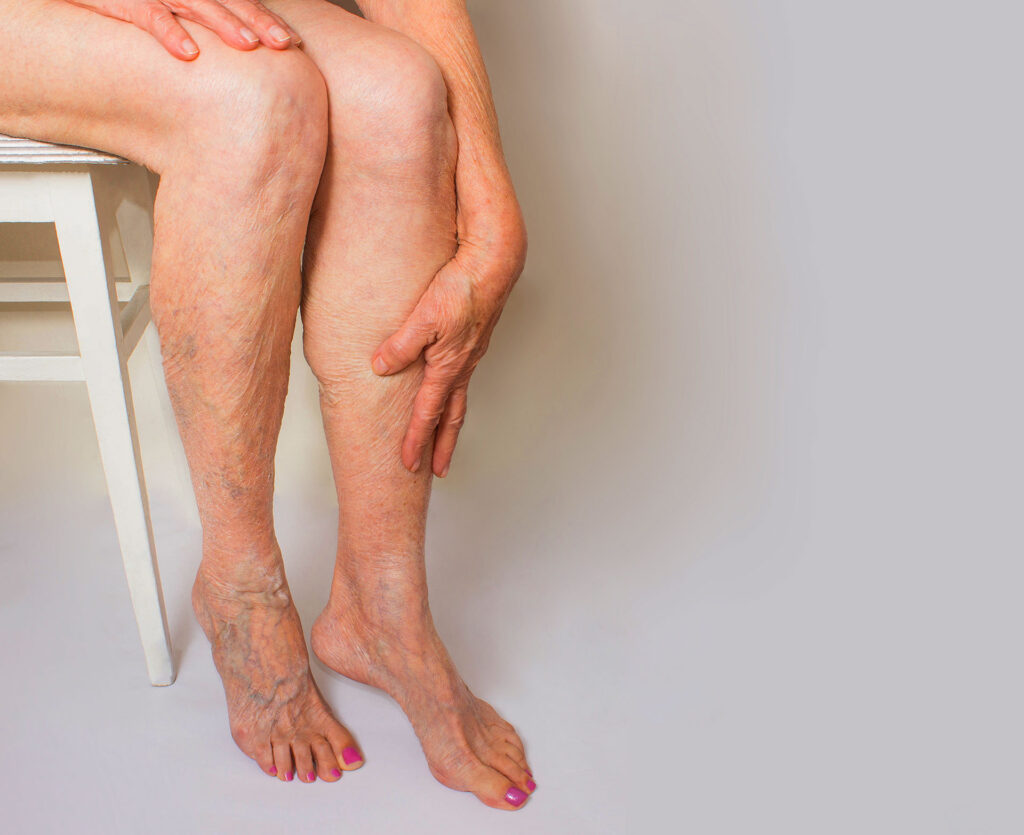
That heaviness should fade with rest.
When it doesn’t, something is wrong.
Most people know tired legs from a long day on their feet. What does not fade, and should not be ignored, is when the same feeling shows up every day without a clear reason.
Faulty valves. Pooling blood.
A pressure your body can’t ignore.
Chronic leg heaviness is the hallmark of venous insufficiency. Knowing what separates a vascular problem from ordinary tiredness can mean the difference between early treatment and years of progression.
“The legs are the furthest point from the heart. When circulation falters, they are always the first place to show it.”
Understanding the symptom
What does it mean when your legs feel heavy?
Not a diagnosis.
A signal.
The body produces that weighted sensation when blood accumulates in the lower legs faster than it can be cleared. In a healthy system, one-way valves snap shut after each heartbeat. When they weaken, blood seeps backward and collects in the calf and thigh.
No visible veins?
You can still have a problem.
Many people have significant valve dysfunction with no outward signs, which is why leg heaviness is often the earliest, most ignored clue. Mornings are comfortable. Evenings are not. That pattern means something.

Five signs your heavy legs are telling you something important
Sign
01
The heaviness follows a daily pattern
Fine in the morning. Aching by afternoon. Every single day.
“If you have started propping your legs up every evening, your body is already compensating.”
Muscle fatigue does not follow a clockwork schedule. Vascular heaviness does. If your legs feel reasonably normal in the morning and reliably heavy or achy by afternoon, that pattern is characteristic of chronic venous insufficiency. Gravity works on pooling blood all day long. Elevation brings relief because it allows gravity to drain the excess back toward the core.
Sign
02
Swelling around the ankles and lower legs
Sock-line marks. Puffy ankles. Fluid with nowhere to go.
“Press a finger in. If the dent lingers, that is pitting edema. That is a sign.”
When venous pressure builds past a threshold, fluid is pushed out of vessel walls into surrounding soft tissue. A classic indicator is sock-line edema, where the elastic band leaves a visible indentation. This type of swelling is not caused by exertion. When swelling comes with persistent aching,
chronic pain and vascular issues often need to be assessed together.
Sign
03
Night cramps and restless sensations
Not a water problem. A circulation problem.
“Treating venous insufficiency has been shown to significantly reduce restless leg symptoms.”
Nocturnal leg cramps are closely associated with venous insufficiency, thought to result from poor circulation, muscle hypoxia, and nerve irritation from distended vessels. Restless leg syndrome has a documented overlap with vein disease. Waking with
nocturnal cramping alongside daytime heaviness is rarely coincidental.
Sign
04
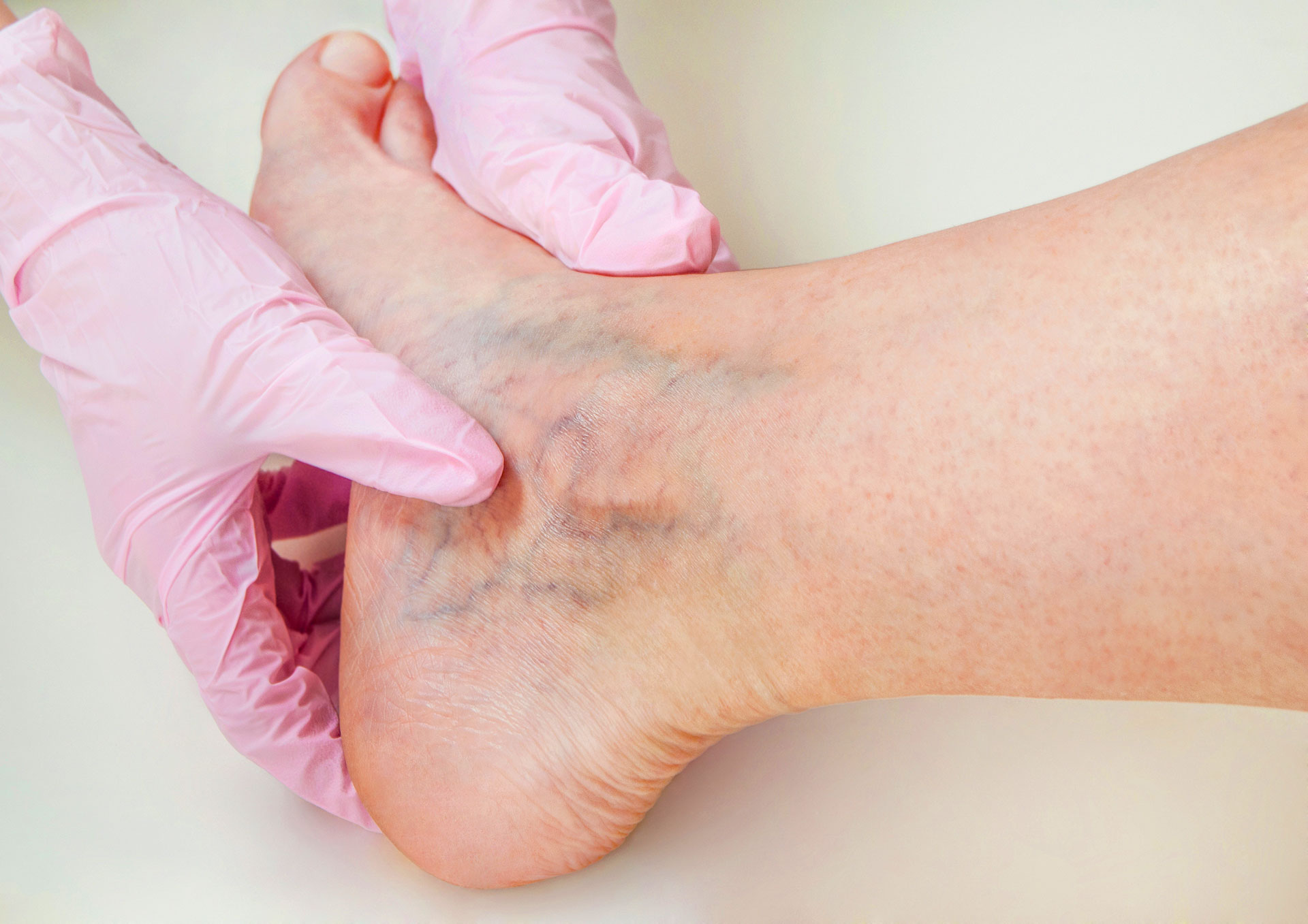
Visible veins, skin changes, or itching
The skin is showing what’s happening underneath.
“Persistent itching over a vein, with no rash, is a recognized early symptom.”
Varicose veins are a direct consequence of valves that have failed. But the signs go deeper: brownish discoloration, dry or leathery skin near the ankle, and persistent itching all reflect long-term venous pressure. These changes are progressive: the longer insufficiency goes untreated, the worse they become. Several
vein procedures address both the cosmetic and medical aspects.
Sign
05
Symptoms worsen with heat or sitting
Summer, hot showers, long desk days: all make it worse.
“The calf muscle pump stops when you sit. Circulation slows. Pooling begins.”
Heat causes vessels to dilate, amplifying the pooling effect in already-struggling veins. Prolonged sitting creates a separate problem: when the legs are bent for hours, the calf muscle pump, which assists venous return during walking, goes inactive. If your legs feel heavy and weak by the same time each afternoon at your desk, you are experiencing circulatory insufficiency, not simple fatigue.
When to seek evaluation promptly
Sudden swelling in one leg only, accompanied by warmth, redness, or tenderness along the inner calf, can indicate deep vein thrombosis and warrants immediate medical attention. This is distinct from the bilateral, gradually developing heaviness associated with venous insufficiency, but both require clinical evaluation.
How to tell if your symptoms fit the pattern
Venous insufficiency builds slowly. Tired legs become heavier legs, then aching legs, then legs with visible changes. This checklist can help clarify whether a clinical evaluation makes sense.
My legs feel significantly heavier by afternoon than they do in the morning
Elevating my legs brings noticeable relief within 15 to 20 minutes
My ankles or calves swell during the day and look normal again by morning
I experience leg cramps or restless sensations at night on a regular basis
I have visible varicose or spider veins on one or both legs
Symptoms worsen noticeably in warm weather or after prolonged sitting
Two or more yes answers suggests a vascular component worth investigating. A venous duplex ultrasound maps blood flow and valve function in under an hour.
Frequently asked questions
What does it mean when your legs feel heavy every day?
Heaviness that follows a daily pattern, worse in the afternoon and better after lying down, typically points to venous insufficiency rather than fatigue. Weakened vein valves allow blood to pool in the lower legs, creating internal pressure the tissue registers as weight and aching. Unlike muscle tiredness, it does not ease with rest alone.
Why do my legs feel heavy and weak even without strenuous activity?
When heaviness cannot be explained by physical activity, the circulatory system is the most logical place to look. Venous insufficiency creates a persistent load on leg tissues that has nothing to do with exertion. Other causes include anemia, peripheral artery disease, and certain medications, which is why clinical evaluation matters.
Can legs feel tight and hurt without visible varicose veins?
Yes. A significant proportion of people with venous insufficiency have no visible varicose veins at all, because the dysfunction can exist entirely in the deeper venous system. Tightness, swelling, and a predictable daily pattern are all consistent with the condition even when the skin looks normal. A duplex ultrasound is the only way to confirm
what causes calf cramps at night and what is happening deeper.
Is leg heaviness related to spider veins?
Spider veins can be a visible indicator of elevated venous pressure in the underlying system, though not everyone with them has symptomatic insufficiency. Their presence alongside heaviness, swelling, or aching is worth evaluating, particularly since
surface treatments now address both cosmetic and functional concerns.
Does wearing compression stockings help with heavy legs?
Compression stockings apply graduated pressure that helps push blood upward and counteracts pooling, providing real symptom relief for many people. They do not treat the underlying valve dysfunction and only work while worn. A clinical evaluation can determine whether a more definitive treatment is appropriate.
When should heavy legs be considered a medical emergency?
Sudden swelling, warmth, and tenderness in one leg, particularly in the calf, can indicate deep vein thrombosis and requires immediate evaluation. Heaviness arriving suddenly alongside shortness of breath or chest pain may signal a pulmonary embolism and warrants emergency care. Gradual bilateral heaviness building over weeks is less urgent but still deserves timely attention.
Tired legs are common. This pattern is not.
Legs tired from exertion resolve with sleep. Legs heavy from venous insufficiency persist, gradually worsen, and can eventually progress to skin changes and ulcers if left unaddressed.
If your legs feel heavy and weak on a regular schedule, swell predictably, and recover only after lying down, these are not the hallmarks of a busy life. They are signs of a vascular system that deserves attention. Catching venous insufficiency early makes every treatment option simpler.
Ready to understand what your legs are telling you?
Our vein specialists can evaluate your symptoms with a duplex ultrasound and provide a clear picture of what is happening.
Contact us