
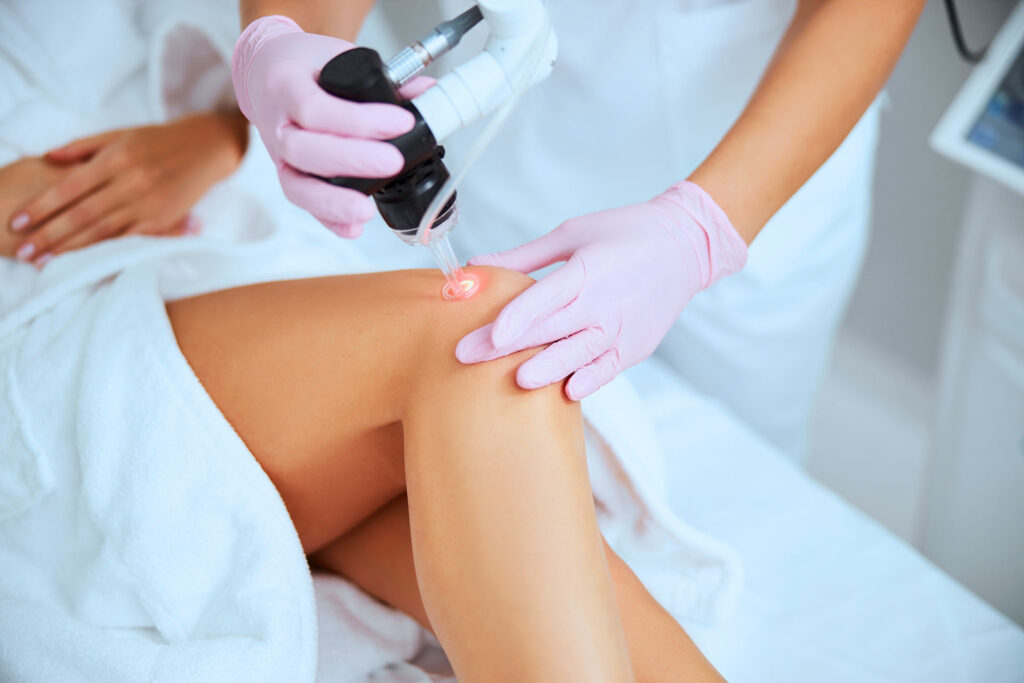
Spider veins are one of the most common reasons people walk into a vein clinic. Small, web-like clusters of red, blue, or purple vessels sitting just beneath the skin. Not dangerous, usually. But visible. And for a lot of people, that visibility is enough. Laser treatment is one of the most frequently searched solutions. It sounds clean, precise, and modern. But how well does it actually work? And is it always the right choice? This article gives you a clear picture.
Does Laser for Spider Veins Actually Work?
Laser for spider veins works by targeting the pigment in blood with a focused beam of light. The heat generated collapses the vessel wall. The body then absorbs the treated vein over several weeks. Results are real for small, superficial veins on the face and legs, though sclerotherapy typically outperforms laser for leg spider veins in terms of clearance rate and cost per session.
How Laser Treatment Works on Spider Veins
Laser energy travels through the skin without cutting it. It targets oxyhemoglobin, the pigment that gives blood its color. When the laser hits the vein, the energy converts to heat, the vessel wall contracts, and blood flow through that vessel stops. The vein gradually breaks down and disappears over two to six weeks as the body reabsorbs it.
The key variable is vein size. Laser works best on very fine, superficial vessels, typically those under 3mm in diameter. Larger, deeper veins absorb less energy from a surface laser, which is why results vary considerably depending on the type and location of the vein being treated.
Laser vs. Other Spider Vein Treatments: How They Compare
| Treatment | Best For | How It Works | Downtime | Sessions Needed |
|---|---|---|---|---|
| Surface laser | Small facial veins, fine leg spider veins | Light energy collapses the vessel | Minimal, some redness | 2 to 4 |
| Sclerotherapy | Leg spider veins, reticular veins | Injectable solution collapses the vein | None | 1 to 3 |
| Venous ablation | Varicose veins, large vessel reflux | Heat closes the vein from inside via catheter | 1 to 2 days | 1 |
| ClariVein | Varicose veins, trunk vein reflux | Rotating catheter + chemical agent | Minimal | 1 |
| VenaSeal | Varicose veins, saphenous vein closure | Medical adhesive seals the vein | None | 1 |
Each treatment suits a different type of vein problem. Using the wrong one for the wrong vein is the most common reason people end up disappointed with results.
Where Laser Works Well
Facial veins are where surface laser tends to perform best. The skin on the face is thinner, the vessels are closer to the surface, and the contrast between the vessel and surrounding tissue is sharp enough for laser energy to work precisely. Nose, cheeks, and around the eyes respond well in most patients.
Fine leg spider veins in lighter skin tones also respond to laser, though results are more variable than on the face. Vessels below 1mm in diameter, particularly those too small to inject with a needle, are good candidates.
Patients who cannot tolerate needles sometimes prefer laser because it avoids injection entirely. The tradeoff is that clearance rates for leg veins are generally lower than sclerotherapy over the same number of sessions.
Where Laser Falls Short
Larger leg spider veins and reticular veins (the blue-green feeder veins beneath spider vein clusters) do not respond as well to surface laser. The energy does not penetrate deeply enough to close the vessel reliably. Sclerotherapy reaches these veins more consistently.
Darker skin tones carry more melanin in the surrounding tissue, which competes with the target vein for laser energy. The risk of hyperpigmentation increases, and some laser systems are not appropriate for skin types IV through VI without specific wavelength adjustment. A skilled provider will assess this during consultation.
Spider veins fed by underlying venous insufficiency will return after any surface treatment, laser or otherwise, if the deeper reflux is never addressed. Treating the surface without diagnosing the root cause is like clearing mold from a wall without fixing the leak behind it. The veins come back, often within months.
What a Good Consultation Should Include
Before any laser session for spider veins, a proper vein clinic will:
- Assess your skin type and vein characteristics to confirm laser is appropriate
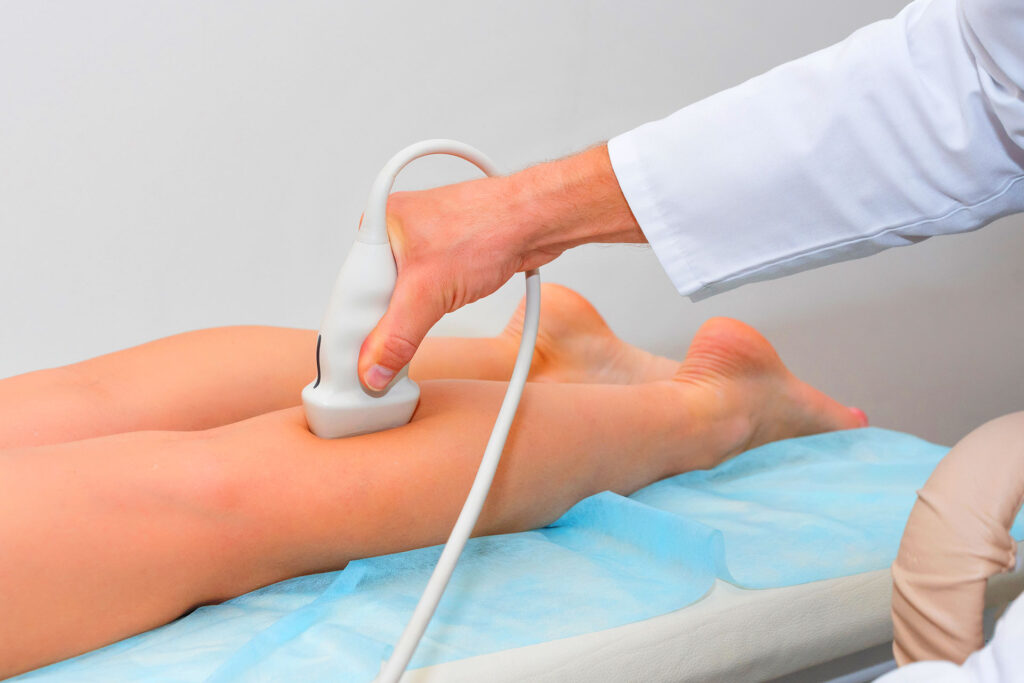
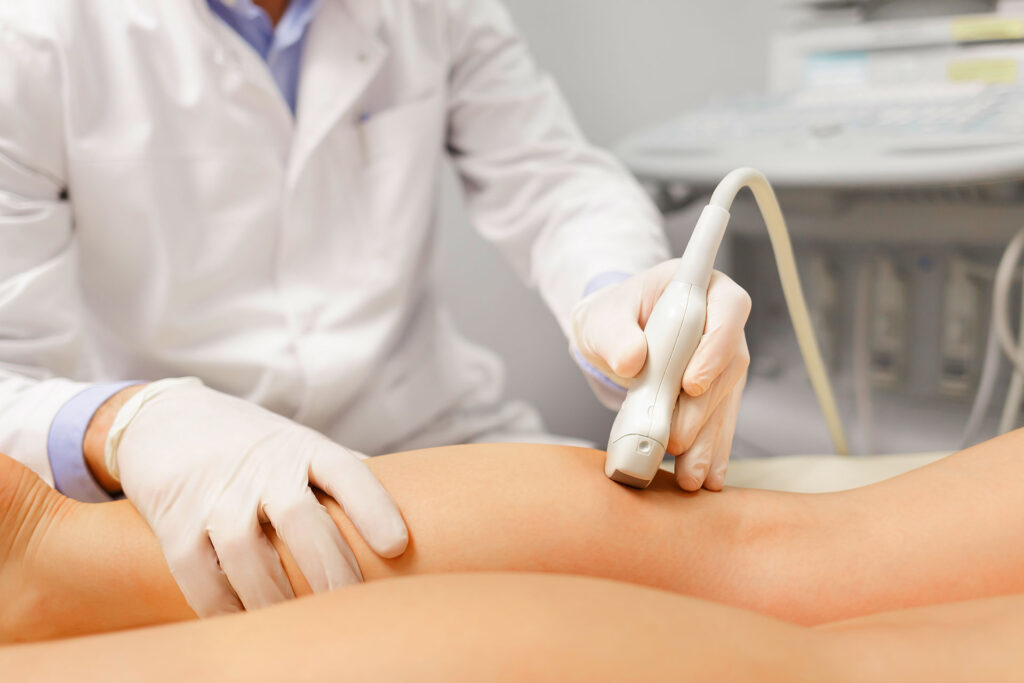
- Perform a duplex ultrasound if there is any clinical suspicion of underlying venous insufficiency
- Discuss the realistic number of sessions required and expected clearance percentage
- Explain all available options, not just laser
Any provider who skips the diagnostic step and moves straight to a treatment plan is treating the appearance, not the patient.
What to Expect During and After Treatment
A surface laser session for spider veins typically takes 20 to 45 minutes depending on the area. Most patients describe the sensation as a series of brief snaps against the skin, similar to a rubber band. Topical numbing cream can reduce discomfort, and knowing which avoid phrases to steer clear of during consultations can help set clear expectations.
After treatment:
- Redness and mild swelling around the treated area are normal for a few hours
- Sun exposure should be avoided for two to four weeks to reduce pigmentation risk
- The treated veins darken before they fade, which surprises some patients. This is normal.
- Full results take four to eight weeks to appear as the body clears the collapsed vessels
- Most patients need two to four sessions spaced four to six weeks apart for complete clearance
When the Problem Goes Deeper Than Spider Veins
Spider veins are often the visible tip of a larger venous issue. Chronic venous insufficiency, where the valves in deeper leg veins fail and blood pools under pressure, frequently produces surface spider veins as a symptom. In these cases, laser or sclerotherapy will clear the visible veins temporarily, but they return because the underlying pressure is still there.
The treatments that address the root cause are not cosmetic. They close the damaged vein entirely.
Venous ablation uses heat delivered through a thin catheter to close the great or small saphenous vein from the inside. It removes the source of the abnormal pressure that feeds surface veins. The procedure takes about an hour, requires only local anesthesia, and patients return to normal activity the next day.
Sclerotherapy can be used for both cosmetic spider veins and for treating the feeder vessels that supply them. Ultrasound-guided sclerotherapy reaches veins that are invisible on the surface but drive the problem from below.
ClariVein combines a rotating wire catheter with a sclerosing agent to close trunk veins without the need for tumescent anesthesia. It is a good option for patients who want to avoid injections along the length of the vein.
VenaSeal closes the saphenous vein using a medical-grade adhesive delivered through a catheter. No heat, no tumescent anesthesia, no compression required immediately after. Patients walk out and resume activity the same day.
For patients whose spider veins keep returning after surface treatment, one of these procedures is almost always the missing piece.
FAQ: Laser for Spider Veins
Does laser really work on spider veins?
Yes, with conditions. Laser works best on small, superficial spider veins, particularly on the face. For leg spider veins, sclerotherapy typically produces better clearance rates in fewer sessions. Laser is most useful for very fine vessels that are too small to inject or for patients who prefer to avoid needles. Results depend heavily on vein size, skin type, and whether underlying venous insufficiency is driving the problem.
How to permanently get rid of spider veins on legs?
Permanent clearance requires two things: treating the visible veins and addressing any underlying reflux feeding them. Sclerotherapy or laser removes the surface veins. If a duplex ultrasound reveals deeper valve failure, venous ablation, ClariVein, or VenaSeal closes the root cause. Veins treated without addressing underlying insufficiency return, often within a year. Treated with both steps, clearance tends to last.
What is the root cause of spider veins?
Spider veins form when small vessels near the skin surface dilate under pressure. The pressure usually comes from one of three sources: weakened venous valves allowing blood to pool, hormonal changes particularly during pregnancy or with oral contraceptive use, or prolonged standing that chronically elevates lower limb venous pressure. Genetics also plays a significant role. Sun exposure and skin aging contribute to facial spider veins specifically.
Is it worth removing spider veins?
For most people, yes. Cosmetically, treated veins clear reliably with the right procedure. Medically, spider veins caused by underlying venous insufficiency are worth addressing early before the insufficiency progresses to varicose veins, skin changes, or ulceration. The procedures are quick, minimally invasive, and covered by insurance when medical necessity is established. Waiting generally means more veins and a larger treatment area later.
Treatments That Go Further Than Cosmetic Laser
Surface laser is one tool. For many patients it is the right starting point. But spider veins fed by deeper venous disease need more than a surface fix. Our clinic offers the full range of vein treatments, from cosmetic sclerotherapy and laser to venous ablation, ClariVein, and VenaSeal for underlying disease. The right treatment depends on what the ultrasound shows, not what the veins look like from the outside. If you have treated spider veins before and watched them come back, that is the pain management conversation worth having.
See a Vein Specialist at CURA Vein Center
Compression helps. Laser helps. But if the same veins keep coming back, the conversation worth having is about the underlying cause.
At CURA Vein Center, we start with a proper diagnosis before recommending anything. Free consultation, no commitment, no surprise bills.
Contact us today or call +1 973-363-2029.