
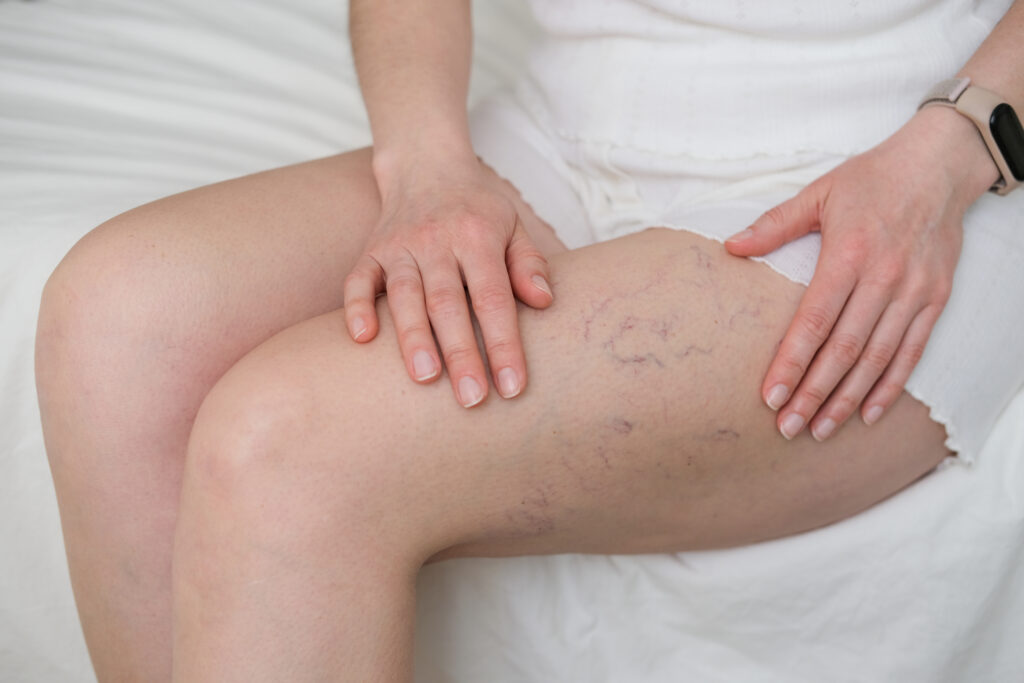
Veins of the leg are built for endurance. They push blood upward against gravity, day after day, for decades. Over time, or sometimes quite suddenly, that system starts to show on the surface. Whether it is a gradual network of blue lines spreading across the thigh or a raised, ropy vein appearing seemingly out of nowhere, visible leg veins are one of the most searched-about health concerns, and one of the least well understood.
This article covers why it happens, when it matters clinically, and what both treatment and prevention actually look like in practice.
Why My Veins So Visible: The Physiology Behind It
The veins of the leg sit at different depths. Deep veins run through the muscle, while superficial veins travel just beneath the skin. It is those superficial veins that become visible when something changes, either in the vein itself or in the tissue around it.
In a healthy venous system, one-way valves keep blood moving efficiently toward the heart. When those valves weaken or fail, blood pools in the vein. The pressure builds, the vein wall expands, and what was once an invisible vessel becomes a visible, sometimes bulging, presence under the skin.
This process explains most cases of large veins and bulging veins on the legs. But it is not the only explanation for visibility. In leaner or more muscular individuals, veins appear prominent simply because there is less subcutaneous fat acting as a buffer between the vessel and the skin surface. Neither scenario is identical, and they do not always call for the same response.

Why Are My Veins So Visible Suddenly? When the Change Happens Fast
Gradual vein visibility is one thing. A sudden change is another, and it tends to catch people off guard. Why are my veins so visible suddenly is one of the more urgent versions of this question, and it deserves a direct answer.
Sudden or rapid changes in vein appearance can be triggered by several things:
- Rapid weight loss, which reduces subcutaneous fat and makes previously hidden veins suddenly visible
- Pregnancy, where rising blood volume and hormonal shifts can cause veins to enlarge and bulge quickly
- Hot weather, which causes blood vessels to dilate and veins to appear more prominent temporarily
- Dehydration, a common but often missed trigger that affects blood volume and vein pressure
- A venous or vascular event, such as a clot or the sudden progression of valve failure, which can cause a vein to change appearance rapidly
When a single vein suddenly becomes hard, warm, red, or painful, that is a different situation entirely. That combination points toward thrombophlebitis or deep vein thrombosis and warrants prompt medical attention rather than a wait-and-see approach.
There is also a connection between visible and symptomatic veins and sleep. An uncomfortable crawling sensation or involuntary movement in the legs at night is often dismissed as stress, but it can have a vascular origin. If that pattern sounds familiar, leg discomfort and venous disease are connected more often than most people realize.
Large Veins and Bulging Veins: Understanding the Difference
Not every visible vein is a problem, and not every vein problem looks the same. Large veins can be anatomically normal in people with lower body fat, particularly in the calves and feet. Bulging veins, on the other hand, suggest the vein wall has expanded under pressure, which is a structural change driven by valve dysfunction.
- Flat against the skin
- No associated symptoms
- Often related to body composition
- Usually harmless
- Raised above skin surface
- May ache, itch, or swell
- Driven by valve failure
- Benefit from evaluation
Spider veins sit in a separate category: small, web-like, and usually superficial. They rarely cause significant symptoms on their own but can indicate underlying venous pressure. If they are spreading or becoming uncomfortable, the options available for treatment options have improved considerably and are worth knowing about.

Prevention: What Actually Makes a Difference
You cannot change your genetics, but you can slow the progression of vein disease significantly with the right habits. These are the approaches with the most consistent evidence behind them.
How Visible Leg Veins Are Treated
Treatment decisions depend on the type of vein, the underlying cause, and what the person is hoping to achieve. Not every visible vein needs intervention, but when one does, there is a well-established range of options.
Injection-based treatment that collapses smaller veins. No anesthesia, minimal downtime. Works well for spider veins and small varicose veins.
Targeted heat closes the vein from inside. Highly effective for larger varicose veins. Typically takes under an hour with local anesthetic.
Uses controlled radiofrequency energy rather than laser. Similar outcomes with slightly less post-procedure bruising for some patients.
Removal of surface veins through tiny incisions. Reserved for larger, more superficial varicose veins that do not respond to other approaches.
Getting a proper diagnosis before committing to any treatment matters. Surface appearance alone does not reveal what is happening deeper in the venous system. Duplex ultrasound is the standard tool for mapping the veins of the leg accurately and identifying where valve failure originates.
If you are heading into a specialist appointment and want to make the most of it, understanding how to communicate your symptoms clearly is genuinely useful.
FAQ: Why My Veins So Visible
Why my veins so visible even though I am healthy?
Vein visibility is not always a sign of disease. In lean or athletic individuals, the lower amount of fat between the skin and vessel makes veins appear more prominent than average. If veins are flat and symptom-free, they are usually harmless.
Why are my veins so visible suddenly when nothing has changed?
Sudden changes in vein visibility that are not explained by weight loss, heat, or dehydration deserve attention. It can signal the rapid progression of venous insufficiency or, in some cases, a vascular event. Sudden, painful, or hard veins should be evaluated promptly.
Are large veins the same as varicose veins?
Not necessarily. Large veins can be anatomically normal. Varicose veins are specifically veins that have enlarged due to valve failure and blood pooling. The distinction matters for treatment decisions and is confirmed through ultrasound, not visual assessment alone.
Can bulging veins improve without treatment?
Bulging veins caused by valve failure do not reverse on their own. Lifestyle changes can slow progression and manage symptoms, but the structural damage to the vein wall and valves is permanent without intervention.
When is the right time to see a vein specialist?
If your veins are symptomatic, growing, affecting your sleep or activity, or simply worrying you, that is reason enough. Early evaluation leads to simpler treatment. There is no clinical benefit to waiting until things are worse.