
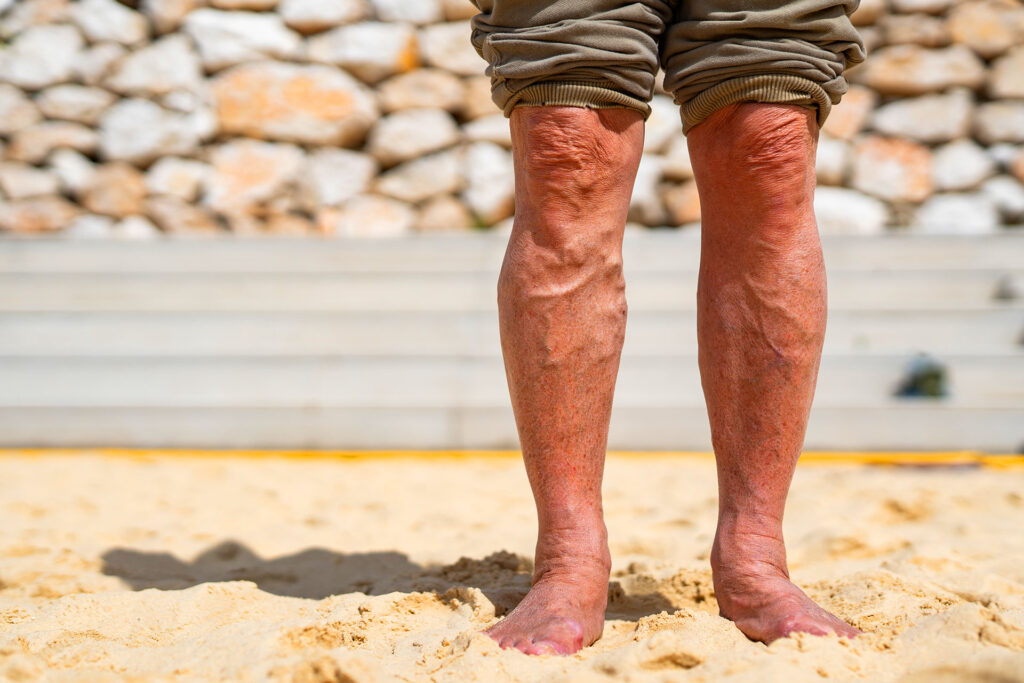
You looked down at your leg and noticed something. A vein. Ropelike. Sitting just under the skin. Your first thought was probably varicose veins. But it does not look twisted or purple. It does not hurt. It is just… there. Good news: you are likely fine. But “likely” is not “definitely,” and this article will help you figure out which category you fall into.
Why Do I Have Bulging Veins in Legs Not Varicose?
Bulging veins in legs that are not varicose are usually caused by low body fat, heavy exercise, heat, genetics, or normal aging. These push veins toward the skin surface without any valve damage. In some cases, they point to early chronic venous insufficiency, superficial thrombophlebitis, or a structural issue called May-Thurner syndrome. A soft, painless vein that flattens when you lift your leg is almost always harmless. One that is hard, warm, or appeared out of nowhere deserves a proper look.
Varicose Veins vs. Other Bulging Veins: What Is the Difference?
People mix these up constantly, and honestly, it makes sense. Both involve visible veins. Both live in the legs. But they are not the same thing. Varicose veins form when the tiny one-way valves inside a vein stop working. Blood pools. The vein twists and swells. The result is that familiar knotted, bluish-purple cord you see in medical diagrams.
Non-varicose bulging veins are different. The valves work fine. The vein is just sitting closer to the surface for some other reason. It tends to look straighter and more linear. Elevate your leg and it usually flattens. A varicose vein does not do that.
Here is a quick comparison:
| Feature | Non-Varicose Bulging Vein | Varicose Vein |
|---|---|---|
| Shape | Straight, rope-like | Twisted, knotted |
| Color | Skin tone to light blue | Bluish-purple |
| Touch | Soft, compressible | Often firm, distended |
| Flattens when elevated | Yes, usually | No |
| Painful | Rarely | Often |
| Valve damage present | No | Yes |
| Needs treatment | Usually not | Often, if symptomatic |
What Actually Causes Big Veins in Legs
There is more than one answer here. Some causes are completely mundane. Others need attention.
Exercise
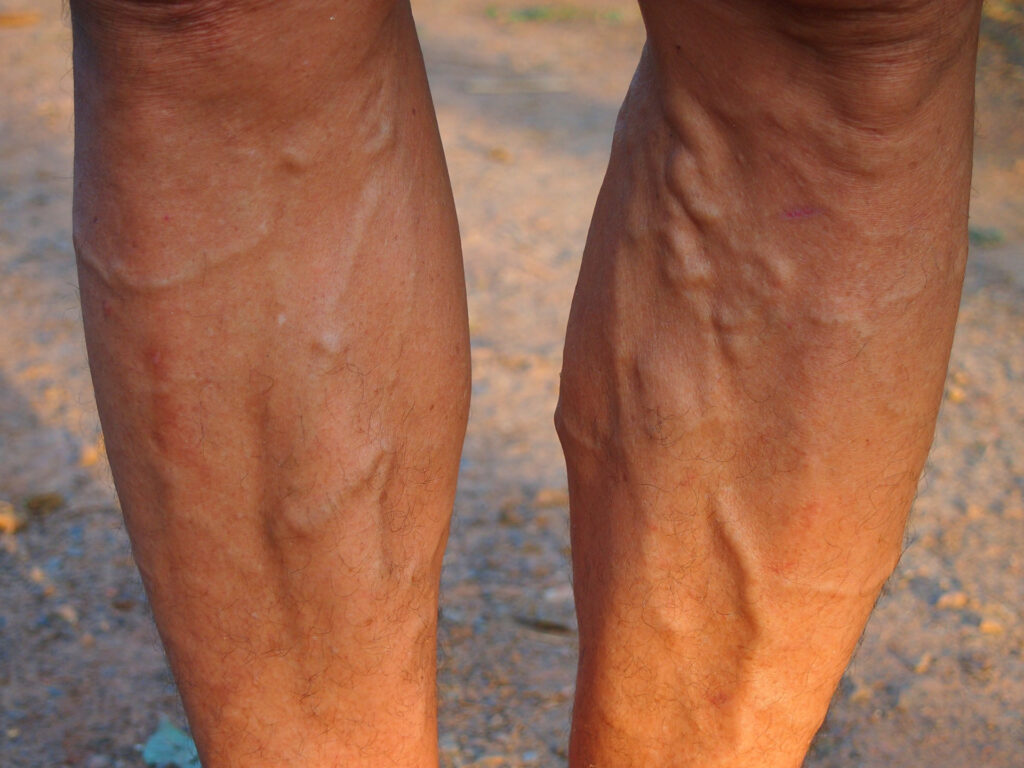
When you work out hard, your muscles demand more blood. Your heart obliges. Veins expand to carry the extra volume and the result is what bodybuilders call vascularity. The big veins in legs that appear mid-workout or right after are doing exactly what they are supposed to do. Nothing is wrong.
In regular athletes, this effect can become lasting over time. Consistent training reduces body fat and increases overall blood flow capacity. The veins stay visible even at rest.
Low Body Fat
Fat sits between the skin and the veins. When it thins out, veins rise toward the surface. This is why a lean distance runner often has a leg with veins running through it like road markings. It is anatomy, not disease.
Aging Skin
Skin loses collagen and elasticity with age. The same vein that was invisible at 30 starts showing at 55. Not because anything changed in the vein. Because the tissue around it changed.
Heat
Warmth causes blood vessels to dilate so the body can shed heat. A bump vein that appears every summer and disappears every winter is almost certainly just your circulatory system doing its job.
Genetics
Some people are simply built with more prominent superficial veins. Check your parents. If they have the same thing, that is probably your answer.
Standing or Sitting Too Long
Gravity pulls blood downward. After a long shift on your feet or a six-hour drive, veins in the lower legs fill up. They look bigger. They feel heavier. Both resolve with movement and elevation.
When a Bump Vein Becomes Worth Investigating
Here is where things get more serious. Some conditions produce visible surface veins before the textbook symptoms appear. Catching them early changes outcomes significantly.
Chronic Venous Insufficiency (CVI)
CVI starts quietly. The valves are not fully failing yet, just struggling. Early signs include mild ankle swelling, a leg that feels heavy by evening, and surface veins that look somewhat fuller than before. Most people dismiss this for years. That tends to be a mistake. CVI worsens progressively without intervention.
Superficial Thrombophlebitis
This is inflammation in a surface vein, sometimes linked to a small clot. The vein feels hard. The skin above it turns red. The area is warm and tender. This is not DVT, but it still requires evaluation because the two can coexist.
May-Thurner Syndrome
An anatomical overlap where the right iliac artery presses against the left iliac vein. The result is poor drainage from the left leg, swelling, and noticeably prominent surface veins on one side only. It is more common in younger women and gets misdiagnosed frequently at first.
Deep Vein Thrombosis (DVT)
DVT hides deep in the muscle. But when a major deep vein is blocked, blood reroutes through surface veins. Those veins expand to handle the extra load. If one leg swells suddenly and the surface veins grow newly prominent, that is a potential emergency.
Symptoms That Should Prompt a Doctor Visit
Most visible leg veins are harmless. These symptoms are a different matter:
- A vein that appeared over days rather than years, with no obvious trigger
- Pain or tenderness directly over the vein when pressed
- Skin that is red, warm, or inflamed along the vein’s path
- A vein that feels hard or cord-like
- One leg noticeably larger than the other
- Skin near the ankle turning dark or leathery over time
- Leg heaviness that accumulates through the day and does not clear overnight
One of these alone warrants a checkup. Several together warrant urgency.
How Doctors Sort This Out
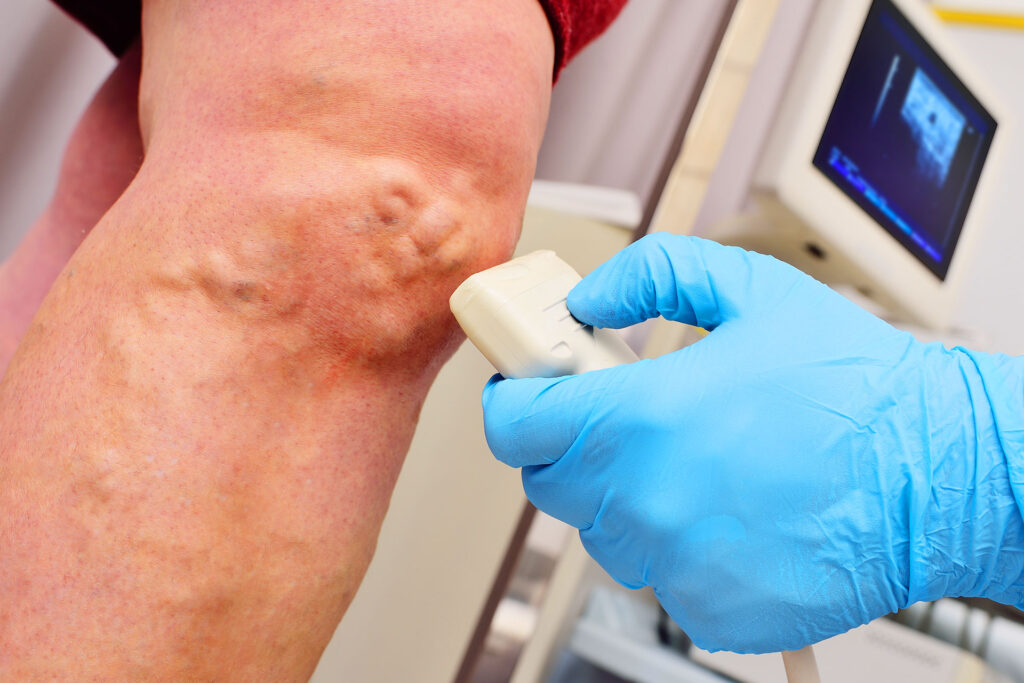
The first step is a physical exam. A vascular specialist will feel the vein, check for swelling differences between legs, look at skin texture, and ask when the veins appeared and what they feel like.
The actual diagnostic work happens with a duplex ultrasound. This test is painless and takes about 30 minutes. It maps the veins and measures blood flow direction. A healthy vein moves blood upward toward the heart. A failing valve lets it fall back down. The ultrasound catches both. It also detects clots before they cause bigger problems.
If May-Thurner syndrome is suspected, CT or MR venography follows. This gives a structural picture of the pelvic and leg veins together.
Treatment Options by Cause
| Cause | What to Do |
|---|---|
| Exercise, low body fat, genetics | Nothing required. Monitor for changes. |
| Heat, dehydration | Stay hydrated, limit prolonged heat exposure |
| Long periods of standing | Compression socks, regular movement breaks |
| Early CVI | Compression therapy, leg elevation, lifestyle changes |
| Superficial thrombophlebitis | Anti-inflammatory medication, ultrasound follow-up |
| May-Thurner syndrome | Endovascular stenting of the compressed segment |
| Cosmetic concern | Sclerotherapy or laser treatment if desired |
Daily Habits That Actually Make a Difference
None of these require prescriptions or procedures. They work by improving circulation and reducing the venous pressure that makes big veins in legs more visible.
- Walk daily, even just 20 minutes. Movement is the most effective pump your legs have.
- Elevate your legs above heart level for 15 minutes after long periods of sitting or standing.
- Wear graduated compression socks on travel days or long work shifts.
- Drink enough water. Dehydration thickens blood and causes peripheral veins to dilate in response.
- Cut back on very long hot baths if your veins concern you. Heat dilates them further.
Small changes, kept up consistently, produce real results over time.
FAQ: Bulging Veins in Legs Not Varicose
What causes veins to suddenly bulge in legs?
Sudden onset is the detail that changes everything. A vein that appeared over days rather than years may signal superficial thrombophlebitis, a blocked deep vein forcing blood to reroute, or May-Thurner syndrome. Heat and exercise produce rapid but temporary bulging. Persistent new veins in one leg, especially with any nerve pain or swelling, need ultrasound imaging within a day or two. Do not sit on this one.
Do bulging veins mean you are healthy?
Sometimes, yes. In lean or athletic people, visible veins reflect low subcutaneous fat and strong circulation. In that context, they are genuinely a positive indicator. In sedentary individuals, older adults, or anyone with leg discomfort, the same appearance carries a different weight. The vein itself is neutral. Everything around it tells the real story.
Can you reverse bulging veins in legs?
Benign visible veins can be reduced but rarely disappear completely without treatment. Staying hydrated, exercising consistently, wearing compression, and managing body weight all help. Veins enlarged by CVI or thrombophlebitis require medical treatment first. After that, sclerotherapy or endovenous laser ablation can close targeted veins permanently if desired.
When should I worry about bulging leg veins?
Worry when a vein is new, hard, warm, or tender. Worry when only one leg is affected without a clear reason. Worry when the skin near the ankle changes color or texture. These are not cosmetic details. They are early vascular signals. A duplex ultrasound takes about 30 minutes and gives you a clear picture. Getting checked is far less stressful than months of uncertainty.
Final Thought
Most people with a prominent leg vein do not have a problem. They have a body that is lean, active, or simply getting older. The vein is doing nothing wrong. But some people do have a problem, and the early signs look nearly identical to the harmless version. That is the uncomfortable reality here.
A vascular evaluation is quick, non-invasive, and removes the guesswork entirely. If everything looks normal, you leave knowing that. If something is developing early, you catch it before it becomes something harder to treat. Either way, you get an answer. That is worth a 30-minute appointment.
See a Vein Specialist at CURA Vein Center
You have read the article. You know what the warning signs look like. If anything here made you think twice about a vein you have been ignoring, that instinct is worth following.
At CURA Vein Center, our board-certified specialists diagnose and treat all types of vein conditions across New Jersey. We use minimally invasive procedures, accept most insurance plans, and offer free consultations with no surprise bills.
Contact us today or call +1 973-363-2029.