
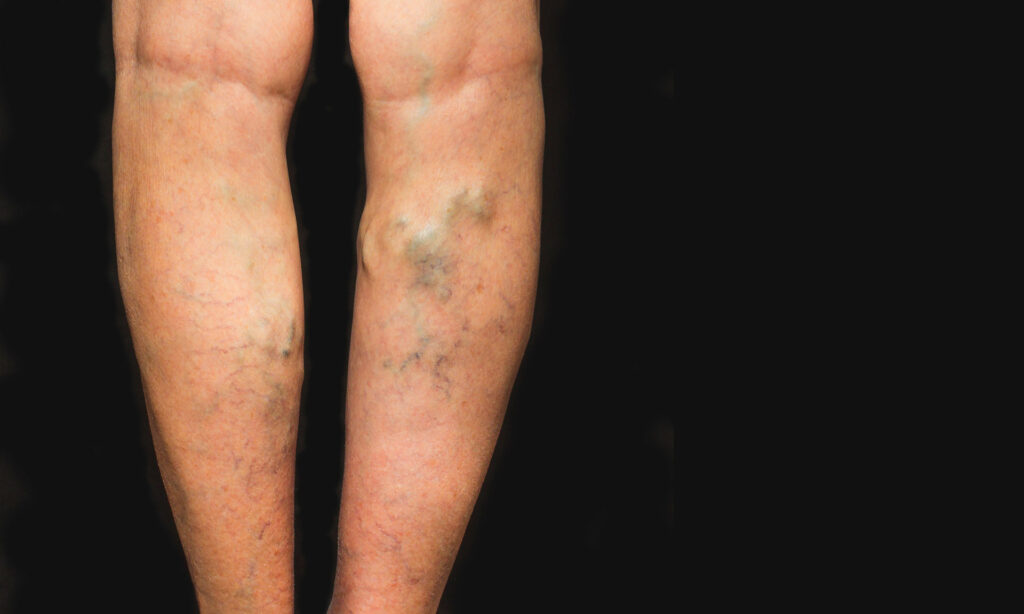
The most common answer people get to this question is “usually harmless.” That answer is incomplete. Varicose veins range from a purely cosmetic issue to a sign of progressive venous disease with real medical consequences. Where yours sit on that spectrum depends on what is driving them and how far the underlying condition has advanced.
Is Varicose Veins Dangerous?
Varicose veins are not immediately dangerous in most cases, but they are a sign of chronic venous insufficiency, a progressive condition that worsens without treatment. Left untreated, varicose veins can lead to skin ulcers, blood clots, superficial thrombophlebitis, and in rare cases deep vein thrombosis. The earlier the underlying disease is addressed, the lower the risk of serious complications.
Cosmetic vs. Medical: What Separates Them
Not every visible vein is dangerous. Not every varicose vein requires urgent treatment. The distinction comes down to what is happening inside the vein and what symptoms the patient is experiencing.
| Situation | Classification | Risk Level | Action Required |
|---|---|---|---|
| Spider veins, no symptoms | Cosmetic | Low | Optional treatment |
| Small varicose veins, no swelling or pain | Borderline | Low to moderate | Monitor, compression |
| Varicose veins with aching or heaviness | Medical | Moderate | Evaluation and treatment |
| Varicose veins with ankle swelling | Medical | Moderate to high | Duplex ultrasound, treat |
| Skin darkening or hardening near ankle | Advanced medical | High | Urgent vein treatment |
| Open wound near ankle (venous ulcer) | Advanced medical | High | Urgent vascular referral |
| Hard, tender, red vein cord | Acute medical | High | Evaluate for thrombophlebitis or DVT |
| Sudden one-leg swelling with vein changes | Emergency | Very high | Same-day evaluation |
How Varicose Veins Become Dangerous Over Time
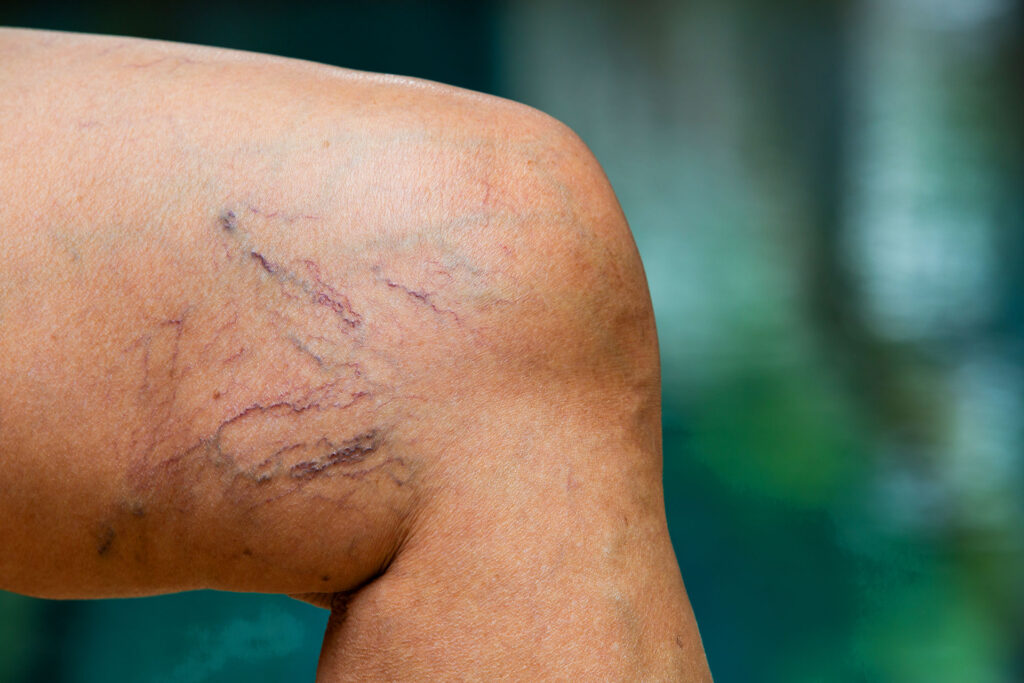
Varicose veins form when the one-way valves inside the leg veins fail. Blood flows backward and pools instead of moving toward the heart. That pooled blood creates sustained pressure against the vein wall and surrounding tissue. The disease does not pause when you stop noticing the symptoms.
Over months and years, that pressure does three things. It stretches more veins, creating new varicosities. It pushes fluid through capillary walls into surrounding tissue, causing chronic swelling. And it gradually damages the skin and subcutaneous fat near the ankle, which is where the pressure is highest and the tissue is most vulnerable. Because discomfort can manifest in complex ways throughout the body, learning how to describe pain to your doctor for faster, better treatment ensures that both subtle and prominent symptoms are properly evaluated.
Most people who develop venous ulcers did not arrive there suddenly. They had varicose veins for years, sometimes decades, that were left untreated because they did not seem dangerous enough. By the time the skin broke down, the disease had been progressing quietly the entire time.
The Complications That Make Varicose Veins Genuinely Dangerous
Superficial Thrombophlebitis
When blood pools in a varicose vein long enough, it can clot. The clot triggers inflammation in the vein wall, producing a hard, red, painful cord along the vein’s path. This is superficial thrombophlebitis. It is painful and requires treatment, but it is not immediately life-threatening in most cases. The important thing is to confirm it has not extended into the deep venous system, which requires an ultrasound.
Deep Vein Thrombosis
DVT is a clot in the deep venous system, the veins inside the muscle rather than on the surface. The connection between varicose veins and DVT is real but not direct. Patients with chronic venous insufficiency have an elevated risk of DVT compared to the general population. More importantly, a clot that starts in a surface varicose vein can extend through perforator veins into the deep system if left untreated. That extension raises the risk of pulmonary embolism.
Venous Ulcers
Venous leg ulcers are open wounds near the inner ankle that develop when the skin breaks down under sustained venous pressure. They affect roughly 1% of the adult population and account for the majority of chronic wound cases in vascular medicine. They are slow to close, prone to infection, and highly likely to recur if the underlying venous disease is not treated. Compression alone is not enough once an ulcer has formed.
Spontaneous Bleeding
A varicose vein sitting close to the skin surface can rupture without warning, sometimes from contact so minor the patient cannot recall it happening. When the vein breaks through the skin, the bleeding can be significant because venous pressure in varicose veins is high. This requires immediate pressure and same-day medical care.
⚠️ These signs require same-day medical evaluation: sudden swelling in one leg, a vein that feels hard and cord-like with overlying redness, external bleeding from a varicose vein, or shortness of breath occurring alongside any leg symptoms. Do not wait for a scheduled appointment in any of these situations.
Signs Your Varicose Veins Have Moved Beyond Cosmetic
These symptoms indicate that venous disease is progressing and conservative management is no longer sufficient:
- Leg heaviness or aching that builds through the day and disrupts sleep
- Ankle swelling that does not fully resolve overnight with elevation
- Skin near the inner ankle that is darkening, itching, or becoming harder than the surrounding tissue
- Varicose veins that have grown more prominent or multiplied over the past year
- Cramping or restless leg sensations that are worsening
- A previous venous ulcer, even if it healed
Any of these moves the situation from “monitor” to “treat.” The gap between those two stages is where most of the serious complications develop.
Can Varicose Veins Stay Cosmetic Forever?
Some can. Small, isolated varicose veins in patients without significant risk factors and with no symptoms sometimes remain stable for years. Regular monitoring and compression reduce the chance of progression.
But venous disease is a progressive condition by nature. The same genetic predisposition that produced the first varicose veins continues to affect the remaining valve tissue. Most patients who leave varicose veins untreated experience gradual worsening over time, even with compression and lifestyle changes in place.
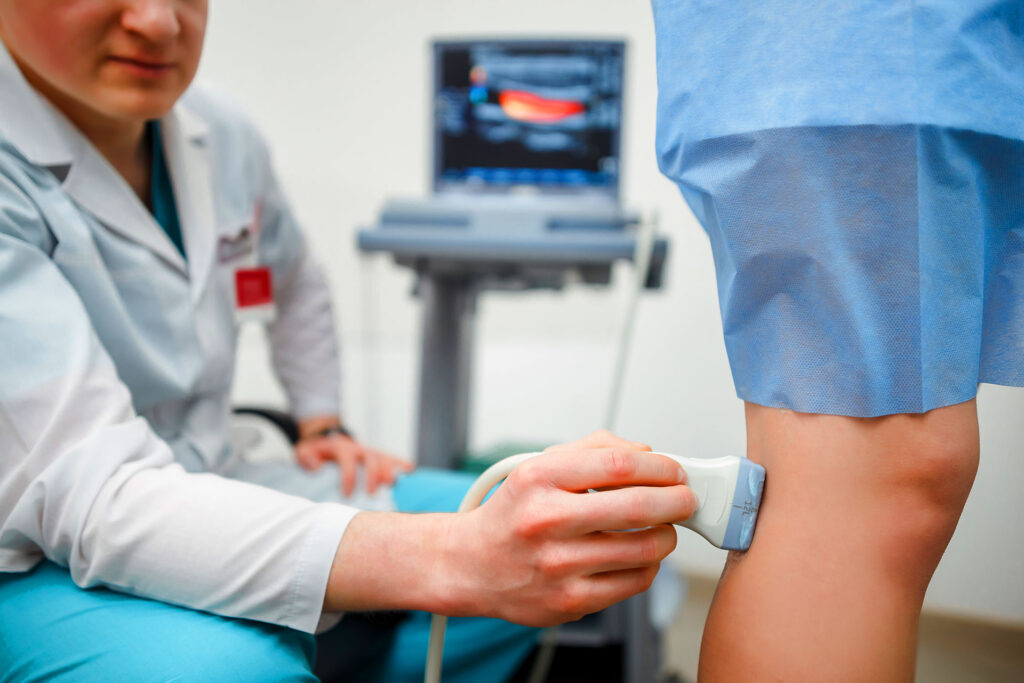
The only reliable way to know where you stand is a duplex ultrasound. It takes 30 minutes, is non-invasive, and shows exactly which valves are failing and how much reflux is present. That information determines whether your varicose veins are currently stable or actively progressing.
Treatment: What Removes the Risk
Modern vein treatment addresses the source of the reflux, not just the visible veins. Closing the great or small saphenous vein, which is where the majority of valve failure originates, removes the pressure driving the varicose veins and eliminates the ongoing risk of progression.
- Endovenous laser ablation (EVLA): heat closes the failing vein from inside via a catheter. One session, local anesthesia, walk-out procedure.
- Radiofrequency ablation (RFA): same approach using radiofrequency energy. Slightly different heat profile, comparable outcomes.
- VenaSeal: medical adhesive seals the vein without heat. No tumescent anesthesia, no compression required immediately after.
- Sclerotherapy: injected solution collapses surface varicosities and feeder veins. Used alongside ablation or as a standalone for smaller veins.
All of these are outpatient procedures. Most patients return to normal activity the following day. Insurance covers them when chronic venous insufficiency is confirmed on ultrasound and conservative measures have been tried.
✓ Treating varicose veins early is always simpler than treating them late. Early-stage venous disease responds to a single ablation session. Advanced disease with skin changes or ulceration requires additional wound care, longer treatment timelines, and more complex management. The earlier the intervention, the better the outcome.
FAQ: Is Varicose Veins Dangerous
When to worry about a varicose vein?
Worry when a vein causes persistent pain, swelling, or heaviness that interferes with daily life. Worry when the skin near the ankle changes color, texture, or starts to itch. Worry immediately when a vein feels hard and cord-like, when one leg swells suddenly, or when any varicose vein bleeds. These signs indicate active disease progression or an acute complication. It helps to remember that discomfort can show up in unexpected ways, so learning how to describe pain to your doctor for faster, better treatment is a great way to make sure nothing gets missed during your visit.
Can I live a normal life with varicose veins?
Yes, many people do for years. Compression, movement, and elevation manage symptoms well in the early and middle stages. The risk is normalizing the progression. Symptoms that worsen gradually feel like a new baseline rather than a warning sign. Most patients who reach the point of skin breakdown or ulceration describe symptoms that have been building, unaddressed, for years.
How can I make my varicose veins go away?
Varicose veins do not resolve on their own. Compression and lifestyle changes reduce symptoms and slow progression but do not eliminate existing veins. Sclerotherapy, endovenous ablation, and VenaSeal permanently close treated veins. The body then reabsorbs them over several weeks. Treating the source vein prevents new varicosities from forming along the same reflux pathway.
Is varicose veins 100% curable?
Treated veins are permanently closed and do not return. In that sense, yes. However, varicose veins are a manifestation of an underlying genetic predisposition to venous insufficiency. New veins can develop in untreated areas over time. Treating the source of reflux reduces the likelihood significantly, but it does not change the underlying genetic tendency. Regular monitoring after treatment is standard practice.
Know Where Your Veins Stand
At CURA Vein Centers, we start with a duplex ultrasound to tell you exactly what stage your venous disease is at and what it means for your health. Cosmetic concerns get honest guidance. Medical concerns get a treatment plan. Free consultations available across New Jersey.