
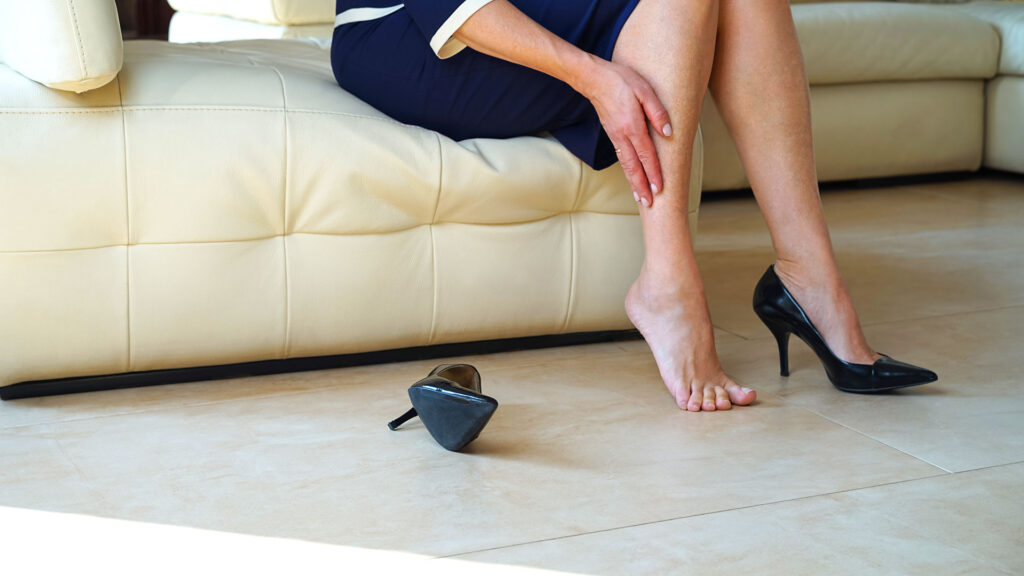
Vein damage rarely announces itself loudly. It builds quietly, over months or years, through symptoms that are easy to dismiss as tiredness, aging, or just standing too long at work. By the time most people seek help, the damage has been there for a while. Knowing the signs early changes the outcome. Venous disease caught in its first stages is far simpler to treat than the same disease caught after the skin has started to break down or a clot has formed.
Who Is at Risk for Vein Damage?
Risk for vein damage is highest in people with a family history of venous disease, those who stand or sit for long periods at work, pregnant women, adults over 50, and people who carry excess weight. Genetics is the single strongest predictor: if both parents had varicose veins, your likelihood of developing vein disease approaches 90%. Other risk factors stack on top of that baseline.
Here is a full picture of the risk landscape:
| Risk Factor | How It Affects Veins |
|---|---|
| Family history | Inherited weak vein valves and vessel wall fragility |
| Age over 50 | Vein valves lose elasticity naturally over decades |
| Pregnancy | Increased blood volume and hormonal changes weaken vessel walls |
| Prolonged standing or sitting | Sustained venous pressure in the lower limbs |
| Obesity | Increased abdominal pressure restricts venous return |
| Prior blood clot (DVT) | Damage to deep vein valves after clot resolution |
| Hormonal contraceptives | Estrogen affects vessel wall tone and clotting tendency |
| Sedentary lifestyle | Reduced calf muscle pump activity slows venous return |
Having one or two of these does not mean vein disease is certain. Having several means monitoring your legs and knowing the early signs is genuinely worthwhile.
Sign 1: Persistent Leg Heaviness or Fatigue
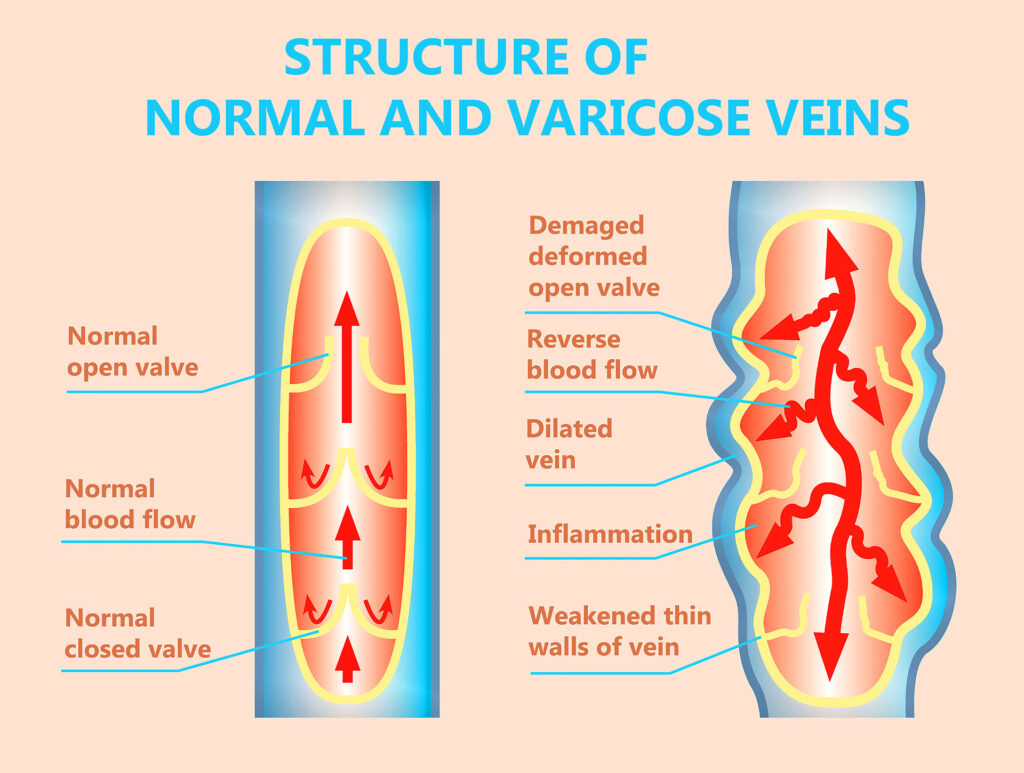
Healthy veins return blood to the heart efficiently. When the valves inside them start to fail, blood pools in the lower leg instead of moving upward. The result is a feeling of weight and fatigue that builds through the day and eases when you lie down and elevate your feet.
This is one of the first signs of vein damage, and one of the most underreported. People attribute it to a long day, an aging body, or being out of shape. Sometimes it is those things. But when the heaviness is consistent, builds predictably through the afternoon, and relieves reliably with elevation, that pattern points clearly to venous insufficiency.
It is worth noting that this symptom often precedes visible varicose veins by years. The valve failure happens inside the vein, invisibly, before the vein begins to bulge outward.
Sign 2: Visible Varicose or Spider Veins
Varicose veins are the most recognizable form of vein damage. They form when the one-way valves inside a vein fail and blood pools, stretching the vein wall outward until it becomes a twisted, bulging cord visible beneath the skin. They tend to appear on the inner thigh, behind the knee, and along the calf.
Spider veins are smaller and closer to the surface, forming web-like clusters of red, blue, or purple capillaries. They are less likely to cause physical symptoms but often indicate that venous pressure in the surrounding area is elevated.
Neither type should be treated purely as a cosmetic problem without first checking whether a deeper valve issue is driving them. Treating the surface without addressing the underlying reflux means the veins return.
Sign 3: Swelling in the Ankles and Lower Legs
Swelling, particularly when it develops through the day and is worse in the evening, is a clear sign of venous damage. When valves fail and blood pools in the lower leg, fluid is pushed out of the vein wall into the surrounding tissue. The result is pitting edema, swelling that leaves an indentation when pressed.
Mild swelling after a long flight or a hot day is common and usually harmless. Swelling that occurs most days, affects one leg more than the other, or accompanies leg pain is a different matter and warrants evaluation.
One-sided leg swelling that appears suddenly, particularly after a period of immobility, is a potential sign of deep vein thrombosis and needs urgent assessment.
Sign 4: Skin Changes Near the Ankle
The skin around the inner ankle is where the effects of chronic venous pressure tend to show up first. Several changes are worth watching for:
- Hyperpigmentation: a brownish or reddish discoloration caused by red blood cells leaking out of damaged capillaries and breaking down into hemosiderin in the tissue
- Lipodermatosclerosis: the skin becomes hard, tight, and leathery as chronic inflammation damages the fat layer beneath it
- Atrophie blanche: pale, scarred patches surrounded by dilated capillaries, a sign of severe chronic venous insufficiency
- Varicose eczema: red, itchy, flaking skin over varicose veins caused by inflammation from pooled blood
Any of these changes indicate that venous disease has progressed beyond its early stages. At this point, cosmetic treatment alone is not appropriate. The underlying venous insufficiency needs to be diagnosed and treated to prevent further tissue breakdown. Being able to describe pain clearly can help physicians better understand how advanced the condition has become and guide treatment decisions.
Sign 5: Leg Ulcers
Venous leg ulcers are open wounds that typically appear near the inner ankle. They develop when chronic venous pressure damages the capillaries feeding the skin, the tissue loses its ability to heal minor injuries, and a break in the skin becomes an ulcer that does not close.
They are slow to heal, prone to infection, and painful. Venous ulcers account for the majority of chronic leg wounds seen in vascular medicine. They are also largely preventable when venous disease is identified and treated before the skin reaches this stage.
An ulcer near the ankle that has been present for more than two weeks without significant improvement needs vascular evaluation. Wound care without treating the underlying venous hypertension produces limited and temporary results.
Sign 6: Aching, Cramping, or Restless Legs at Night
Nighttime leg cramps and restless leg sensations are symptoms that many people write off as nothing. In a portion of patients, they are directly linked to venous insufficiency.
When blood pools in the lower leg, waste products accumulate in the surrounding muscle tissue. The resulting irritation produces leg cramps, a crawling sensation, or an uncomfortable urge to move the legs. These symptoms are classically worse in the evening and at night, after blood has been pooling through the day.
Patients whose restless leg symptoms improve significantly after vein treatment are often surprised by the connection. It is not a guarantee, but nocturnal leg symptoms in a patient with other signs of venous disease are worth including in the diagnostic conversation.
When Signs of Vein Damage Become an Emergency
Most vein damage progresses slowly and is not immediately life-threatening. These situations are different:
- Sudden, severe leg swelling in one leg: possible deep vein thrombosis
- Calf pain with warmth and redness: possible DVT, especially after travel or immobility
- Shortness of breath with leg symptoms: possible pulmonary embolism, call emergency services immediately
- Rapidly expanding skin ulcer with fever: possible infected venous ulcer requiring urgent wound care
- A varicose vein that bleeds: apply firm pressure and seek same-day care; the bleeding can be significant
DVT and pulmonary embolism are the most serious potential consequences of untreated venous disease. They are not common, but the risk is real and the connection to venous insufficiency is well established.
The 6 Signs at a Glance
| Warning Sign | Key Symptoms | Urgency Level |
|---|---|---|
| Leg heaviness and fatigue | Tired, weighted legs by afternoon, relieved by elevation | Monitor, see a specialist |
| Visible varicose or spider veins | Twisted bulging cords, web-like clusters near the skin | Schedule evaluation |
| Ankle and lower leg swelling | Pitting edema, worse in the evening, one leg larger than the other | See a specialist soon |
| Skin changes near the ankle | Darkening, hardening, itching, pale scarred patches | See a specialist urgently |
| Leg ulcers | Open wound near inner ankle, slow to heal, recurring | Urgent vascular referral |
| Nighttime cramping or restless legs | Cramps, crawling sensation, urge to move legs at night | Monitor, mention at consultation |
FAQ: Signs of Vein Damage
How do I know if my vein is damaged?
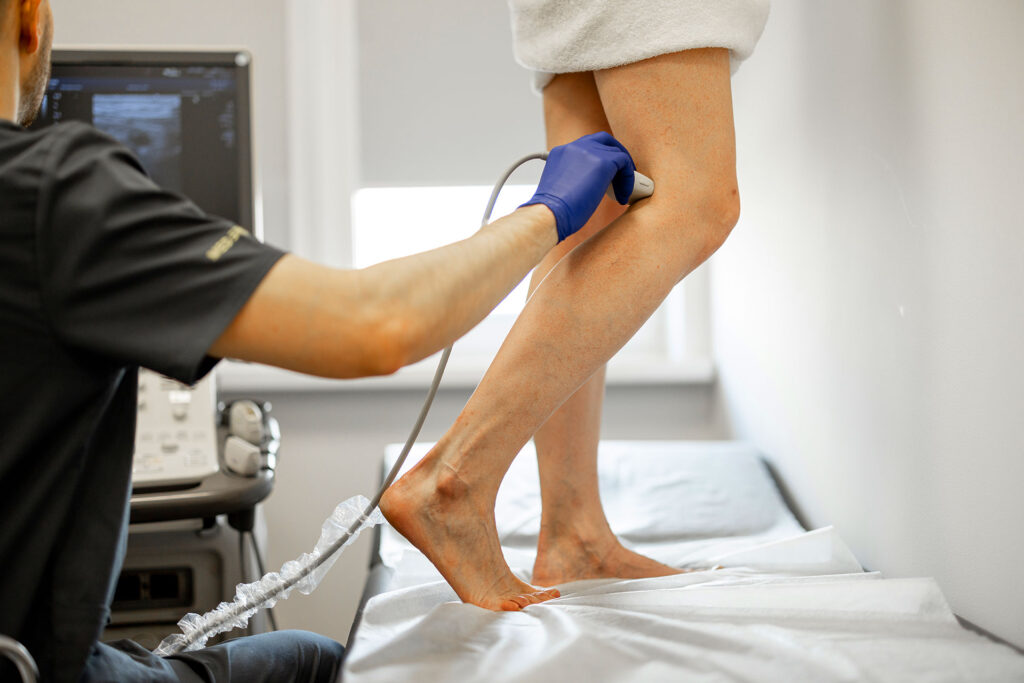
The clearest signs are veins that are visibly bulging or twisted, legs that feel heavy and tired by afternoon, swelling around the ankle that develops through the day, and skin near the ankle that has darkened or hardened. Internally, valve damage is confirmed with a duplex ultrasound, which measures blood flow direction and identifies reflux in both superficial and deep veins. A physical exam alone is not enough to rule out significant vein damage.
What does vein damage feel like?
Early vein damage often feels like nothing at all, which is why it goes unnoticed for years. As it progresses, patients describe a heaviness or pressure deep in the calf, aching that builds through standing or sitting, occasional cramping at night, and itching or burning over visible varicose veins. More advanced damage produces constant swelling and tenderness. In severe cases, the skin becomes painful around areas of discoloration or ulceration.
Will a damaged vein heal itself?
Minor vein wall irritation can resolve with rest and compression. Structural valve damage does not repair itself. Once the valves inside a vein have lost their function, the reflux they produce continues and typically worsens over time. Venous insufficiency is a progressive condition. Compression manages the symptoms. Procedures like endovenous ablation, sclerotherapy, or VenaSeal close the damaged vein permanently, redirecting blood through healthier vessels. The body then absorbs the closed vein over several weeks.
What are 5 signs of a blood clot forming?
The classic signs of deep vein thrombosis are: swelling in one leg, particularly the calf or thigh; pain or tenderness in the affected area, often described as a cramp that does not resolve; warmth over the swollen area; redness or a bluish discoloration of the skin; and visible surface veins that have recently become more prominent on the affected leg. Not all DVTs produce obvious symptoms, which is why any sudden unilateral leg swelling after immobility should prompt same-day evaluation.
One Consultation Changes Everything
If any of these signs sound familiar, do not sit on it. Our specialists at CURA Vein Center will tell you exactly what is going on and what it takes to fix it. Free consultation, no commitment.
Book now or call +1 973-363-2029.