
Your legs carry you through every day without complaint, until the veins inside them stop doing their job. Leg vein problems are far more varied than most people realize, and the difference between a spider vein and a deep vein thrombosis is not just a matter of size. It is a matter of risk, urgency, and what happens if you leave it alone.
Vein conditions in the leg range from purely cosmetic to genuinely dangerous. Knowing which type you are dealing with shapes everything that comes after, from whether you need compression stockings or a same-day hospital visit.
What Are the Different Types of Vein Conditions in the Leg?
Leg vein conditions include spider veins, varicose veins, chronic venous insufficiency (CVI), superficial thrombophlebitis, and deep vein thrombosis (DVT). They vary widely in severity. Spider veins are cosmetic. Varicose veins cause symptoms and can progress. CVI signals long-term valve failure. DVT is a medical emergency requiring immediate attention.
How the Vein System in the Leg Actually Works
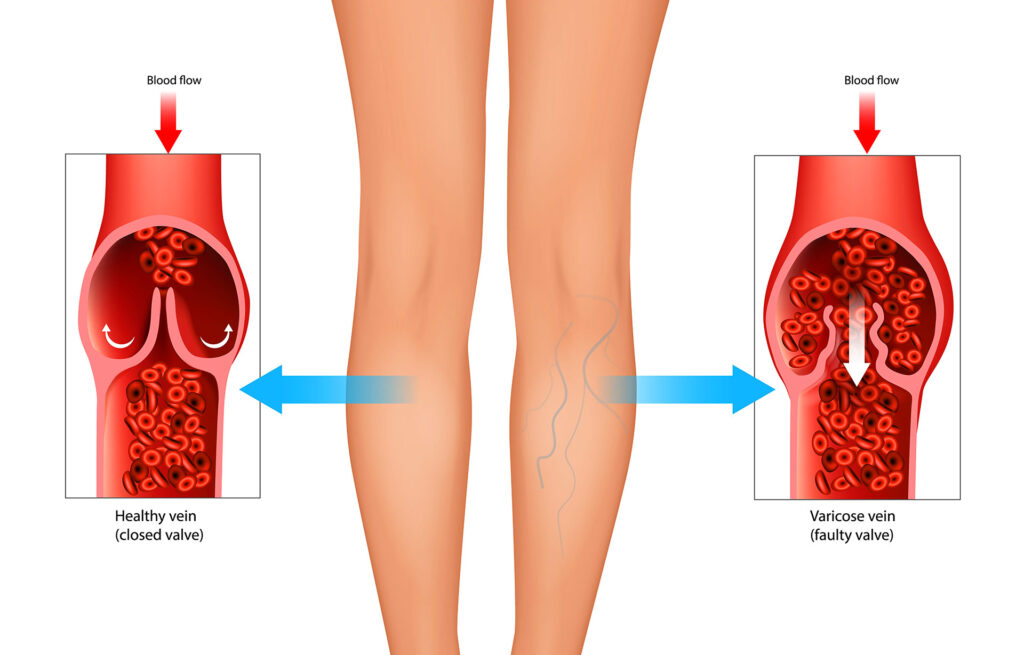
Blood flows down to the legs easily. Getting it back up is the hard part. Leg veins work against gravity, relying on one-way valves that open to let blood through and snap shut to stop it from sliding back. The calf muscles act as a pump, squeezing the veins with every step and pushing blood upward.
When valves weaken, blood drifts backward. It pools. Pressure rises inside the vein wall. Over time, that pressure distorts the vein, damages the surrounding tissue, and produces the spectrum of conditions described below. Most of them share the same root cause. What differs is how deep the problem sits, how long it has been developing, and how severe the valve failure has become.
Spider Veins
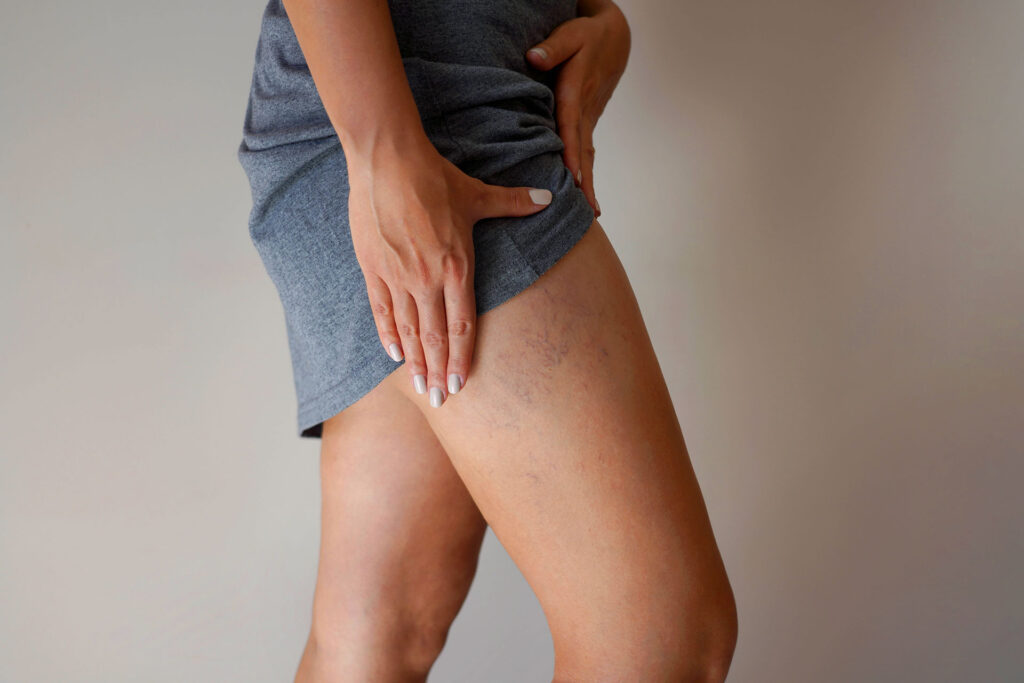
Spider veins are the smallest and shallowest of the vein conditions in the leg. They sit just beneath the skin surface, branching outward in thin red, blue, or purple threads that resemble a web or a starburst pattern. Most are no wider than a millimeter.
They are largely cosmetic. They rarely cause pain, though some people notice a mild burning or itching sensation, particularly after long periods of standing. Spider veins on the legs often appear on the thigh, behind the knee, or on the lower calf.
Common contributing factors:
- Family history of vein disease
- Hormonal changes, including pregnancy and oral contraceptives
- Prolonged standing or sitting
- Sun exposure on the face
- Prior leg injury or trauma
Spider veins do not become dangerous on their own, but they can indicate that deeper venous pressure is elevated. When they appear alongside other symptoms like aching or swelling, a duplex ultrasound is worth considering.
Varicose Veins
Varicose veins are larger, raised, and structurally distorted. They bulge visibly beneath the skin, often appearing twisted or rope-like, and tend to run along the inner thigh, back of the calf, or behind the knee. The color ranges from blue to dark purple.
Unlike spider veins, they are a functional problem. Valve failure inside the great or small saphenous vein causes blood to pool in the superficial venous system. That pooling generates pressure, and that pressure produces real symptoms.
Typical symptoms:
- Aching or throbbing that worsens through the day
- Leg heaviness, especially by late afternoon
- Itching or burning near the vein
- Ankle swelling that clears overnight
- Nighttime cramping in the calf
Left untreated, varicose veins can progress. The sustained pressure damages the skin around the ankle, produces discoloration, and eventually creates conditions where venous ulcers form. They are not cosmetic. They are a chronic, progressive medical condition.
Chronic Venous Insufficiency (CVI)
Chronic venous insufficiency sits further along the same spectrum. It represents a more advanced stage of valve failure, where the leg veins can no longer return blood to the heart efficiently on a sustained basis. The result is long-term venous hypertension, meaning elevated pressure inside the leg veins day after day.
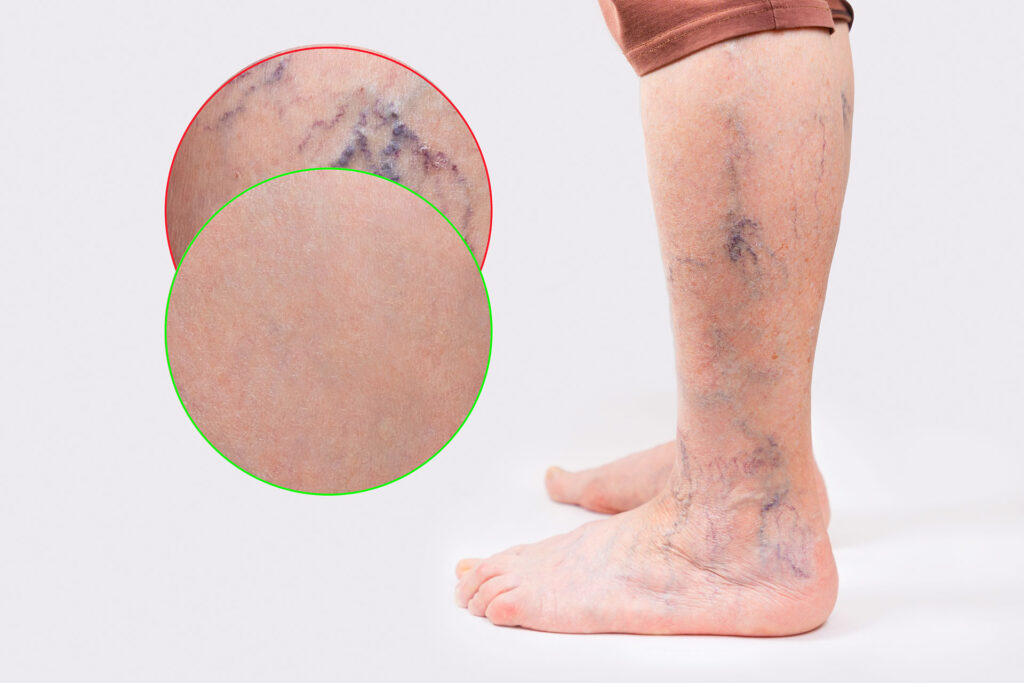
CVI produces changes that go beyond discomfort. The skin around the lower leg and ankle begins to show the accumulated damage of years of elevated pressure.
Signs of Chronic venous insufficiency beyond typical varicose vein symptoms:
- Brownish or reddish skin staining near the ankle (hemosiderin deposits)
- Thickened, hardened skin on the lower leg
- Skin that feels tight or leathery to the touch
- Shallow, slow-healing wounds near the ankle (venous ulcers)
- Persistent swelling that does not fully resolve overnight
CVI is the condition that makes vein disease genuinely serious. Venous ulcers can take months to heal, are prone to infection, and recur frequently without treatment of the underlying insufficiency.
Superficial Thrombophlebitis
Superficial thrombophlebitis is inflammation of a superficial vein, usually combined with a small clot forming inside it. It is painful and noticeable. The vein becomes red, warm, and tender to the touch, often with a hard, cord-like feel beneath the skin.
It most commonly occurs in varicose veins, where sluggish blood flow already creates favorable conditions for clotting. It can also develop after an IV line or after trauma to the leg.
Superficial thrombophlebitis is not life-threatening in most cases, but it should be evaluated. Clots near the junction of a superficial and deep vein carry a risk of extending into the deep venous system, which changes the clinical picture significantly.
Deep Vein Thrombosis (DVT)
Deep vein thrombosis is a clot that forms inside one of the deep veins of the leg, usually in the calf or thigh. It is the most serious of the common vein conditions in the leg. If the clot detaches and travels to the lungs, it causes a pulmonary embolism, which can be fatal.
DVT does not always announce itself clearly. Some cases produce obvious symptoms. Others cause very little discomfort.
Warning signs that require same-day evaluation:
- Sudden swelling in one leg, with no obvious cause
- Pain or tenderness in the calf or thigh, particularly when walking
- Warmth and redness along the inner leg
- A feeling of tightness or fullness that came on quickly
If you develop sudden shortness of breath, chest pain, or a rapid heart rate alongside any leg symptoms, call emergency services immediately. These signs suggest the clot may have already moved.
Comparing the Main Leg Vein Conditions at a Glance
| Condition | Depth | Main Symptoms | Urgency | Treated By |
|---|---|---|---|---|
| Spider veins | Superficial | Cosmetic, mild burning | Low | Sclerotherapy, laser |
| Varicose veins | Superficial | Aching, heaviness, swelling | Moderate | Ablation, sclerotherapy |
| Chronic venous insufficiency | Superficial and perforator | Skin changes, ulcers, persistent swelling | High | Ablation, compression, wound care |
| Superficial thrombophlebitis | Superficial | Red, tender, cord-like vein | Moderate to high | Anti-inflammatories, monitoring |
| Deep vein thrombosis | Deep | Sudden swelling, calf pain, warmth | Emergency | Anticoagulants, hospital care |
Risk Factors That Apply Across All Leg Vein Conditions
Several factors raise the likelihood of developing vein conditions in the leg, regardless of type. Some are fixed. Most are modifiable.
| Risk Factor | Why It Matters |
|---|---|
| Family history | Valve competence is largely inherited |
| Age | Vein walls and valves lose elasticity over time |
| Pregnancy | Progesterone relaxes vein walls; increased blood volume raises pressure |
| Prolonged standing or sitting | Reduces calf muscle pump activity |
| Excess weight | Increases abdominal pressure, hindering upward blood return |
| Prior DVT or clotting history | Damages valve architecture permanently |
| Sedentary lifestyle | Calf pump underused, venous return suffers |
Frequently Asked Questions
Do I Have Spider Veins or Varicose Veins? How to Tell the Difference
Spider veins are thin, flat, web-like threads visible just under the skin, usually red or blue, and rarely painful. Varicose veins are larger, raised, and often twisted, causing aching, heaviness, and swelling. If the vein bulges above the skin surface and produces symptoms, it is varicose, not a spider vein.
Can You Get Varicose Veins from Standing All Day at Work?
Prolonged standing is a significant contributing factor. It keeps blood pooling in the lower legs for hours at a time, increasing venous pressure and accelerating valve wear. It does not cause vein disease on its own, but in people with a genetic predisposition, it speeds up the process considerably. People who spend long hours on their feet often report knee pain as a related complaint, since the strain extends beyond the veins.
What Are the Types of Vein Diseases?
The main types are spider veins, varicose veins, chronic venous insufficiency, superficial thrombophlebitis, and deep vein thrombosis. They range from cosmetic to life-threatening. Most share the same underlying mechanism, which is valve failure causing blood to pool, but differ in depth, severity, and the structures involved.
How to Treat Vein Issues in Legs?
Treatment depends on the condition. Spider veins respond to sclerotherapy and laser. Varicose veins are treated with endovenous laser ablation, radiofrequency ablation, or sclerotherapy. CVI requires the same plus compression and sometimes wound care. DVT needs anticoagulant medication and hospital-level management. Compression stockings and leg elevation help manage symptoms across most types.
When to Worry About Veins in Your Legs?
Seek evaluation if you notice sudden swelling in one leg, a rapidly appearing red or tender cord along a vein, skin discoloration near the ankle, or wounds that will not heal. Any combination of leg swelling, warmth, and calf pain warrants same-day assessment to rule out DVT.
How Serious Is a Vein Condition?
It depends entirely on the type. Spider veins are not serious. Varicose veins are a progressive medical condition that worsens without treatment. Chronic venous insufficiency can lead to permanent skin damage and ulcers. Deep vein thrombosis is potentially fatal. Getting an accurate diagnosis early determines how straightforward or complex the path forward becomes.