
Treatment of Vein Disease used to be complicated and surgery used to be the only solution. The innovation of cutting-edge minimally invasive techniques dramatically transformed the landscape of vein treatments. It has never been more swift, safe and simple to treat Vein Disease that now. Utilizing office-based procedures with ultrasound guidance have been proven to achieve the best results for patients.
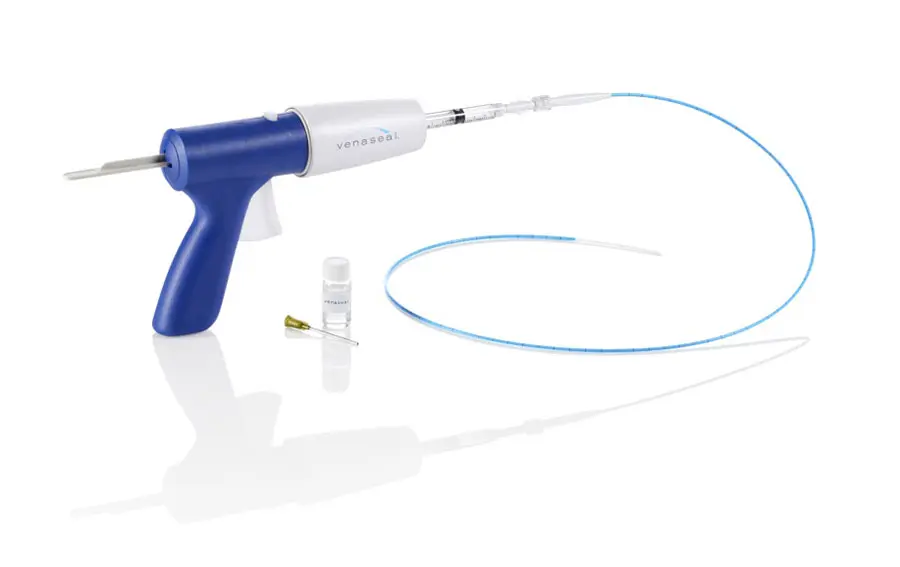
Under ultrasound guidance, doctors introduce a device into the vein. The devices releases “cyanoacrylate glue”. The glue works as an adhesive to close the unhealthy vein. It has long been used in other vascular medical procedures with a proven safety record.
VenaSeal is performed using one single injection and it doesn’t utilize thermal or laser energy, so it’s virtually painless and it avoids the risk of nerve injuries. The vein will permanently harden after a few hours and progressively be absorbed by the body as time passes.
After the damaged vein has been closed, blood will naturally begin to reroute through the healthy competent veins in the leg creating a healthy circulation. The procedure is minimally invasive and can be done in office. Sclerotherapy just needs one injection in each vein, making the treatment almost painless. In the area where the injection is given, the sclerosant may temporarily produce a cramping or burning sensation. Depending on the size and degree of your varicose and spider veins, you may need more than one treatment. If the vein is located at the surface, your doctor can inject it under direct visualization. However, If the vein is deeper, Ultrasound is utilized to deliver the medication precisely.
One advantage of VenaSeal over Radiofrequency ablation is the ability to close the vein without the use of heat delivery. As a result, using anesthetic solution is not required.
The procedure is minimally invasive, takes only 30 minutes, doesn’t require general anesthesia, and can be done in office for most patients. No downtime and can resume daily activities immediately.
On the other hand, hypersensitivity and allergic reactions are more common with VenaSeal due to injecting the “glue”. There is also a higher rate of vein inflammation (phlebitis) following the procedure. It’s also not covered by most insurances.