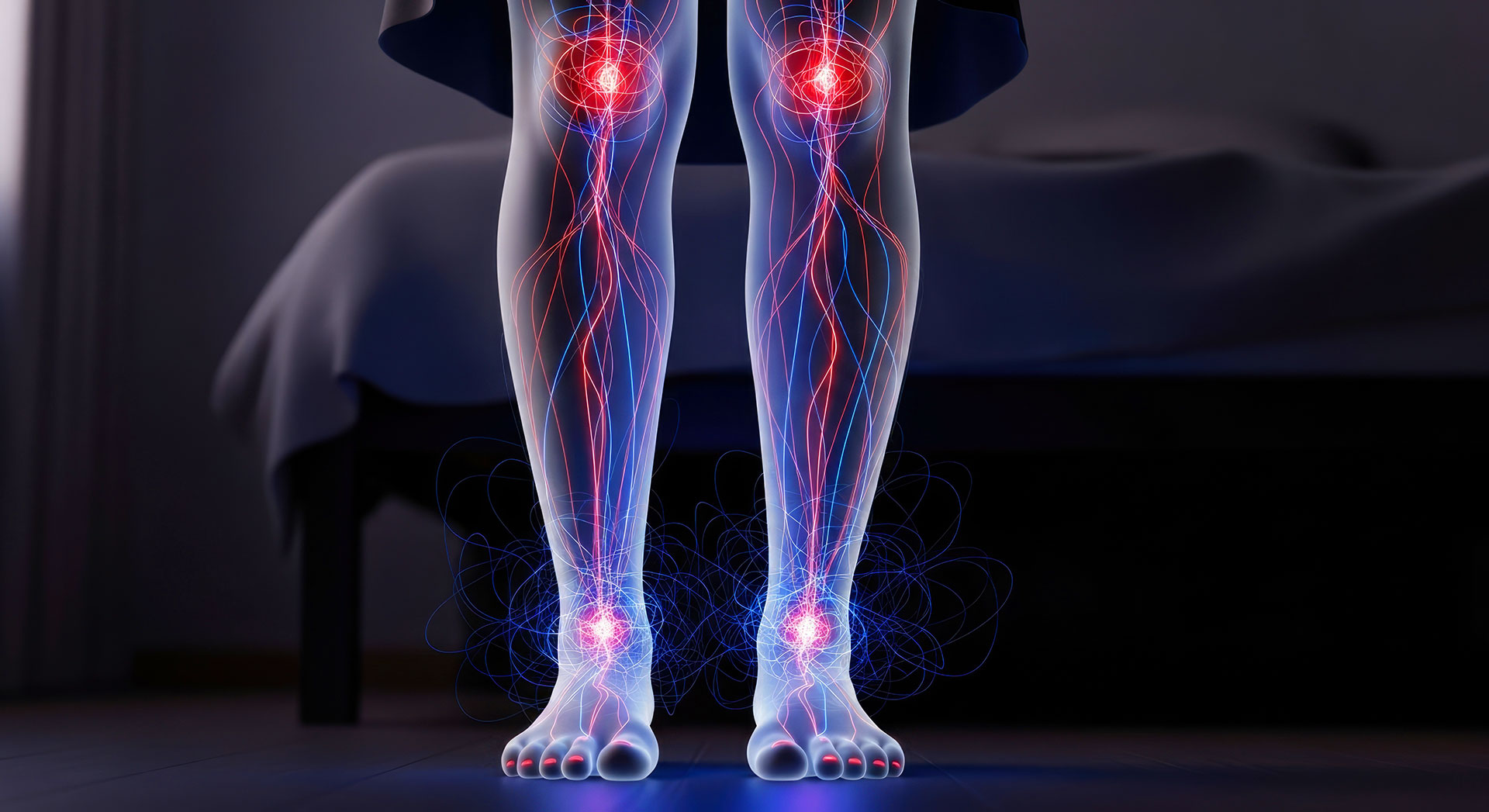
Restless Legs Syndrome (RLS)
RLS is a condition where uncomfortable sensations in the legs lead to a compelling need to move them. It’s a condition that makes your legs feel funny and gives you a strong urge to move them.
When you have RLS, it’s hard to sit still, especially when you’re trying to rest or sleep. The feelings in your legs can be uncomfortable, and moving them seems the only way to make it feel better. Sometimes, these sensations can make it difficult to fall asleep at night.
RLS can happen for different reasons, like not having enough iron in your blood or having certain medical conditions.
Diagnosing Restless Legs Syndrome
When the doctor wants to find out if you have Restless Legs Syndrome (RLS), they will ask you questions about how your legs feel and make tests. Diagnose RLS include:
- Complete Medical History: Understanding your overall health and any chronic diseases.
- Blood Tests: Check iron levels and rule out conditions like kidney failure.
- Sleep Study: To identify RLS symptoms, monitor sleep patterns, like any discomfort or urges to move your legs when you try to sleep.
- Neurological Exam: Assessing nervous system function and peripheral neuropathy.
Talking to your doctor about your legs and answering their questions is important in figuring out what might be happening and how to make you feel better.
Treatment and Management Strategies
When it comes to helping with Restless Legs Syndrome (RLS), different things can make you feel better.
If you have low iron in your blood, the doctor might suggest taking iron supplements to help. It’s essential to avoid medications, like those for colds or allergies, because they can make the symptoms worse.
If your RLS symptoms are severe and diagnosed by a doctor, they may recommend special medications to increase a chemical called dopamine, which can relieve symptoms. For some people, RLS is linked to other sleep problems like sleep apnea, so treating those issues can also help.
Good sleep habits, like having a regular sleep routine, can make a big difference, and avoiding things that might disrupt your sleep is essential.
Talking to a doctor is a smart idea if you ever feel an overwhelming urge to move your legs, especially at night, or have trouble falling asleep. They can help you figure out what might be causing your symptoms and find the best ways to make you feel more comfortable.
Conclusion
While RLS presents challenges, understanding its connection to venous insufficiency and adopting appropriate treatments can provide relief. Lifestyle changes, medications, and medical consultations are crucial in managing RLS symptoms and improving overall sleep quality. If you experience symptoms of RLS, seeking guidance from healthcare professionals is essential for accurate diagnosis and tailored treatment plans.