Treatment of Vein Disease used to be complicated and surgery used to be the only solution. The innovation of cutting-edge minimally invasive techniques dramatically transformed the landscape of vein treatments. It has never been more swift, safe and simple to treat Vein Disease that now. Utilizing office-based procedures with ultrasound guidance have been proven to achieve the best results for patients.
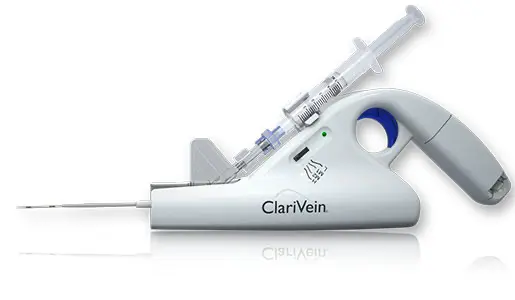
After numbing the skin with Lidocaine, the ClariVein Cather will be inserted through a tiny skin incision and will be advanced through the unhealthy vein. When the device is activated, the rotating tip will injure the vein walls while injecting a sclerosant agent at the same time. This rotation induces injury the wall of the vein, prompting the unhealthy vein to fuse and close. Therefore, Blood will be diverted to healthy veins with competent valves. Depending on the quantity and size of varicose veins treated, the procedure is carried out in a doctor’s office or clinic and lasts 10 to 30 minutes. Following sclerotherapy, your vein doctor will instruct you to wear medical-grade compression stockings for a few days.
Sclerotherapy just needs one injection in each vein, making the treatment almost painless. In the area where the injection is given, the sclerosant may temporarily produce a cramping or burning sensation. Depending on the size and degree of your varicose and spider veins, you may need more than one treatment. If the vein is located at the surface, your doctor can inject it under direct visualization. However, If the vein is deeper, Ultrasound is utilized to deliver the medication precisely.
ClariVein is performed using one single injection. It doesn’t utilize thermal or laser energy and it doesn’t involve injecting any glue into your body, so it’s virtually painless. The procedure is minimally invasive, takes only 30-45 minutes, doesn’t require general anesthesia, and can be done in office for most patients. No downtime and can resume daily activities immediately. On the other hand, there is no such a thing as a perfect treatment, and not every treatment is appropriate for every patient. The use of sclerotherapy has some drawbacks. The fact that the medication may not be effective in all people is one possible drawback. However, it is often prescribed for smaller varicose veins and spider veins. Sclerotherapy may need to be combined with other treatments such as radiofrequency ablation or VenaSeal in order to achieve the best results for patients with larger varicose veins.
ClariVein is not suitable for smaller veins and veins in areas with a dense arterial supply (such as the feet). Not covered by all insurances yet.
Radiofrequency ablation remains the gold standard and first line for Venous Insufficiency. However, it can be used as an adjunctive and complimentary treatment for specific cases. Your Vein doctor will guide to create a personalized treatment plan that suits you specifically.
Most insurances do not cover ClariVein. However, we can work with you to arrange coverage if ClariVein is needed as part of your treatment plan.