
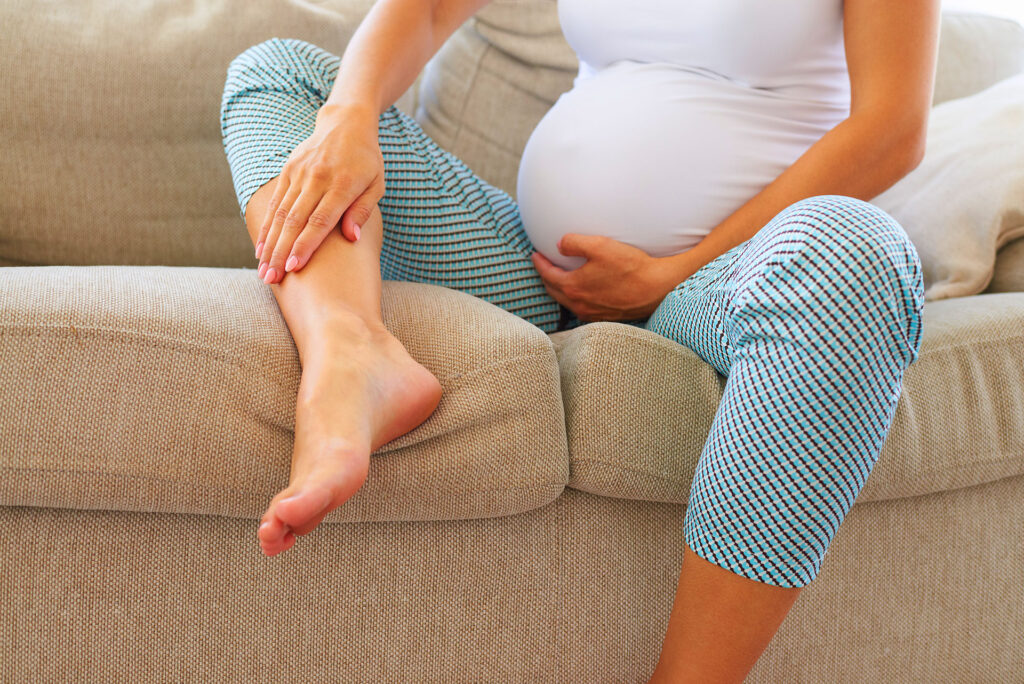
For many women, varicose veins and spider veins make their first appearance during or after pregnancy. Those who have had multiple pregnancies tend to face an even greater likelihood of developing them. Fortunately, in most cases these veins follow a benign course, but for some women, the symptoms can be significant enough to interfere with daily comfort and quality of life.
Common Symptoms to Watch For
Symptoms are often most noticeable by the end of the day, particularly after long periods of standing. If you recognize any of the following, a vein specialist can help.
Heavy, Aching Legs
A persistent sense of tiredness or pressure in the legs that tends to worsen as the day progresses.
Visible, Bulging Veins
Raised, rope-like varicose veins beneath the skin surface that may also be tender to the touch.
Itching & Burning
Skin irritation, localized burning, or an itching sensation around affected veins is frequently reported.
Skin Eczema & Discoloration
Chronic venous pressure can trigger skin changes, including eczema patches and surface discoloration.
Leg Swelling (Edema)
Swelling in the ankles and lower legs, especially during the third trimester, is a hallmark warning sign.
End-of-Day Worsening
Symptoms that steadily intensify throughout the day and offer some relief when lying down and elevating the legs.
Why Does Pregnancy Trigger Varicose Veins?
Pregnancy triggers a series of profound physiological changes, and several of them directly affect venous circulation in the legs. Understanding these changes can help explain why varicose veins develop, and why some women are more susceptible than others.
-
01
Expanded Blood Volume: The body significantly increases total blood volume during pregnancy to meet fetal demands. This places added pressure on all veins, particularly those in the lower extremities.
-
02
Progesterone and Vein Wall Relaxation: Rising progesterone levels cause smooth muscle tissue, including vein walls, to relax and expand. This reduces their ability to efficiently pump blood back toward the heart.
-
03
Uterine Pressure on Pelvic Veins: As the uterus grows, it compresses the iliac veins and inferior vena cava, directly impeding the return of blood from the legs to the heart.
-
04
Slowed Venous Return: The combination of hormonal changes and physical compression significantly slows blood flow in the lower limbs, increasing the risk of venous pooling and vein dilation.
-
05
Genetic Predisposition: Family history, number of previous pregnancies, and weight gain during pregnancy all appear to elevate individual risk, though the precise triggers in susceptible women are still being studied.
These physiological changes are entirely normal and necessary. They support fetal development and prepare the body for labor and delivery. However, in women who are genetically predisposed, the same changes can create the conditions in which varicose veins first emerge or worsen significantly.
Frequently Asked Questions
Have questions about varicose veins and pregnancy? Our specialists answer the most common ones below.
In some cases, varicose veins that develop during pregnancy improve on their own within a few months after delivery, once blood volume normalizes and hormonal levels stabilize. However, they do not always resolve completely, particularly in women who had multiple pregnancies or a family history of vein disease. A consultation with a vein specialist can help assess your specific situation.
For most women, pregnancy-related varicose veins are a cosmetic and comfort concern rather than a serious medical risk. That said, any new or worsening vein symptoms during pregnancy should be discussed with your doctor. In rare cases, varicose veins can contribute to superficial thrombophlebitis or other venous complications that require medical attention.
Most elective vein treatments are recommended after pregnancy and breastfeeding have concluded. During pregnancy, conservative measures such as compression stockings, leg elevation, and regular low-impact movement are the preferred approach. Once you have delivered and finished nursing, a range of safe, minimally invasive treatment options become available.
Several steps can help manage discomfort while pregnant. Wearing graduated compression stockings, avoiding prolonged standing or sitting, elevating your legs when resting, staying active with low-impact exercise like walking, and sleeping on your left side to reduce pressure on the vena cava can all provide meaningful relief. Always confirm any approach with your OB-GYN first.
Yes. Research consistently shows that the risk of developing varicose veins increases with each successive pregnancy. Women who experienced vein issues in their first pregnancy are more likely to see earlier onset and greater severity in subsequent pregnancies. This makes early evaluation and proactive management particularly important for multiparous women.
CURA Vein Centers offers a range of modern, minimally invasive treatments including sclerotherapy for spider veins, thermal venous ablation, ClariVein, and VenaSeal for larger varicose veins. All procedures are performed in-office with no general anesthesia, minimal downtime, and most are covered by insurance when medically necessary. Our board-certified specialists will recommend the right option based on your vein anatomy and symptoms.