

Most people notice a bulging vein and do nothing. They figure it is cosmetic. Something to deal with later, maybe never. That logic makes sense on the surface, but it misses what is actually happening inside the vein wall.
Bulging veins are not always dangerous. But when they are, waiting costs you. Here are six reasons treatment is worth taking seriously, and what happens when you put it off.
Why Are Veins Popping Out of Legs Suddenly?
Veins popping out of legs suddenly are most often caused by increased blood pressure in the vein, valve failure, or blood rerouting around a blockage. Chronic venous insufficiency is the most common culprit in adults. Less often, the cause is a clot, inflammation, or a structural compression like May-Thurner syndrome. Sudden onset in one leg without an obvious trigger needs medical evaluation within 48 hours.
What Counts as a Bulging Blood Vessel in the Leg?
Before getting into the reasons for treatment, it helps to understand what we are actually talking about.
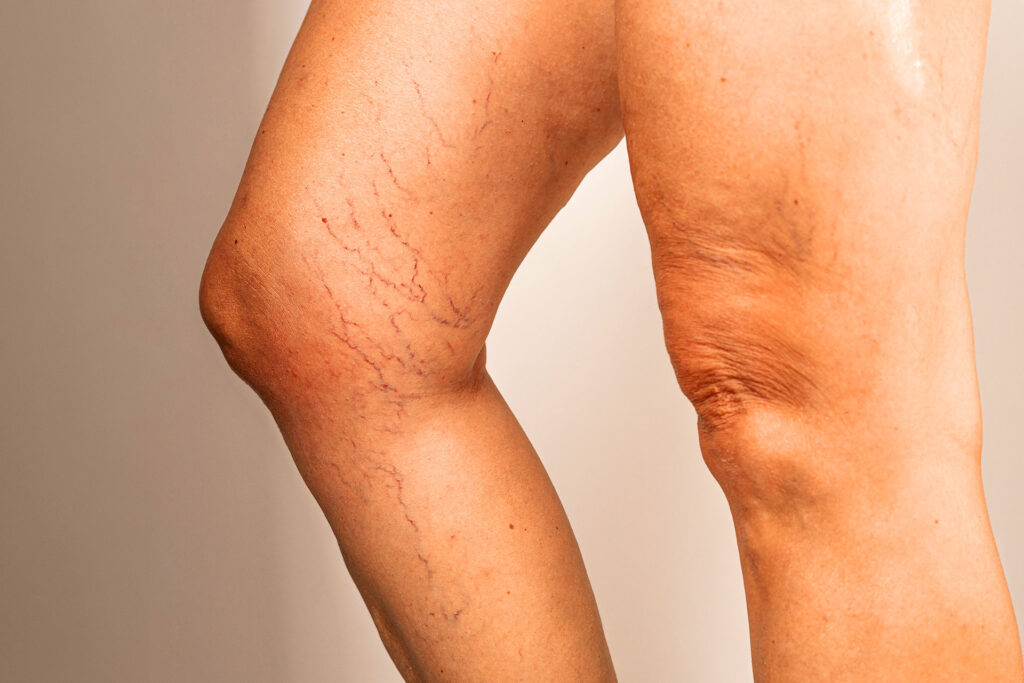
A bulging blood vessel in leg tissue is a vein that has expanded and risen toward the skin surface. It may look rope-like, knotted, or simply more prominent than usual. The cause matters enormously.
Some visible veins are harmless. Others are early signs of venous disease. Here is how they compare:
| Type | Appearance | Cause | Treatment Needed |
|---|---|---|---|
| Exercise vascularity | Straight, prominent after activity | Increased blood flow | No |
| Spider veins | Web-like, red or purple | Minor valve leak | Optional (cosmetic) |
| Varicose veins | Twisted, raised, bluish | Valve failure | Often yes |
| Superficial thrombophlebitis | Hard, red, tender | Clot or inflammation | Yes |
| CVI-related veins | Full, persistent, worse at day’s end | Chronic valve insufficiency | Yes |
| DVT collateral veins | Sudden, one-sided | Deep vein blockage | Urgent |
If you are unsure which category your veins fall into, a duplex ultrasound will tell you in about 30 minutes.

Reason 1: Big Veins Signal a Problem That Grows Over Time
Big veins do not stay the same. Venous insufficiency is a progressive condition. The valves weaken gradually, blood pools more with each passing month, and the pressure inside the vein builds. What starts as a slightly visible vein eventually becomes swelling, skin changes, and in advanced cases, venous ulcers that are genuinely difficult to heal.
Catching and treating venous disease early is dramatically easier than managing it late. Early-stage CVI responds well to compression therapy and minor procedural interventions. Late-stage CVI can require extended wound care and complex management.
The vein you ignore at 45 is not the same problem at 60.
Reason 2: The Pain Gets Worse Without Treatment
Bulging veins often come with symptoms people attribute to other things. A heavy, tired feeling in the legs by late afternoon. Aching that improves when you elevate your feet. Nighttime cramping that disrupts sleep. Mild swelling around the ankles. None of these are dramatic. All of them are your venous system under pressure.
Left untreated, that pressure builds. The aching becomes constant. The swelling spreads from the ankle to the calf. Restless leg symptoms and nerve pain intensify. What started as an inconvenience becomes a daily limitation.
Treatment reduces that pressure. Most patients notice significant symptom relief within weeks of starting even conservative management.
Reason 3: Skin Around the Vein Starts to Break Down
This is the consequence most people do not anticipate.
Chronic venous pressure does not stay in the vein. It leaks into surrounding tissue. Blood proteins escape through weakened vessel walls and deposit in the skin. The result is a condition called lipodermatosclerosis: the skin hardens, darkens, and becomes fragile. Wounds heal slowly. Small injuries turn into open sores.
Venous ulcers, which form near the inner ankle, affect roughly 1% of the adult population and account for the majority of chronic wound cases in vascular medicine. They are painful, slow to close, and prone to infection. They are also largely preventable. Treating the underlying venous disease before the skin breaks down is the most effective approach by a wide margin.
Reason 4: A Clot Can Develop Without Warning
Veins with damaged valves carry stagnant blood. Stagnant blood clots. This is not a rare complication. It is a predictable consequence of untreated venous disease. Superficial thrombophlebitis, a clot in a surface vein, causes localized pain, redness, and a hard cord-like vein. It is uncomfortable and requires treatment but is not immediately life-threatening in most cases.
Deep vein thrombosis is a different matter. A clot in the deep venous system can break loose and travel to the lungs, causing a pulmonary embolism. DVT affects hundreds of thousands of people each year and is one of the leading causes of preventable hospital death in the United States.
The connection between visible varicose veins and DVT risk is well established. Treating the surface venous disease reduces that risk. Ignoring it does not.
Reason 5: Veins Popping Out of Legs Suddenly May Mean Something Urgent
Most bulging veins develop gradually over months or years. When they appear quickly, that changes the picture.
Veins popping out of legs suddenly on one side, without exercise or heat as a trigger, can indicate a deep vein clot forcing blood to reroute through surface veins. They can also signal May-Thurner syndrome, where a structural compression restricts venous drainage from the left leg. Or they may point to a pelvic obstruction with a vascular cause.
Any of these require prompt imaging. Waiting to see if the veins settle down on their own is not the right approach here. A duplex ultrasound and possibly CT venography will clarify the cause quickly.
Reason 6: Treatment Is Easier Than You Probably Think
A lot of people avoid vein treatment because they imagine surgery. General anesthesia, recovery time, and a procedure that disrupts their schedule for weeks. Modern vein treatment is nothing like that.
The most common approaches today are minimally invasive and performed in an outpatient setting. Endovenous laser ablation closes the affected vein using heat delivered through a thin catheter. The procedure takes about an hour. Patients walk out and return to most normal activities the same day or the next.
Sclerotherapy involves injecting a solution directly into the vein, causing it to collapse and fade over several weeks. It requires no anesthesia and no recovery period.
Microphlebectomy removes surface varicosities through tiny incisions that leave almost no scarring.
The barrier to treatment is much lower than it used to be. The main thing delaying most patients is the assumption that it will be harder than it is.
What Happens If You Do Nothing
Here is a straightforward summary of how untreated venous disease tends to progress:
| Stage | What You Notice | What Is Happening Inside |
|---|---|---|
| Early | Visible surface veins, mild fatigue | Valve weakness, minor reflux |
| Moderate | Swelling, aching, heaviness | Increased venous pressure, pooling |
| Advanced | Skin darkening, hardening | Protein leakage, tissue breakdown |
| Severe | Open ulcers, chronic wounds | Full venous insufficiency |
Most people arrive at a vascular clinic somewhere in the moderate stage. The earlier you arrive, the simpler the treatment.
FAQ: Bulging Veins and When to Act
Why have veins suddenly appeared on my legs?
Sudden appearance of visible veins in one or both legs usually means something changed in your circulation. Possibilities include a clot in a deep vein forcing blood through surface channels, a new valve failure in a superficial vein, or a structural compression higher up in the pelvis. Exercise and heat produce rapid but temporary vein visibility. If the veins appeared without either and have persisted for more than a few days, get an ultrasound.
Do bulging veins mean dehydration?
Dehydration can make veins more visible temporarily. When blood volume drops, the body dilates peripheral veins to maintain flow, and they become easier to see. This effect resolves quickly with adequate hydration. If your veins look prominent mainly when you are thirsty and then calm down after drinking water, dehydration is likely the cause. Persistent bulging that does not fluctuate with hydration points to something else.
When should I worry about bulging leg veins?
Worry when veins appear suddenly without explanation. Worry when only one leg is affected. Worry when a vein feels hard, warm, or tender to touch. Worry when your legs swell, ache persistently, or the skin near your ankle starts to darken or thicken. None of these are cosmetic variations. They are signs of venous disease at various stages, and earlier evaluation leads to simpler treatment.
What causes veins to pop out suddenly?
The most common vascular cause is blood rerouting around a blockage. When a deep vein is obstructed by a clot, blood finds alternate paths through the surface veins, which then expand visibly. A sudden increase in venous pressure from a pelvic mass, structural compression, or new valve failure can produce the same effect. In athletes, intense exertion causes temporary rapid engorgement that looks sudden but resolves within hours. Veins that stay prominent and appeared without an obvious trigger need evaluation.
See a Vein Specialist at CURA Vein Center
You have read the article. You know what the warning signs look like. If anything here made you think twice about a vein you have been ignoring, that instinct is worth following.
At CURA Vein Center, our board-certified specialists diagnose and treat all types of vein conditions across New Jersey. We use minimally invasive procedures, accept most insurance plans, and offer free consultations with no surprise bills.
Contact us today or call +1 973-363-2029.